Head to head
Adjustable base vs box spring
They are not really rivals — one quietly replaces the other. Here is what each does, what it does to your mattress, and what it does to your height.
By Stephen V.Published How we pick
This comparison confuses people because the two things are not really rivals — they are answers to different questions, and one of them quietly replaces the other. A box spring holds a mattress up at a fixed height and gives an innerspring something firm to push against. An adjustable base holds a mattress up too, but it also bends. You do not stack them, you do not use both, and choosing the base means giving up the box spring entirely. Here is what that actually means for your mattress, your height and your back.
What each one does
What a box spring does
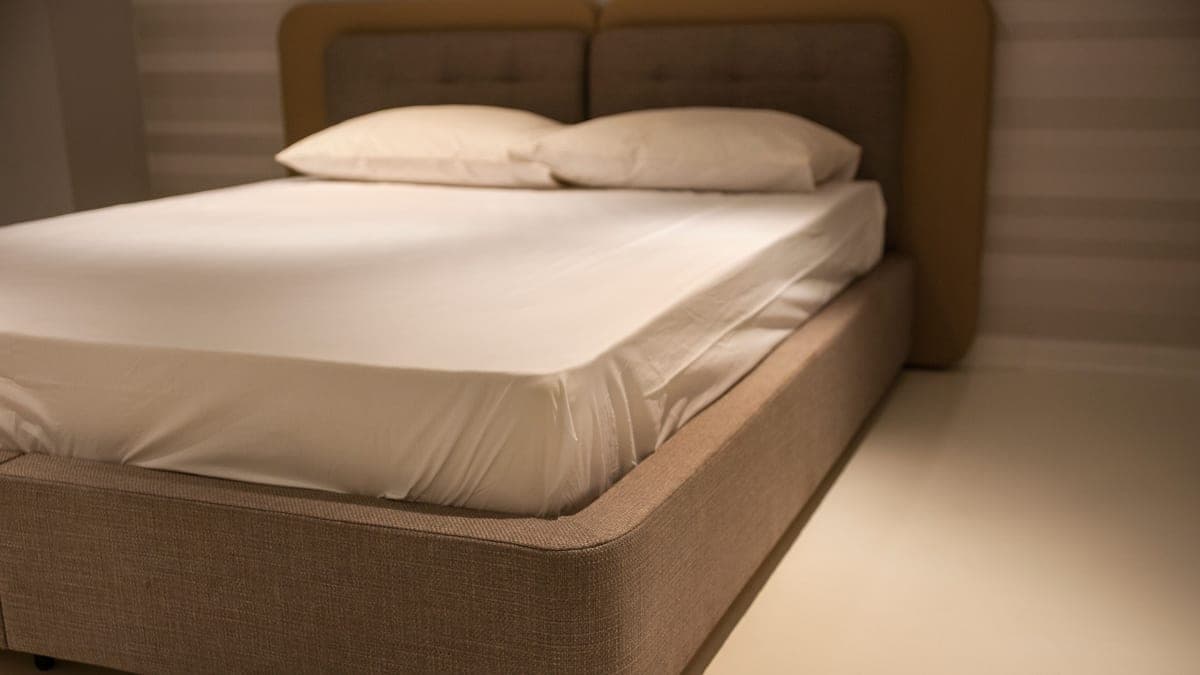
A box spring is a wooden or steel frame, usually wrapped in fabric, with springs or a rigid grid inside. It does two jobs: it lifts the mattress to a comfortable height, and it gives a traditional innerspring mattress a firm, slightly forgiving surface to sit on so the mattress is not working alone. It has no moving parts and it never changes shape. That is a feature — a box spring is simple, cheap, and almost impossible to break.
What an adjustable base does
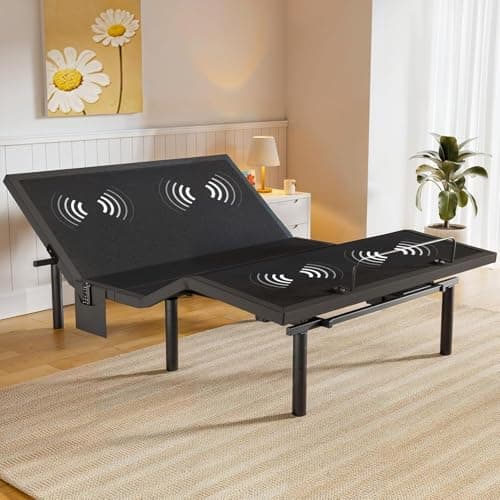
An adjustable base is a motorized frame whose deck is hinged so the head and, on most models, the feet rise. It replaces the box spring completely: the mattress sits directly on the base, and the base provides both the support and the movement. How the mechanism works covers the motors and the electronics in plain English. The point that matters for this comparison is that the base only helps if the mattress on top of it can bend with it.
The mattress is where this decision is really made
The reason you cannot treat this as a straight swap is the mattress. A mattress bought to sit on a box spring is often a traditional innerspring with a rigid perimeter, and a rigid mattress will not bend on an adjustable base — it fights the hinge, lifts at the corners, and in the worst case cracks its own border. All-foam and most hybrid mattresses flex fine. This is the compatibility question that catches people out, and it has its own page for a reason.
The practical test is simple, and you can do it tonight. Press down hard on the long edge of your mattress and watch what the border does. If the perimeter is a stiff encased spring or a firm foam rail that resists bending, that mattress will fight an adjustable base. If it gives smoothly, it will follow the deck. All-foam mattresses almost always pass this test; older pillow-top innersprings almost always fail it. When in doubt, the compatibility guide has the full checklist, and it is far cheaper to check first than to return a base and a mattress both.
| Box spring | Adjustable base | |
|---|---|---|
| Changes the bed's angle | No | Yes — head and, usually, feet |
| Mattress it needs | Innersprings and foam alike | One that flexes — foam or most hybrids |
| Moving parts | None | Motors, a control board, a remote |
| Height off the floor | Fixed, and tall | Varies; often lower unless the legs adjust |
| Power needed | None | A mains outlet at the bedside |
| Cost band | Inexpensive | Roughly a mattress upward |
| Can fail | Almost never | Yes — see common problems |
| Helps reflux or swelling | No | Yes, that is the point of it |
The moving-parts and can-fail rows in that table are the honest cost of the base's one advantage. A box spring has nothing to break; an adjustable base has motors, a control board and a remote, all of which can fail, sometimes out of warranty. That is not a reason to avoid a base — the parts are usually replaceable and the failures are predictable — but it is a real difference, and our page on common problems lays out what goes wrong and what is fixable. If you value never having to think about the bed over having the head and feet move, that row alone can settle the question.
Why people try to use both, and why it fails
It is worth spelling out the failure mode, because it is common and expensive. People buy an adjustable base meaning to keep their existing mattress-and-box-spring, and assume the box spring simply moves onto the base. It does not. The base needs the mattress directly on its hinged deck; a rigid box spring on top of a base cannot bend, so the base strains against it, the mattress barely moves, and you have paid for a motor to lift something built specifically not to flex. The box spring is not a companion to the base. It is the thing the base replaces, and the money you spent on it does not transfer.
Height is the part people forget
A box spring is tall — often eight or nine inches — and it sets a bed height people are used to. Swap it for an adjustable base and the height usually changes, because a base plus a modern low-profile mattress can land lower than the old innerspring-on-box-spring stack it replaced. On a site about getting out of bed safely, that matters more than almost anything else here. A bed that is suddenly too low is harder to stand up from, not easier.
So do the arithmetic before you buy, not after. Measure the height you get out of comfortably now, work out the height of the base plus your intended mattress, and if there is a gap, plan to close it. A base with height-adjustable legs closes it at the source; otherwise risers do. Our bed-height guide walks through the numbers against your own leg length.
Where slatted frames and platform beds fit
People shopping this question often have a third option in the house already: a platform bed or a slatted frame that needs no box spring at all. A platform bed is a fixed, non-adjustable base with a solid or closely-slatted surface — a fine, cheap way to support a foam mattress at a set height. But like a box spring, it does not move. If the whole reason you are here is to raise your head or your feet, a platform bed answers the mattress-support question and none of the positioning one. If you like your platform bed's height and only want the angle, note that some low-profile adjustable bases are designed to drop inside an existing frame; the FlexiSpot in our reviews is one such zero-clearance design.
So which one
- Keep the box spring if your mattress is a traditional innerspring you are happy with, you have no interest in changing the angle of the bed, and the height already suits you. There is no reason to spend on a base you would not use.
- Move to an adjustable base if you want to sleep with your head or feet raised, and your mattress either flexes already or you are replacing it anyway. Check compatibility first — here is how.
- Either way, settle the height before you order. Our comparison of bases flags which ones let you set the leg height, because that is the spec this audience should weigh first.
One more thing that trips people up: an adjustable base is not a bed frame with a headboard, and a box spring usually sits inside one. Many bases are freestanding on their own legs. If keeping your headboard matters, check that the base is designed to bolt to it — some are, many are not — before the box spring leaves the house.
Questions people actually ask
Can you put an adjustable base on a box spring?
No, and you should not. An adjustable base replaces the box spring entirely — the mattress sits directly on the base. Putting a box spring in between stops the base bending, wastes the money you spent on it, and can strain the motors.
Do you need a special mattress for an adjustable base?
You need one that flexes. All-foam and most hybrid mattresses bend fine. A traditional innerspring with a rigid perimeter — the kind often bought to sit on a box spring — usually will not, and can be damaged trying. Our compatibility guide explains how to tell.
Is an adjustable base higher or lower than a box spring?
Usually lower, which matters more than it sounds. A box spring is tall and sets a height people are used to. Swap it for a base plus a modern low-profile mattress and the bed can land lower — harder to stand up from, not easier. Measure before you buy and plan to close any gap with risers or adjustable legs.
What is the point of a box spring at all?
Two things: it lifts the mattress to a comfortable height, and it gives a traditional innerspring a firm surface to push against. It has no moving parts and almost never breaks. If you have no interest in changing the angle of the bed, there is nothing wrong with keeping it.
Does an adjustable base work with a platform bed?
A platform bed is a fixed, non-adjustable base — like a box spring, it supports the mattress but does not move. If you want the angle to change, a platform bed does not give you that. Some low-profile bases are designed to drop inside an existing frame; the FlexiSpot in our reviews is one such zero-clearance design.
Read next
Guide
How They Work
What is inside the frame, what the buttons do, and which parts fail first. No sales pitch, just the mechanism.
Guide
Base Compatibility
No, and the two-minute test to find out about the one you own — before the base is in the room.
Guide
Best Bed Height for Seniors
A calculator that shows its working, because the right answer depends on your legs and not on an average.
Comparison
Best Adjustable Beds for Seniors
Ranked on leg height, controls and published capacity — not on how the marketing photo looks.
Our top pick — Amada 01B-Q1 Queen Adjustable Bed Frame


Nothing here is medical advice. Prices are pulled live and stamped with the date they were checked; scores are our published spec rubric, not a test result. How we pick · How we make money · Corrections