Head to head
Platform beds for seniors
No box spring and a sturdier deck, but a lower bed - and lower is the harder direction to get out of.
By Stephen V.Published Updated How we pick
Are platform beds good for seniors? Often, with one large caveat: they tend to sit low, and low is the direction that makes getting out of bed harder. Removing the box spring is genuinely useful - fewer parts, a sturdier deck, nothing separate to sag - but removing the box spring also removes several inches of height, and for an older adult the height is usually the thing that matters most.
So the honest answer is not about the frame style at all. It is about the finished height, which is the floor-to-back-of-knee number this whole section is built around. A platform bed set at your measured height is a very good bed. A platform bed that leaves you perched several inches too low is a bed you will need a hand to leave. The construction is a means to that number, not the point in itself.
What a platform bed actually is
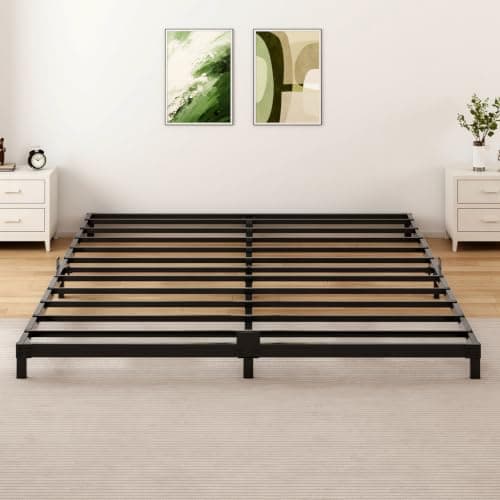
A platform bed is a frame with a solid or closely slatted deck that supports the mattress directly. There is no box spring and no separate foundation - the mattress rests on the platform and nothing else. A traditional bed, by contrast, stacks three things: a metal or wooden frame, a box spring on top of it, and the mattress on top of that. One layer under the mattress instead of two.
That single difference in construction drives every difference that follows - height, sturdiness, the feel of the edge you sit on, and what you can do to change any of them later. It is worth understanding before you shop, because the label 'platform bed' hides a wide range of finished heights.
Platform bed versus frame and box spring, row by row
| Platform bed | Frame + box spring | |
|---|---|---|
| Layers under the mattress | One - the deck | Two - frame, then box spring |
| Box spring needed | No | Yes |
| Typical finished height | Lower - often too low for a senior | Higher - occasionally too high |
| Sturdiness over the years | Fewer joints to work loose | More parts, more to loosen |
| The edge you sit on | Deck supports the mattress fully | A worn box spring can sag and drop it |
| Under-bed clearance | Usually low | Usually more |
| If it sits too low | Risers or leg extensions | Risers, or a taller box spring |
| If it sits too high | Rarely the problem | Thinner mattress, or remove a topper |
| With an all-foam mattress | Deck supports it directly | Works, but the box spring adds height you may not want |
The height problem is the whole ballgame
A box spring is not just a spring - it is height. It raises the mattress by roughly its own thickness, which on many beds is close to the thickness of the mattress itself. Take it away and the sleep surface drops by that amount. That is why a platform bed can feel dramatically lower than the bed it replaced, even with the same mattress on top.
Modern mattresses have got thicker, which claws some of that height back - a 12-inch mattress on a platform sits higher than an 8-inch one did. But many platforms are deliberately low-profile, and a low deck plus a modest mattress can land the sleep surface below the range most older adults need. The only way to know is to measure it: floor to the top of the mattress, at the edge you sit on, with the mattress compressed under your weight.
Why low is the harder direction: sitting on the edge of a bed that is too low puts your knees above your hips, and standing from there needs far more strength from the thighs than most people have to spare after a certain age. The CDC reports that around one in four adults aged 65 and over falls each year, and bed transfers are exactly the kind of routine, repeated, half-asleep movement where that risk lives. A bed that is easy to stand up from is not a luxury - it is the point.
How to raise a platform bed that sits too low
The good news is that a too-low platform is usually the easy problem to fix. The levers, cheapest first:
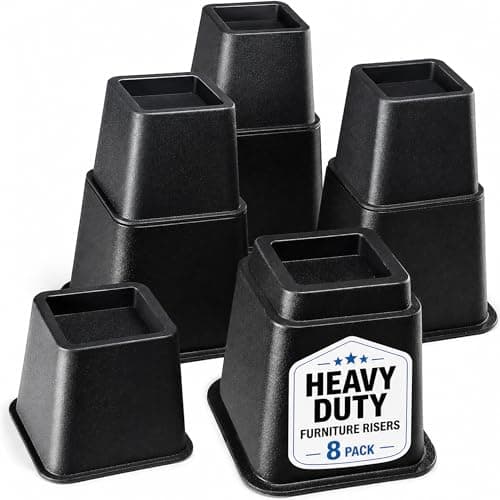
- Bed risers under the legs. If the platform stands on four legs or corner posts, a riser with a socket lifts the whole bed by 3 to 8 inches. This is the cheapest fix in the whole subject - the risers we would buy are here.
- Leg extensions, if the maker offers taller legs for that exact frame, or the legs are threaded to take them. Sturdier than risers because the height becomes part of the frame, but frame-specific — and one set we compared is the only one that goes shorter rather than taller. The difference is here, and the sets themselves are here.
- A thicker mattress. Height is deck plus mattress, and a platform's deck supports an all-foam mattress well. Moving up two inches of mattress raises the surface by two inches and changes nothing about the frame.
Where a platform bed is the better choice
- It already sits at, or can be raised to, your measured height. Once the height is right, the platform's sturdiness is a genuine advantage.
- You want fewer things to fail. No box spring means no box spring to sag, and a solid deck stays put for years.
- You sleep on an all-foam mattress. A platform deck supports it evenly, where an old innerspring bed sometimes wanted a box spring under it.
- You want a firm, even surface right to the edge - assuming the mattress itself has decent edge support, which is a mattress property, not a frame one.
Where a frame and box spring still wins
- Your current bed is already at a good height and you would only be lowering it by switching. If it is not broken, do not drop it four inches.
- You need a lot of height and want it built in. Swapping to a taller box spring, or a high-profile one, is a single-part change that lifts the whole bed.
- The box spring is sound. A firm, undamaged box spring supports the mattress edge perfectly well; the problem is an old one that has started to sag, and that is a replacement, not a redesign.
Which one for you
Decide by the number, not by the marketing. Take your target sleep-surface height, then work out where each option lands: platform deck plus mattress, versus frame plus box spring plus mattress. If the platform lands at your target, or lands low but stands on legs you can raise, it is the sturdier, lower-maintenance pick. If the platform would leave you too low and cannot take risers, a frame and box spring - or a different platform - is the safer route. Where the bed you have is too tall rather than too low, the low bed frames we track publish their deck heights from 4 to 7 inches, so you can pick the one that lands on your number.
Take a worked example. Say your measured target is 22 inches and your mattress is 11 inches thick. A platform whose deck sits 7 inches off the floor gives you 18 inches - four short, and a candidate for risers if it stands on legs. A frame and box spring that together stand 13 inches off the floor gives you 24 inches - two too high, and a candidate for a thinner box spring or losing a topper. Same mattress, same person, and six inches of difference decided entirely by what is underneath it.
What you should not do is choose the frame first and hope the height works out. That is how people end up with a beautiful low platform they need help to get out of. The measurement comes first; the furniture serves it. A bed frame is furniture, not a fall-prevention device - the height is what does the work, and the height is something you can check with a tape measure this afternoon.
Questions people actually ask
Are platform beds good for seniors?
Often yes, with one caveat that matters more than any other: a platform bed removes the box spring, and with it several inches of height. A platform set at your measured sleep-surface height is an excellent, sturdy bed. One that leaves you perched too low is a bed you will need a hand to get out of. Measure the target first, then judge the frame against it.
Do platform beds sit lower than regular beds?
Usually, because there is no box spring under the mattress. A box spring adds roughly the same height again as the mattress on top of it; take it away and the sleep surface drops by that amount. That is the whole reason this page exists.
Do you need a box spring with a platform bed?
No. The deck - solid or closely slatted - supports the mattress directly, which is the point of the design. Adding a box spring on a platform is both unnecessary and a common accidental way to end up with a bed that is now too high.
Can you put bed risers on a platform bed?
Only if the platform stands on legs or corner posts that will seat inside a riser socket. Many platforms do; some have a solid plinth base with no legs at all, and those cannot take risers. Our riser roundup covers what to look for.
Is a platform bed sturdier than a frame and box spring?
As a rule, yes. One deck has fewer joints to work loose over the years than a frame plus a separate box spring, and a sagging box spring is a common reason an older bed starts to feel unsteady at the edge. Sturdiness is the platform's real advantage; height is its real risk.
Sources
Every factual claim on this page traces to one of these, or to a product listing cited in the specification table beside it.
Read next
Guide
Best Bed Height for Seniors
A calculator that shows its working, because the right answer depends on your legs and not on an average.
Comparison
Best Low Bed Frames
Deck height plus mattress thickness is the whole decision. Six frames from 4 to 7 inches, scored on what each one actually publishes.
Our top pick — Samhapyrom 6 Inch Low Profile Bed Frame, Queen
$85.99 · Check priceAs of September 21, 2026. #ad How we’re funded
Comparison
Best Bed Risers
The cheapest fix in this subject, scored on the two specs that matter: how much lift, and how much load.
Our top pick — Home It Adjustable Bed Risers, 3/5/8 in
Guide
Measuring Your Bed
Two minutes, one tape measure, and the mistake nearly everyone makes with a soft mattress.
Head to head
Risers vs Leg Extensions
One sits under the leg, one becomes the leg. The difference matters more on an adjustable base than on a normal frame.


Nothing here is medical advice. Prices are pulled live and stamped with the date they were checked; scores are our published spec rubric, not a test result. How we pick · How we make money · Corrections