Guide
Measuring your bed height
Two minutes, one tape measure, and the mistake nearly everyone makes with a soft mattress.
By Stephen V.Published Updated How we pick
You need two numbers before you can make any decision in this section: the height you want, and the height you have. The first comes from your lower-leg measurement. This page is about the second, which sounds trivial and is where the errors come from.
The measurement that matters
How to do it
- Strip the duvet and pillows off the edge you sit on. Leave the fitted sheet; it is a few millimeters and not worth undoing.
- Sit on the edge exactly where you normally do.
- Have someone put the tape on the floor beside your leg and read the height to the top of the mattress beside your hip, while you are sitting there.
- Write it down. That is your real, compressed, in-use bed height.
- For reference, stand up and measure the same spot uncompressed. The difference between the two is how much your mattress edge gives, and if it is more than about two inches you have a mattress problem as well as a height one.
Doing it alone: rest a rigid straight edge — a spirit level, a length of timber, a broom handle — across the mattress so it overhangs the side, sit down, mark where it crosses a doorframe or wall, then measure to that mark. Fiddly, and accurate enough.
The mistake almost everyone makes
Measuring the empty bed. A soft or older mattress can give an inch and a half at the edge under an adult's weight. If you measure 23 inches on an empty bed and it behaves like 21½ when you sit on it, and your target is 21, you may conclude the bed is too high and lower it — when it was already about right in use.
This is also why edge firmness matters beyond comfort. A mattress that collapses at the edge is effectively shorter every time you use it, and no amount of lift under the frame corrects it. Firmness and edge support.
The other measurements worth taking while you are there
| Measurement | Why you will need it |
|---|---|
| Floor to top of mattress, compressed | The number every decision in this section depends on |
| Mattress thickness | Subtract it from your target to get the frame height you need |
| Frame height, floor to the deck | Tells you whether risers or a new mattress is the lever |
| Mattress width and length | For sheets, and for checking a bed rail's fit |
| Gap between mattress and frame at the sides | An existing gap here is an entrapment risk before any rail is added |
| Clearance under the frame | Whether a riser has room, and whether under-bed storage survives |
If you are buying an adjustable base
Not one adjustable base in our comparison publishes its frame height off the floor, at any leg setting. That is a real gap in the published record and it means you cannot fully plan the finished height before delivery.
So: measure the frame the day it arrives, before the mattress goes on. Add your mattress thickness. Compare with your target. If it is wrong, the fix is leg adjustment if the base has it, risers if it does not, and a different mattress thickness if neither is enough. Doing that on delivery day is a great deal easier than doing it in six months.
One more measurement belongs on the list if a wheelchair is involved, and it is not a measurement of the bed at all: the height of the chair's own seat, taken at the front edge with the cushion compressed. For a sideways transfer that number is the target and the bed has to meet it — how to match the two surfaces.
Questions people actually ask
How do you measure the height of a bed?
From the floor to the top of the mattress, at the edge where you sit, with the mattress compressed under your weight. Frame height on its own is not useful, and an uncompressed soft mattress reads an inch or more taller than it behaves.
Should I measure with the bedding on?
Measure to the top of the mattress, not the top of the duvet. A fitted sheet is negligible; a thick mattress protector or a topper is not, and a topper should be counted as part of the mattress.
What measurements do I need before buying an adjustable base?
Your target sleep-surface height, your current mattress thickness, and the frame height you would need to hit the target. The base's own frame height is almost never published, so plan to measure it on arrival.
Where exactly should I measure from on the bed?
At the side where you get in and out, roughly level with your hips when sitting. Beds are not uniform — an older mattress is often lower in the middle and at the edge you use most.
Read next
Guide
Best Bed Height for Seniors
A calculator that shows its working, because the right answer depends on your legs and not on an average.
Comparison
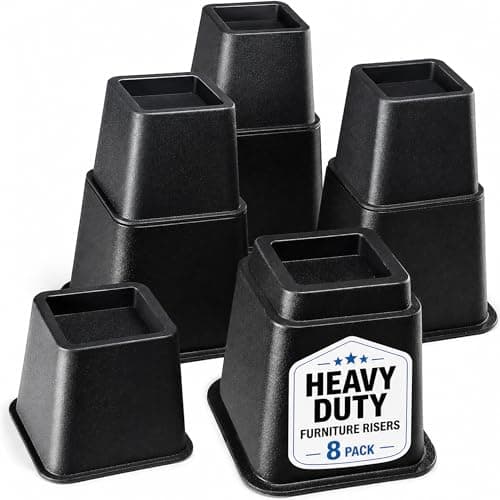
Best Bed Risers
The cheapest fix in this subject, scored on the two specs that matter: how much lift, and how much load.
Our top pick — Home It Adjustable Bed Risers, 3/5/8 in
$25.99 · Check priceAs of October 20, 2026. #ad How we’re funded
Comparison
Best Mattresses for Seniors
Scored on published height, flex and certification — not on how they feel, because we have not slept on them.
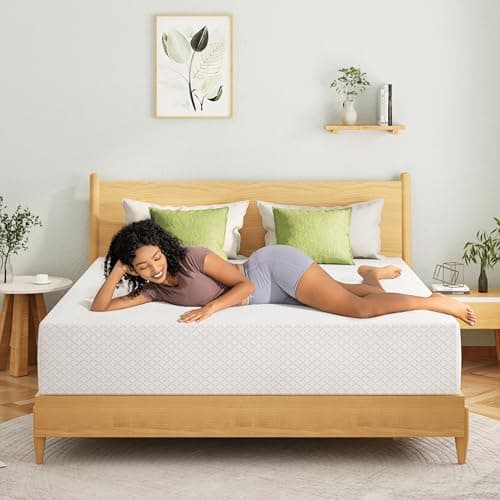
Our top pick — EGOHOME 12 Inch Queen Memory Foam Mattress
$249.99 · Check priceAs of October 20, 2026. #ad How we’re funded
Guide
Fitting a Bed Rail
Fitting takes twenty minutes. The measuring afterwards is the part that decides whether it is safe.

Nothing here is medical advice. Prices are pulled live and stamped with the date they were checked; scores are our published spec rubric, not a test result. How we pick · How we make money · Corrections