Guide
Trial periods and returns
The trial and return terms on a heavy motorized bed are not the easy returns you are used to. What to read before you buy.
By Stephen V.Published How we pick
The time to read a return policy is before you buy, not after the first bad night. That is true of anything, but it is far more true of an adjustable bed than of most purchases, because everything about this item — its weight, its motor, its packaging, the fact that a mattress may arrive compressed in a box it will never fit back into — makes returning it harder, slower and more expensive than returning almost anything else you own. A generous-sounding trial is only generous if you can actually act on it, and whether you can is written in the terms.
Is there a home trial at all?
The first thing to establish is whether there is a home-trial window at all, and it is not safe to assume. A sleep trial — the promise that you can sleep on the thing for a period and send it back if it does not suit — is common for mattresses sold direct by brands, and much less reliably offered on the motorized base, on accessories, or on items bought through a marketplace. Some sellers offer a trial on the mattress but not the base. Some offer none. The word trial in the marketing is not the same as a trial in the terms, so find it written down.
Establish two dates while you are there: when the window opens — the day of delivery, or the day of purchase, which are not the same — and when it closes. A trial measured from the purchase date quietly shrinks with every day the item spends in transit.
Who pays to send back something this heavy?
This is where return policies on large items diverge most sharply from the easy returns people are used to. An adjustable base is heavy and awkward; a mattress that arrived compressed is heavy and, once expanded, enormous. Shipping either one back is a real cost, and the policy decides who bears it.
- Return shipping. On a small item the seller often covers it. On something this size, many do not — and freight on a heavy base can be a meaningful fraction of what you paid. Find out who pays before you buy, not after.
- Restocking fees. Some sellers deduct a restocking fee from the refund on large or opened items. Whether one applies, and to what, is in the terms — we will not invent a percentage, but you should find the real one.
- Pickup versus arranging your own freight. Some sellers collect the item; some expect you to crate and ship a heavy base yourself, which is not a one-person job.
- The condition required for a refund. Many policies only accept returns unused, or in original packaging, or both — which for a bed you have slept on to evaluate is a contradiction worth spotting early.
The re-boxing problem nobody mentions
Here is the practical trap that catches people even when the policy is fair. A compressed mattress is vacuum-sealed and rolled by industrial machinery. Once you open it and let it expand, you are not getting it back into that box — it is physically several times the size it shipped at. An adjustable base arrives as a heavy frame in dense, custom-cut packaging that is genuinely difficult to reassemble around the product a second time. A return that requires original packaging can be effectively impossible to make the moment you have unpacked the thing to try it.
The lesson is not to leave the boxes in the garage forever, but to know before you unpack what the policy requires. If a refund depends on returning the item in its original packaging, keep every piece of that packaging intact and photograph how it comes apart as you open it. If the item turns out to be genuinely difficult to re-box, that difficulty is part of the true cost of the return, and it is worth weighing before the trial period runs out rather than on its final day.
Marketplace versus brand-direct
Where you buy changes the return policy as much as what you buy, and the two common routes behave differently.
| Brand-direct | Marketplace | |
|---|---|---|
| Sleep trial | More often offered, especially on mattresses | Varies by third-party seller; sometimes none |
| Who sets the policy | The brand, consistently | Often the individual seller, not the platform |
| Return shipping on a heavy item | Stated in the brand's policy | Depends on the seller and the item |
| Restocking fees | In the brand's terms | Set per seller — read that seller's terms |
| Proof of purchase later | The brand's order record | Your order history — export it, do not rely on it staying |
The point of the table is not that one route is always better. It is that a return policy on a marketplace is frequently the third-party seller's policy rather than the platform's familiar one, and it can be much stricter. Read the seller's terms, not the platform's reputation. And whichever route you take, keep your own dated record of the purchase — a warranty claim or a return can arrive long after the transaction, and your receipt is the one fixed point either process needs.
A return is not a warranty — keep both alive
It is worth being clear about the difference, because people conflate them. A trial or return period is a short window in which you can send the item back because you changed your mind or it did not suit. A warranty is a longer, separate promise to repair or replace the item if it fails. They run on different clocks and have different requirements, and you can easily protect one while forfeiting the other.
In particular, registering the warranty and keeping the proof of purchase matter regardless of whether you ever use the return window. Some warranties require registration within a window of the purchase date, and a claim years later can be refused on that technicality. How these warranties are structured and what they exclude covers that side in full; the short version is to register promptly if it is required and to keep the receipt either way.
Before the trial even starts: will it fit and flex?
Some returns are avoidable entirely, and the most common avoidable one is a mattress that will not work on a base. If your existing mattress is a rigid innerspring, it will not bend over an adjustable frame, and discovering that after delivery turns into a return you could have skipped. Whether a mattress flexes on an adjustable base is a two-minute check you can do before you buy either item.
The same is true of size and access: measure the room, the doorways and the stairs before a heavy base arrives, because a bed that cannot physically reach the bedroom becomes a return under whatever policy you agreed to. If the underlying need might be short-lived — recovery from surgery, an uncertain prognosis — renting rather than buying can sidestep the return question altogether.
How to read a return policy before you buy
- Find the actual policy for the exact item and the exact seller — on a marketplace, the third-party seller's policy, not the platform's general one.
- Confirm there is a trial or return window at all, and whether it covers the base, the mattress, or both.
- Note when the window opens and closes — from delivery or from purchase — and put the closing date somewhere you will see it.
- Establish who pays return shipping on an item this heavy, and whether a restocking fee applies.
- Read the condition requirement — unused, original packaging, or slept-on-but-clean — because it decides whether trying the item forfeits the return.
- Keep the packaging until the window closes, and photograph how the item came apart in case you have to reverse it.
- Register the warranty and save the receipt regardless, because the return window and the warranty are separate protections.
Questions people actually ask
Can you return an adjustable bed?
Often, but the terms are far stricter than the easy returns people expect on smaller items, because the base is heavy and a compressed mattress cannot go back in its box once opened. Whether there is a return window, who pays return shipping, and whether a restocking fee applies are all set by the seller. Read the actual policy for your exact item before you buy.
Do adjustable beds come with a sleep trial?
Sometimes on the mattress, less reliably on the motorized base or on accessories, and not at all from some sellers. A sleep trial is common for mattresses sold brand-direct and much more variable through a marketplace. The word trial in the marketing is not the same as a trial in the terms, so find it written down before you order.
Who pays return shipping on an adjustable bed?
It depends on the seller. On small items the seller often covers it; on something this heavy, many do not, and freight on a bed base can be a meaningful cost. Some sellers arrange pickup and some expect you to crate and ship the item yourself. Establish who pays, and how the item gets collected, before you buy rather than after.
Is there a restocking fee on adjustable beds?
There can be. Some sellers deduct a restocking fee from the refund on large or opened items. Whether one applies, and to what, is in that seller's terms — we will not invent a figure, but you should find the real one before you commit, because it comes straight out of your refund.
Can you return a mattress after unboxing it?
It depends on the policy, and there is a physical catch: a compressed mattress expands to several times its shipped size and will not go back in the box. If a refund requires original packaging, opening the item can make a return impractical. Check the condition the policy requires before you unpack, and keep the packaging until you are sure.
Read next
Guide
Warranties
What these warranties really cover, whether an adjustable base voids a mattress warranty, and how to read the terms before you buy.
Guide
What It Costs
Live prices across every category, plus the four accessory costs that never appear in anyone's total.
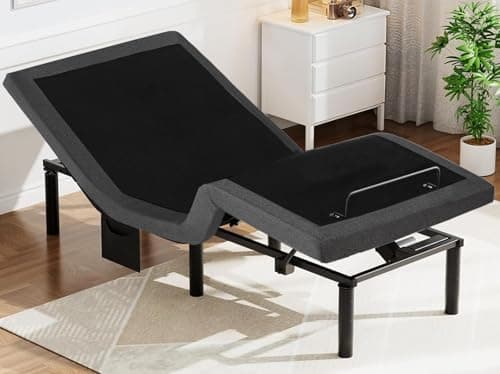
Our top pick — Pipishell Twin XL Adjustable Bed Frame
$339.99 · Check priceAs of September 22, 2026. #ad How we’re funded
Head to head
Rent vs Buy
Rental suits a short or uncertain need. Buying suits a long one. Medicare's capped rental changes the math in a way worth knowing.
Guide
Base Compatibility
No, and the two-minute test to find out about the one you own — before the base is in the room.



Nothing here is medical advice. Prices are pulled live and stamped with the date they were checked; scores are our published spec rubric, not a test result. How we pick · How we make money · Corrections