Head to head
Adjustable bed vs hospital bed
Two different products that look similar in photographs. One is furniture, one is medical equipment, and only one of them Medicare will help with.
By Stephen V.Published Updated How we pick
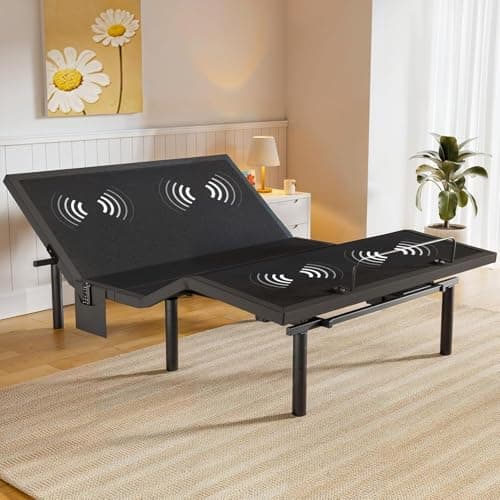
In a photograph these look like the same product with different upholstery. They are not. The difference is not comfort or price — it is whether the bed can do three specific things, and whether anyone but you will help pay for it.
The three functional differences
| Adjustable base | Hospital bed | |
|---|---|---|
| Head and foot angle | Yes | Yes |
| Whole-bed height changes | No — the frame sits at one height | Yes, that is the defining feature |
| Fitted full-length side rails | No | Yes, designed for them |
| Trapeze bar attachment | No | Yes, on most |
| Sold as | Consumer furniture | Durable medical equipment |
| Medicare Part B coverage | No | Possible, with clinical criteria |
| Where it fits | A normal bedroom | A normal bedroom, but it looks like a hospital bed |
The second row is the one that matters most and gets discussed least. A hospital bed can be lowered so that a transfer to a wheelchair happens across a level surface, and raised so that a carer is not bending double to work. An adjustable base cannot do either. If someone is helping with transfers daily, that difference outweighs everything else on the list.
What Medicare actually covers
Medicare Part B covers hospital beds as durable medical equipment when a physician certifies medical necessity. Coverage determination L33820 sets out the criteria, and they are specific rather than general.
A fixed height hospital bed is covered if the beneficiary has a medical condition which requires positioning of the body in ways not feasible with an ordinary bed; or requires the head of the bed to be elevated more than 30 degrees most of the time due to congestive heart failure, chronic pulmonary disease, or problems with aspiration; or requires traction equipment which can only be attached to a hospital bed.
A semi-electric bed — the type most people picture, with motorized head and foot but a hand crank for overall height — requires the fixed-height criteria to be met and a demonstrated need for frequent changes of body position. The codes involved are E0250 and E0251 for fixed height and E0260 and E0261 for semi-electric.
Side rails are the other real difference
A hospital bed is designed around its rails: the rail, the mattress and the frame are engineered as a system, and the FDA publishes dimensional guidance for the gaps between them precisely because entrapment in those gaps has killed people.
An adjustable base has none of that. Any rail you add is a separate consumer product — an adult portable bed rail, regulated since August 2023 under 16 CFR part 1270 — and the fit is your problem to get right. We wrote a full page on rail safety because this is the single most consequential decision in this whole subject area, and most retail pages treat it as an accessory choice.
So which one
- Hospital bed if someone helps with transfers, if the bed needs to lower for a wheelchair, if full-length rails are genuinely needed, or if a clinician has said so. Start with the doctor, not the catalog.
- Adjustable base if the goal is angle — reflux, breathing, swelling, reading — and the person gets in and out unaided or with a hand. Our comparison of bases is here.
- Neither, yet if the real problem is the height of the bed. That is cheaper to fix and worth ruling out first: work out your target height.
The honest version of this comparison is condition-specific, because the answer changes with how much of the day is spent in bed. Bed setup for stroke recovery at home works through that case in detail, including the point at which a consumer base stops being the right machine.
One more consideration that nobody puts in a comparison table. A hospital bed changes what a bedroom feels like, and for some people that matters a great deal. It is a fair thing to weigh, and it is a reason many families choose a base plus a rail plus risers instead — a combination that costs less than a month of private rental and leaves the room looking like a bedroom.
Questions people actually ask
What is the difference between an adjustable bed and a hospital bed?
A hospital bed raises and lowers as a whole, accepts fitted side rails, and usually takes a trapeze bar. An adjustable base only changes the angle of the head and feet — the frame stays at one height. The functional difference is whether a carer can work at the bedside and whether the bed can be lowered for a safe transfer.
Will Medicare pay for a hospital bed at home?
It can. Part B covers hospital beds as durable medical equipment when a doctor certifies medical necessity and the criteria in coverage determination L33820 are met. After the Part B deductible you pay 20% of the Medicare-approved amount, and hospital beds are typically supplied as a capped rental. The detail is on our Medicare page.
Can I put side rails on an adjustable bed?
Not the fitted full-length rails a hospital bed takes. Portable adult bed rails are a separate consumer product regulated under 16 CFR part 1270, and only some are listed as compatible with adjustable frames. See bed rails for adjustable beds.
Is a hospital bed uncomfortable?
The frame is fine; the mattress is usually the complaint. Hospital bed mattresses are specified for pressure care and infection control, not for how they feel. Many people who need the frame end up buying a better mattress for it separately.
Sources
Every factual claim on this page traces to one of these, or to a product listing cited in the specification table beside it.
Read next
Guide
Medicare Coverage
No. It can cover a hospital bed, and here are the actual criteria, quoted, with the codes and what you would pay.
Guide
Getting a Bed Approved
What the physician actually has to document, in what order, and the two mistakes that produce most denials.
Comparison
Rails for Adjustable Beds
The compatibility question everyone asks and almost no listing answers. Here is what to check before you order.
Our top pick — Able Life Click-N-Go Extendable Bed Rail
$159.99 · Check priceAs of October 20, 2026. #ad How we’re funded
Comparison
Best Adjustable Beds for Seniors
Ranked on leg height, controls and published capacity — not on how the marketing photo looks.
Our top pick — Amada 01B-Q1 Queen Adjustable Bed Frame
Head to head
Adjustable Bed vs Recliner
Many people already sleep in the chair and did not plan to. Here is the honest comparison, including the cases where a recliner genuinely wins.




Nothing here is medical advice. Prices are pulled live and stamped with the date they were checked; scores are our published spec rubric, not a test result. How we pick · How we make money · Corrections