Head to head
Adjustable bed vs recliner
Many people already sleep in the chair and did not plan to. Here is the honest comparison, including the cases where a recliner genuinely wins.
By Stephen V.Published How we pick
A large share of the people reading this already sleep in a recliner, and did not plan to. It happened gradually — a chest cold that was easier sitting up, a back that complained about lying flat, a night in the chair that turned into a habit. So the real question is rarely recliner versus bed in the abstract. It is: I am sleeping in the chair anyway, would an adjustable bed be better? That is the question this page answers honestly, including the cases where the chair is the right call.
Why people end up in the recliner
Two things send people to the recliner, and they are worth separating because a bed answers one of them fully and the other only partly. The first is angle — sleeping propped up eases reflux, breathing, sinus pressure and a night cough. The second is the transfer — a recliner rises to meet you and tips you gently forward onto your feet, which for a lot of people is simply easier than getting off a mattress. An adjustable bed does the first at least as well as a chair. It does the second only in part, and only if you buy the right one and set it at the right height.
The comparison, row by row
| Adjustable bed | Recliner | |
|---|---|---|
| Sleeping at an angle | Yes, and holds it all night | Yes, but in a narrower seat |
| Room to turn over | A full mattress width | A single chair width; turning is limited |
| Getting up | Raises your back; legs still do the standing | A lift chair tilts you onto your feet in one motion |
| Feet and legs up on their own | Independent foot lift on most bases | Legs rise with the back, not separately, on most chairs |
| Sharing with a partner | Yes — queen, king or split king | No, it is a one-person chair |
| Footprint | A bedroom's worth | A living-room corner |
| Cost band | Roughly a mattress upward | A lift recliner is comparable; a plain one less |
| Long-term nightly sleep | Designed for it | Tolerable, harder on spines and hips over months |
The row people underrate is the last one. A recliner is a fine place to doze and a poorer place to spend every night for years. Sleeping semi-upright in a seat that is narrower than your shoulders keeps the same joints loaded night after night, and it does not let you turn over — which is how a healthy body redistributes pressure in its sleep without waking. The transfer row matters too, and not only for comfort: a poor transfer is how falls happen, and the CDC puts falls at one in four adults over 65 every year.
Where the recliner genuinely wins
This is not a page that ends by telling you to buy the bed. There are real situations where a recliner — and specifically a lift recliner, the kind whose whole seat rises and tilts forward — is the better tool.
- The transfer is the whole problem. If standing up is the hardest thing you do all day, a lift recliner does more of that work for you than any bed. It brings the seat to you and tips you onto your feet. A bed can only raise your back; your legs still do the standing. For someone with very little leg strength, that difference is decisive.
- Space is tight. A recliner lives in the corner of a room you already have. An adjustable bed needs a bedroom, a mattress that flexes, deep-pocket sheets and mains power at the bedside.
- You want to sleep near people. For someone anxious alone at night, or who needs to be within earshot of a carer, a recliner in the living room is a reasonable choice a bed in a back bedroom cannot match.
- It is temporary. Recovering from surgery or a chest infection for a few weeks does not justify buying and assembling a bed. The chair you already own is fine for that.
Where the bed wins
- Every-night sleep over years. A full mattress you can turn over on is kinder to hips, shoulders and lower backs than a fixed seat, month after month.
- Elevating your feet on their own. Swollen ankles want the feet up independently of the back. Most adjustable bases lift the foot section separately; most recliners raise the legs only as the back reclines.
- A partner. A bed can be a queen, a king, or a split king where each side moves on its own. A recliner is one seat.
- Getting the height right. A base with height-adjustable legs can be set so your feet reach the floor and standing is easier — see our comparison. A rail or assist handle beside it closes the gap the bed itself cannot.
What each actually costs to live with
The purchase price is not the whole story on either side, and the ongoing costs are the ones people forget. An adjustable bed usually means a flexible mattress, deep-pocket sheets that survive the bending, and a motor and control board that may need a part one day. A lift recliner has a motor of its own, upholstery that wears, and a seat that is doing hard mechanical work every time you stand. Neither is maintenance-free. What tips the arithmetic for most long-term buyers is that a bed gives a couple one shared surface, while a chair is one seat for one person — so a household often needs only one bed but two chairs.
There is also the plain fact that prices in both categories move constantly, which is why this site pulls live prices for the beds rather than printing a number that is wrong within a fortnight. Compare the current figure, not a number you remember from a year ago.
Getting up: the honest mechanics
It is worth being precise about getting up, because it is where people most often expect a bed to do what a chair does and come away disappointed. A lift recliner performs the whole stand for you: it rises and tips you onto your feet, and your legs barely work. A bed cannot do that. What a bed with head lift can do is turn the transfer into two easy movements instead of one hard one — raising you to near-vertical first, so you only have to swing your legs out and stand from an already-upright start. Whether that is enough depends on your leg strength, and the honest advice is to test the movement rather than imagine it before you choose between the two.
This is also why bed height matters so much to this comparison. A bed that sits you upright still leaves you to stand from the edge, and if that edge is too low, the last part of the stand is the hard part all over again. A recliner sidesteps that by rising to meet you. A bed only matches it if you get the height right and, often, add something to pull against — a rail or an assist handle beside the bed.
What years in the chair does to sleep
There is one more thing worth being honest about, because it is the reason clinicians gently steer people out of the chair. A recliner holds you in broadly one posture all night. A bed lets you cycle through the positions a body naturally moves between in its sleep — onto one side, onto the other, briefly onto the back — and that movement is not restlessness, it is how pressure gets redistributed so that no single hip, shoulder or heel carries the load until it aches. In a narrow reclined seat you cannot do much of that, which is why chair-sleepers often wake stiff in the same few places. For a night or a week it is nothing. Over years it adds up, and it is the strongest argument for moving the every-night sleep to a bed even if the chair stays for the daytime.
None of that makes a recliner a bad buy. It means a recliner is a daytime and short-term tool that a great many people have quietly promoted to full-time, and it is worth asking whether that promotion was a decision or a drift. If it was a drift, this is the moment to decide it on purpose.
So which one
- Recliner if the transfer is the main event, if space is tight, if you want to sleep among people, or if the need is short-term. A lift recliner specifically, if standing up is the hard part.
- Adjustable bed if you are sleeping in the chair mainly for the angle, if you share a bed, if your feet need elevating, or if you are doing this every night for the long term. Start with the bases we compare.
- Neither, first if the honest problem is that your current bed is too low or too soft to get out of. That is cheaper to fix than either — work out your target height before you spend.
One last thing worth saying plainly. Many people run both: an adjustable bed for the night and a lift chair for the day, because they solve different problems. And neither is a hospital bed — if you need side rails, a bed that lowers for a wheelchair, or something a clinician has specified, read the hospital-bed comparison instead. Whether a bed is worth it at all is its own question, and worth settling before you shop.
Questions people actually ask
Is it bad to sleep in a recliner every night?
It is fine occasionally and less good as a permanent arrangement. A recliner is narrower than your shoulders and does not let you turn over, so the same joints stay loaded night after night. For a few weeks recovering from surgery or a chest cold it is reasonable; for years it is where an adjustable bed does better.
Is an adjustable bed better than a recliner for acid reflux?
Both raise your head, which is the thing that helps reflux, and a bed position is not a medical treatment either way. A bed holds the angle across a full-width surface you can turn over on; a recliner does it in a narrower seat. Try the angle cheaply first — our reflux page explains the order to test things in.
Which is easier to get out of, a bed or a recliner?
A lift recliner is, if standing up is the hard part — it rises and tips you forward onto your feet. An adjustable bed only raises your back; your legs still do the standing, unless you also set the right height and add a rail. If the transfer is the whole problem, the chair often wins.
Can a couple use an adjustable bed the way one person uses a recliner?
Yes, and this is a real advantage of the bed. A recliner is a single seat. An adjustable bed can be a queen, a king, or a split king where each side moves independently, so two people can share it at different angles.
Do I need a hospital bed instead of either?
Only if you need side rails, a bed that lowers for a wheelchair transfer, or something a clinician has specified. That is a different product with a different funding route — see adjustable bed vs hospital bed.
Sources
Every factual claim on this page traces to one of these, or to a product listing cited in the specification table beside it.
Read next
Comparison
Best Adjustable Beds for Seniors
Ranked on leg height, controls and published capacity — not on how the marketing photo looks.
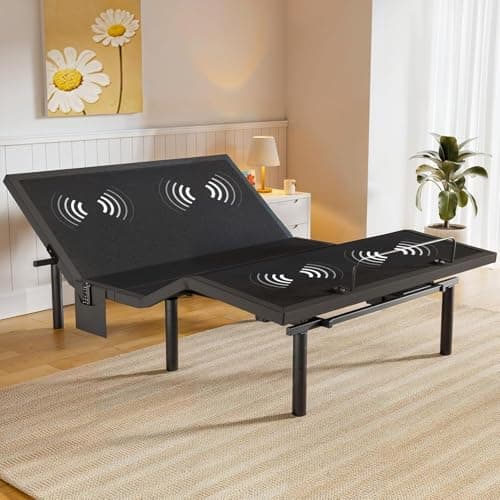
Our top pick — Amada 01B-Q1 Queen Adjustable Bed Frame
Comparison
Acid Reflux
Start with the cheap answer. If it works you will know within a week, and only then is a base worth considering.
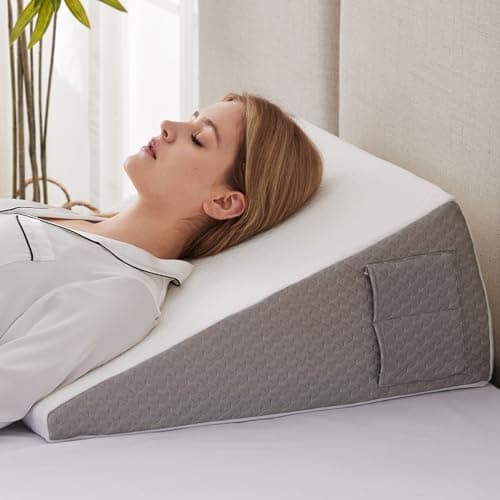
Our top pick — Ruqmuis Bed Wedge Pillow, 10 in
$38.99 · Check priceAs of September 21, 2026. #ad How we’re funded
Head to head
Adjustable Bed vs Hospital Bed
Two different products that look similar in photographs. One is furniture, one is medical equipment, and only one of them Medicare will help with.
Guide
Are They Worth It?
Sometimes. Here are the four cheaper things to rule out first, and the three situations where a base is genuinely the right purchase.


Nothing here is medical advice. Prices are pulled live and stamped with the date they were checked; scores are our published spec rubric, not a test result. How we pick · How we make money · Corrections