Comparison
Getting in and out of bed after a stroke
One-sided weakness changes which side of the bed the person gets out of, and that decides every piece of hardware you buy. Set the side first, then the height, then the grip.
By Stephen V.Published How we pick
We earn a commission if you buy through the links on this page, at no extra cost to you. It does not change what we recommend, and we have not tested these products — here is what we do instead.
The verdict first: after a one-sided stroke the single decision that shapes everything else is which side of the bed the person gets out of — it has to be the side they can grip and push with. Set that, then set the height, then add one grip. If you are buying hardware, the DOMIA T600 queen is the base we would start from, because a powered head raise to 65 degrees does the part of the movement that trunk strength has to supply, and the Lesamediio HC035 rail is the grip, at a published 400 lb.
What changes, and which of it a bed can answer
A stroke does not usually make a person weaker all over. It makes one side unreliable, and the bed problem follows from that: every movement that used to be symmetrical now has a good side and a bad side. Four consequences show up at the bedside.
- Getting from flat to sitting needs trunk strength and two arms. This is the part a powered head raise genuinely replaces — the bed lifts the torso and the person finishes the movement.
- Sitting balance on the edge may be shaky for a while, which makes the pause between sitting and standing the most important part of the sequence rather than a waste of time.
- Standing happens through one leg and one arm. The height of the mattress and the position of the grip decide whether that is possible, and both are measurable in advance.
- Fatigue and dizziness are common early on, and standing up too fast after lying down can drop blood pressure for a moment. That is a falls risk in its own right — the bed side of dizziness on standing.
Set the side before you buy anything
If the left side is affected, the person gets out on the right, and the grip goes on the right. That sounds obvious and it is routinely got wrong, because the bed is where the bed has always been and one side of it faces a wall. Moving the bed is free, takes twenty minutes and is usually the single most effective change in the room. Do it before spending anything, and check the clear floor on the exit side — two feet is a reasonable minimum, more if a walker is in use. Getting out of bed with a walker.
Then set the height. The target is the ordinary one — feet flat, knees level with or just below the hips — but the margin for error is smaller when the push comes from one side. Measure what you have now before you decide the bed is wrong.
What each option publishes for this job
| Option | The part of the job it does | Published figure | Limit worth knowing |
|---|---|---|---|
| DOMIA T600 queen base | Lifts the torso toward sitting | Head to 65 degrees, foot to 45 | Publishes no description of its remote |
| Lesamediio HC035 rail | A grip to pull and push against | 400 lb; width 23-30.5 in | Stated as not for adjustable beds |
| Able Life Bedside Safety Handle | A vertical grip for standing | 300 lb; fits mattresses 6-14 in | No protection against rolling out |
| Able Life Click-N-Go rail | A grip on an adjustable base | 300 lb; mattresses 10-12 in | The only rail listed for adjustable frames |
| Home It risers | Raises the whole bed 3, 5 or 8 in | 1,300 lb per set of four | Changes height, not grip |
| Hospital bed | Carer height, rails, clinical mattress | Varies by model | A prescription and a coverage process |
The three we would buy
| # | Pick | Key spec | Score | Price |
|---|---|---|---|---|
| Rank1 | 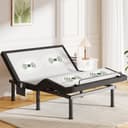 DOMIA T600 Queen Adjustable Bed Frame Best base for getting to sitting | Key specZero-G, anti-snorePresets | Score8.2/10 | |
| Rank2 | 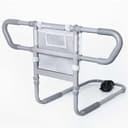 Lesamediio HC035 Bed Assist Rail Best grip to pull against | Key spec400 lbLoad rating | Score9.2/10 | |
| Rank3 | 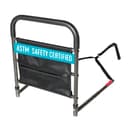 Able Life Bedside Safety Handle Best grip for standing | Key specStand assistType | Score8.0/10 |
Prices checked October 16, 2026. Scores are our published spec rubric, not a test result — here is exactly how they are calculated.
1 · Best base for getting to sitting
DOMIA T600 Queen Adjustable Bed Frame
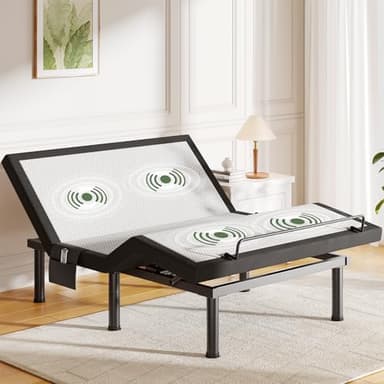
The only queen here that publishes both a zero-gravity and an anti-snore preset, on the only queen base in the set that also publishes a warranty term and a motor-noise figure.
- Presets
- Zero-G, anti-snore
- Our spec score
- 8.2/10
- Best for
- Both presets, published
As of October 16, 2026. #ad How we’re funded
What works
- Zero-gravity and anti-snore are both published as presets — no other queen in this set states both — alongside a 750 lb capacity this category usually leaves blank
- Motor noise given as a number, under 45 dB, rather than as the word quiet. Only two other bases in this set — both Tami Tami split kings — do that
- A five-year warranty on the frame and motor, and 30,000 tested lift cycles, both published. No other queen base here publishes a warranty term at all
What doesn’t
- The listing never says whether the remote is wireless or wired, and on a bed you operate from the mattress that is the control detail that matters most
- Three leg heights are published but not the depth of the deck sitting on them, so the finished sleep-surface height is still an estimate until it arrives
- The listing rules out a zero-clearance setup — the legs are required — so this cannot drop inside a frame you already own
Published specifications
| Positions | Head to 65 degrees and foot to 45 degrees, separately or together, plus zero-gravity and anti-snore presets |
|---|---|
| Motors | Dual, 8,000 N of thrust published, tested to 30,000 lift cycles |
| Leg height options | 3 heights up to 12 inches, from 4 in and 8 in leg sections |
| Frame height off floor | Not published |
| Remote | Not published |
| Weight capacity | 750 lb |
| Massage | Head and foot, multiple modes and intensity levels |
| USB ports | USB-A and USB-C |
| Motor noise | Under 45 dB |
| Under-bed light | Under-bed nightlight |
| Warranty | 5 years on frame and motor |
| Sizes listed | Queen |
Read from the product listing on 2026-09-10. Blanks are specifications the manufacturer does not publish, not figures we could not be bothered to find.
How the score was reached
| Entry-height controlThree leg-height options published with their measurements; four or more is the top band, and the frame height itself is not published. | 8 |
|---|---|
| ControlsThe listing never states whether the remote is wireless — the neutral score on /methodology. | 5 |
| Weight capacity750 lb published — the top band on /methodology. | 10 |
| Position rangeHead and foot, separately or together, plus published zero-gravity and anti-snore presets. | 9 |
| Setup and daily useAll three: USB-A and USB-C ports, an under-bed nightlight and a published tool-free five-minute assembly. | 9 |
| Mean, rounded to one decimal | 8.2 |
2 · Best grip to pull against
Lesamediio HC035 Bed Assist Rail
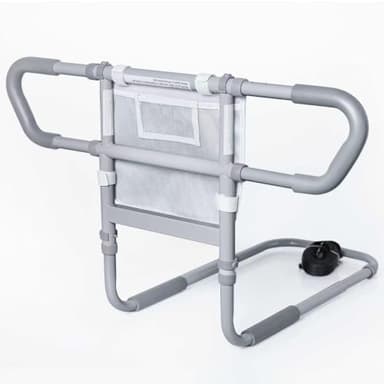
The highest published load rating here at 400 lb, on a rail that names the exact ASTM standard rather than gesturing at one.
- Load rating
- 400 lb
- Our spec score
- 9.2/10
- Best for
- The highest published load rating
As of October 16, 2026. #ad How we’re funded
What works
- It publishes a 400 lb load rating — the one number you actually lean on, and the highest figure any rail here prints
- It names the standard instead of gesturing at it: ASTM F3186-17, the standard 16 CFR part 1270 made mandatory in August 2023
- Published width and height adjustment, so the grip can be set where your hand falls from sitting, plus a motion sensor light and a safety strap to the opposite side of the frame
What doesn’t
- The listing states it is not compatible with adjustable beds. If the deck bends, this is the wrong rail
- One handrail, not a U-bar — there is no second grip height for anyone who pushes up in two stages
- The light's brightness, run-time and power source are not published, and a sensor light is the first component to fail on an inexpensive rail
Published specifications
| Standard claimed | ASTM F3186-17, named on the listing |
|---|---|
| Load rating | 400 lb |
| Light | Motion sensor night light |
| Grip form | Single padded non-slip handrail |
| Adjustable | Width 23–30.5 in, height 20.5–23.5 in |
| Stabilizer bar | Extends to 28 in under the mattress |
| Storage pocket | Yes — detachable |
| Fits | Twin, full, queen and king; not adjustable beds |
Read from the product listing on 2026-08-26. Blanks are specifications the manufacturer does not publish, not figures we could not be bothered to find.
How the score was reached
| Standard complianceNames ASTM F3186-17 specifically — the standard 16 CFR part 1270 made mandatory — not a generic ASTM claim. | 10 |
|---|---|
| Grip and reachPadded non-slip handrail with published width and height adjustment; one grip height, not two. | 9 |
| Load rating400 lb published — the highest figure any rail here states. | 10 |
| FitTwin, full, queen and king published; explicitly not for adjustable beds. | 8 |
| Night useMotion sensor light published; no brightness or run-time figure. | 9 |
| Mean, rounded to one decimal | 9.2 |
3 · Best grip for standing
Able Life Bedside Safety Handle
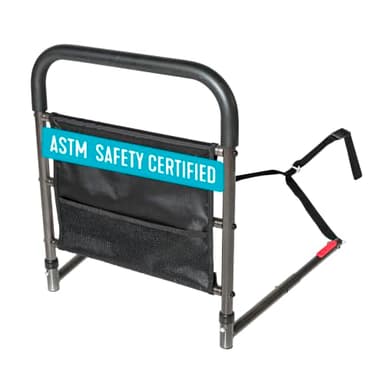
A padded stand-assist handle rather than a guard rail — the right tool if the problem is standing up, not rolling out.
- Type
- Stand assist
- Our spec score
- 8.0/10
- Best for
- Standing up, not staying in
As of October 16, 2026. #ad How we’re funded
What works
- Height adjustable, so the grip can sit where your hand naturally reaches from sitting
- Padded grip, which matters if arthritis makes a bare steel tube unpleasant to hold hard
- A published 300 lb load rating and a published fit across king, queen, full and twin
What doesn’t
- It is a handle, not a rail. It will not stop anyone rolling out of bed, and it is not meant to
- 300 lb is the lowest published rating of the rails here, and standing up loads a handle harder than sitting on it does
- No light, and the listing rules out adjustable beds and extra-soft mattresses
Published specifications
| Type | Stand-assist handle (not a full-length guard rail) |
|---|---|
| Standard claimed | ASTM safety approved |
| Height adjustable | Yes |
| Padding | Padded grip |
| Load rating | 300 lb |
| Fits | King, queen, full and twin beds; mattresses 6–14 in thick |
| Light | Not published |
Read from the product listing on 2026-08-26. Blanks are specifications the manufacturer does not publish, not figures we could not be bothered to find.
How the score was reached
| Standard complianceASTM compliance stated on the listing. | 9 |
|---|---|
| Grip and reachHeight adjustable with a published padded grip. | 9 |
| Load rating300 lb published — the lowest published figure of the rails here. | 8 |
| FitKing, queen, full and twin all published, with a 6–14 in mattress window. | 9 |
| Night useNo light published — neutral score. | 5 |
| Mean, rounded to one decimal | 8.0 |
DOMIA T600 queen — for the person who cannot get from flat to sitting. It publishes head lift to 65 degrees and foot lift to 45, independently or together, plus zero-gravity and anti-snore presets, dual motors with 8,000 N of thrust, a 30,000-cycle lift test, under 45 dB and a five-year warranty. It is also the base with the most complete spec sheet of the fourteen we track. Its blank is the remote, which the listing never describes — worth asking the seller about, because after a stroke the handset is operated one-handed.
Lesamediio HC035 — for the pull. The highest published load rating of the six rails and handles we track at 400 lb, a grip width adjustable from 23 to 30.5 inches, a height adjustment of 20.5 to 23.5 inches and a 28-inch stabilizer bar under the mattress. It names ASTM F3186-17 by number and carries a motion-sensor night light. Two honest limits: it publishes no mattress-depth window at all, and its listing states it is not for adjustable beds — so on a powered base, use the Click-N-Go instead.
Able Life Bedside Safety Handle — for the stand. A padded, height-adjustable vertical grip rated to 300 lb with the widest published depth window on the site, 6 to 14 inches. This is the one to buy when the person can get to sitting unaided but the last six inches of standing fail. It is not a guard rail and gives no protection against rolling out of bed. The full handle comparison.
When the honest answer is a hospital bed
A consumer adjustable base is bedroom furniture with a motor. A hospital bed is clinical equipment: it changes the height of the whole deck so a carer is not bending, takes full-length rails as designed accessories rather than aftermarket ones, and pairs with pressure-relieving mattresses. If the person is spending most of the day in bed, needs two people to transfer, or is at risk of pressure injuries, the bed to be asking about is that one — and it may be covered where a physician documents the need.
That route is slower and it is paperwork, but it is the one that pays. What a hospital bed does differently, how one gets approved, and preventing pressure sores in bed are the three pages to read in that order.

Every product figure above was read from the live Amazon listing of that product on the date stamped in its own specification table, and every blank is reported as a blank. The description of what a stroke changes at the bedside is general information drawn from the MedlinePlus rehabilitation source named above; it is not a care plan, we have not tested any of this equipment, and nothing here replaces the assessment of the person's own therapist. How we pick.
Questions people actually ask
How do you help a stroke patient get out of bed?
Work toward the stronger side, not the weaker one. The usual sequence is to raise the head of the bed so the person starts from a partly upright position, roll toward the stronger side, drop the feet over the edge, push up through the stronger arm against a fixed grip, then pause sitting before standing. Which side is which, and how much help is safe to give, is a question for the person's physical or occupational therapist rather than for a website — rehabilitation after a stroke is individually assessed, as the MedlinePlus source below sets out.
Is an adjustable bed good after a stroke?
It helps with one specific thing: getting from flat to sitting. A powered head raise does the part of the movement that needs trunk strength, and the person finishes the rest. What it does not do is help with standing, transfers, or any of the clinical equipment a hospital bed provides — carer-height adjustment, full side rails, a pressure-relieving mattress platform. If the person is spending most of the day in bed, that is the hospital bed conversation instead. Adjustable bed versus hospital bed.
Which side of the bed should the bed rail go on?
On the side the person gets out from, which after a one-sided stroke is normally the stronger side — they have to be able to grip it. A rail on the weaker side is furniture. If the layout of the room means the stronger side faces a wall, moving the bed is the cheaper intervention and it should happen before any hardware is bought.
What bed height is right after a stroke?
The same target as anyone else, measured rather than guessed: sitting on the edge, feet flat on the floor, knees level with or just below the hips. The difference after a stroke is that an inch matters more, because the push to standing is coming from one leg and one arm rather than four limbs. How to measure your own number, and risers are the cheapest way to change it.
Are bed rails safe for someone recovering from a stroke?
It depends on whether they can reliably operate them and judge their own limits. A rail used as a grip by an alert person is doing the job it was designed for. A rail that someone confused tries to climb over is a hazard, and after a stroke that affects attention, perception or judgement, that risk is real. The FDA's entrapment guidance exists because of injuries that happened that way. Who should not use a bed rail.
Will Medicare pay for a bed after a stroke?
Possibly, through the hospital bed route rather than the adjustable bed route. Medicare's durable medical equipment benefit can cover a hospital bed when a physician documents a medical need that the bed answers; a consumer adjustable base bought online is not covered equipment. How a hospital bed gets approved.
Sources
Every factual claim on this page traces to one of these, or to a product listing cited in the specification table beside it.
Read next
Guide
Parkinson's and Mobility
Bed mobility is often the hard part. A higher firmer edge, a head raise and a grip help you move, with your therapy team, not instead of it.
Guide
Post-Surgery Recovery
Elevation can make recovery more comfortable and getting up safer. What a bed helps with, and what stays with your surgical team.
Head to head
Adjustable Bed vs Hospital Bed
Two different products that look similar in photographs. One is furniture, one is medical equipment, and only one of them Medicare will help with.
Comparison
Getting-Up Aids
Three kinds of hardware do three different jobs. Which one you need depends on whether the failure is pulling up, standing up, or a bed that is simply the wrong height.
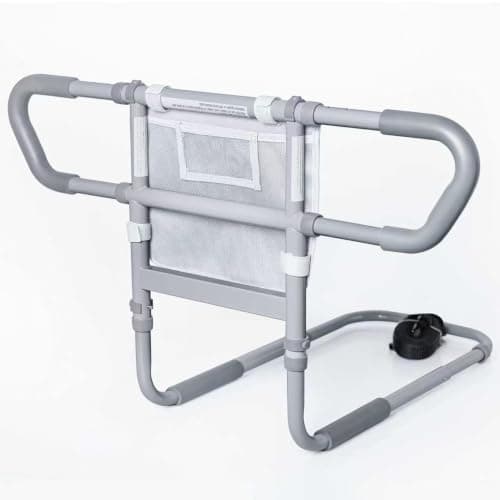
Our top pick — Lesamediio HC035 Bed Assist Rail
$69.99 · Check priceAs of October 16, 2026. #ad How we’re funded
Guide
Best Bed Height for Seniors
A calculator that shows its working, because the right answer depends on your legs and not on an average.
Guide
Pressure Sores
Repositioning matters more than any mattress angle. How a bed helps a caregiver, the shear caution, and when this needs clinical equipment.
Guide
Getting a Bed Approved
What the physician actually has to document, in what order, and the two mistakes that produce most denials.



Nothing here is medical advice. Prices are pulled live and stamped with the date they were checked; scores are our published spec rubric, not a test result. How we pick · How we make money · Corrections