Comparison
The best transfer belts and gait belts
Every listing counts its handles. Only three of five say what the belt will hold. Scored on published load rating, waist range and width.
By Stephen V.Published How we pick
We earn a commission if you buy through the links on this page, at no extra cost to you. It does not change what we recommend, and we have not tested these products — here is what we do instead.
A transfer belt is a wide webbing band buckled round somebody's waist, with handles sewn onto it. A second person holds the handles instead of holding an arm, a waistband or a hand, and guides the move from bed to wheelchair, or steadies a walk down a hallway. It is the cheapest product on this entire site and the only one here that does nothing whatsoever on its own.
Buy it on the published load rating, because the category does not want you to. Every listing below leads with a handle count — six handles, seven handles, eight grips — and a handle count is a count of places to grab, not a statement about what the webbing and the buckle will carry. Three of these five publish a load figure. Two publish none. That is the gap this page is built around.
| # | Pick | Key spec | Score | Price |
|---|---|---|---|---|
| Rank1 | 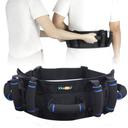 KkaFFe Gait Belt with 7 Handles Best overall | Key spec360 lbLoad published | Score8.3/10 | |
| Rank2 | 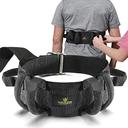 Medical King Gait Belt with 6 Handles, 50" Highest published load, lowest price | Key spec500 lbLoad published | Score7.3/10 | |
| Rank3 | 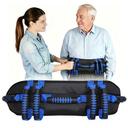 WSYDKNS Gait Belt with 7 Handles, 5" Wide Widest belt published | Key spec300 lbLoad published | Score7.5/10 | |
| Rank4 | 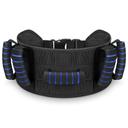 Silimore Gait Belt with 7 Handles Widest waist range | Key spec32-55 inWaist range | Score7.5/10 | |
| Rank5 | 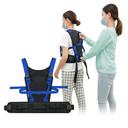 KAVIL Transfer Vest Belt with 8 Grips Most hardware, least published · we would skip this one | Key spec30-44 inWaist range | Score5.8/10 |
Prices checked November 24, 2026. Scores are our published spec rubric, not a test result — here is exactly how they are calculated.
These five are the shapes this category comes in: plain webbing belts at three price points, a wide five-inch belt, and a vest with shoulder straps. We have not used any of them and do not claim to have. What we have done is read every specification each listing publishes, record the blanks rather than fill them, and score them against bands we publish in full. Prices are checked live and we earn a commission if you buy through them — how that works.
Measure two things, in this order
- The waist of the person who will wear it, over clothing. Not the trouser size. Four of the five here publish a range, and those ranges start at 30 or 32 inches and stop at 44, 46, 50 or 55. The spread at the top end is eleven inches, which is a different product for a different body.
- The weight the belt will actually be asked to take. Not body weight — the share of it that comes through the belt during an assisted stand, which is a judgment, not a number you can look up. What you can do is refuse to buy a belt that publishes nothing, because then you are guessing against a blank instead of against a figure.
The load rating nobody leads with
Here is the pattern across the five listings. The Medical King publishes 500 pounds, in its title. The KkaFFe publishes 360, in a feature bullet. The WSYDKNS publishes 300, also in a bullet — and uses the word bariatric in the same listing, which sits badly beside the lowest figure in the set. The Silimore publishes nothing. The KAVIL vest, which is the most expensive product here by a factor of three, publishes nothing either.
What all five publish instead is handles. Six, seven, seven, seven and eight. It is an easy number to print and an easy number to photograph, and it tells you something real about working angles — but it is not load-bearing information, and a listing that counts grips while staying silent about webbing strength has chosen which question to answer. The one listing that breaks the pattern is the KkaFFe, which publishes the figure, the waist range, the width, the webbing type and the fact that the stitching at the handle seam is cross-reinforced. That seam is where this product fails.
How we scored them
Four criteria, averaged with no weighting, rounded to one decimal. An unpublished specification scores five — neutral — and the write-up says so rather than guessing. A specification that is published and unhelpful can score below five, because that is information rather than silence. The full rubric.
- Load disclosure. Whether a figure is published at all, and how it compares. This is the criterion the category is worst at, and the one with consequences.
- Fit disclosure. The published waist range and the belt width in inches. A range without a width tells you it will go round and nothing about how the pressure lands on the ribs of a thin, frail person.
- Grip and hardware. Handle count, handle orientation, buckle mechanism, and the materials and stitching named. Orientation matters more than count: vertical grips are for lifting, horizontal for steadying.
- Care and ownership. Warranty, non-slip measures, washing, and — scored here as a positive — whether the listing publishes the limits of its own product.
The five belts side by side
| Belt | Load | Waist range | Width | Handles |
|---|---|---|---|---|
| KkaFFe | 360 lb | 30-46 in | 5.1 in | 7 |
| Medical King | 500 lb | Not published | Not published | 6 |
| WSYDKNS | 300 lb | 30-50 in | 5 in | 7 |
| Silimore | Not published | 32-55 in | Not published | 7 |
| KAVIL vest | Not published | 30-44 in | Not published | 8 |
Read down the first two columns and the trade is obvious: nothing here publishes both the highest load and the widest fit. The belt with the biggest number has no waist range at all, and the belt with the longest reach has no load figure. If the person being helped is both heavy and broad, this category currently asks you to pick which blank you are willing to live with — and that is the honest finding rather than a failure of the shortlist.
The width column is the one most buyers skip, and it is the comfort decision. Five inches of webbing spreads the pull across the lower ribs and the top of the pelvis. A narrow strap concentrates it, and on somebody thin, frail or recently operated on that is the difference between a belt they will tolerate and one they refuse to wear twice. Two of the five publish a width.
The five transfer belts in full
1 · Best overall
KkaFFe Gait Belt with 7 Handles
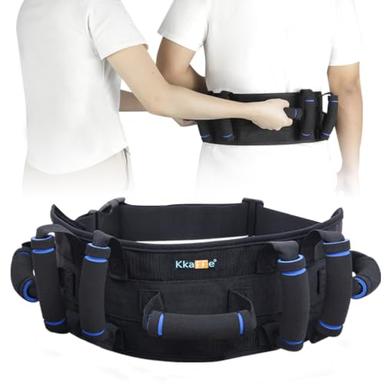
The most completely specified belt here: a load figure, a waist range and a belt width in inches, all three published, which no other entry manages.
- Load published
- 360 lb
- Our spec score
- 8.3/10
- Best for
- The fullest specification
As of November 24, 2026. #ad How we’re funded
What works
- The only belt here that publishes all three fit-and-safety numbers at once: 360 lb, a 30 to 46 inch waist range and a 5.1-inch width
- Names the construction properly — nylon webbing, cross-reinforced stitching where the handles meet the belt, which is the seam that fails
- Publishes an anti-slip measure on the inside face, so the claim is a feature rather than a hope
- Seven handles set at different angles, which is the thing that lets one caregiver work from the side of a bed rather than reaching across it
What doesn’t
- A 46-inch top end on the waist range. That is the narrowest ceiling in this set and rules out the bariatric use its own 360 lb figure invites
- No overall belt length published, only the waist range it fits
- No warranty term published
- The listing copy is machine-translated and reads badly, which is not a product fault but does make the specification harder to verify than it should be
Published specifications
| Load published | 360 lb |
|---|---|
| Belt length | Not published |
| Waist range | 30 to 46 inches |
| Belt width | 5.1 inches |
| Handles | 7, sponge-wrapped, set at different angles |
| Buckle | Quick-release with a polymer locking-tooth structure |
| Material | Nylon and polyester, high-density nylon webbing, cross-reinforced stitching at the handles |
| Non-slip lining | Built-in anti-slip adhesive points |
| Warranty | Not published |
| Standards claim | Not published |
Read from the product listing on 2026-11-22. Blanks are specifications the manufacturer does not publish, not figures we could not be bothered to find.
How the score was reached
| Load disclosure360 lb published in the feature bullets; second-highest figure here and the one published alongside a waist range. | 8 |
|---|---|
| Fit disclosureA 30 to 46 inch waist range and a 5.1-inch width both published; the 46-inch ceiling is the only thing holding this below ten. | 9 |
| Grip and hardwareSeven angled padded handles, a described buckle mechanism, named webbing and reinforced stitching at the handle seam. | 10 |
| Care and ownershipAnti-slip lining published; no warranty and no care instruction. | 6 |
| Mean, rounded to one decimal | 8.3 |
2 · Highest published load, lowest price
Medical King Gait Belt with 6 Handles, 50"
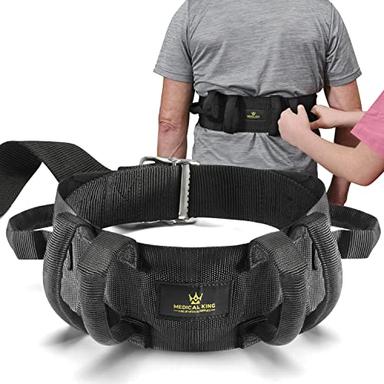
The highest published load figure in the category at 500 lb, the only published warranty, and the lowest price on the page — with a specification sheet that lives almost entirely in the title.
- Load published
- 500 lb
- Our spec score
- 7.3/10
- Best for
- The highest published load
What works
- Five hundred pounds published, which is 140 lb above the next-highest figure here and 200 above the lowest
- The only entry in the category with a warranty term in its listing, and the term is lifetime
- Cheapest on the page by a wide margin, and it is not the one publishing the least about what it holds
- A single published belt length of 50 inches, which is at the long end of this set
What doesn’t
- The feature bullets publish nothing. Every number this entry has — the 500 lb, the 50 inches — is in the title, and the bullets are adjectives and a Christmas-gift line
- No waist range, so the 50-inch length is the only fit figure. The belts that publish a range tell you where the adjustment actually starts
- "Meets all USA safety requirements" names no standard, no test and no body. We record it because it is published, and we do not treat it as evidence of anything
- No material published, no belt width in inches, and nothing about a non-slip lining — three things the Silimore and KkaFFe both state
Published specifications
| Load published | 500 lb (title) |
|---|---|
| Belt length | 50 inches (title) |
| Waist range | Not published |
| Belt width | Described as "extra wide"; no figure published |
| Handles | 6, padded |
| Buckle | Quick-release |
| Material | Not published |
| Non-slip lining | Not published |
| Warranty | Lifetime, published in the listing's warranty field |
| Standards claim | "Meets all USA safety requirements" — no standard named |
Read from the product listing on 2026-11-22. Blanks are specifications the manufacturer does not publish, not figures we could not be bothered to find.
How the score was reached
| Load disclosure500 lb published, the highest figure in the set, in the title. | 10 |
|---|---|
| Fit disclosureA 50-inch length published and no waist range and no width figure — half the fit picture. The neutral score. | 5 |
| Grip and hardwareSix padded handles and a quick-release buckle published; two fewer handles than most of this set, and no material named. | 6 |
| Care and ownershipA lifetime warranty published in the listing's own warranty field — the only warranty in the category. | 8 |
| Mean, rounded to one decimal | 7.3 |
3 · Widest belt published
WSYDKNS Gait Belt with 7 Handles, 5" Wide
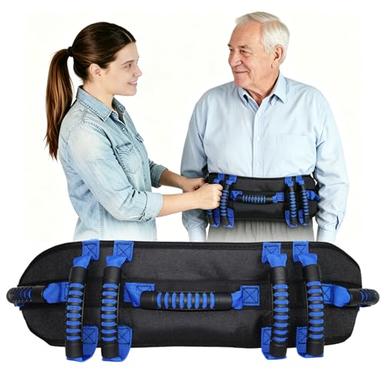
A five-inch belt with a published load figure and a published range, aimed at the caregiver's back rather than the patient — and the only listing here that says so in those words.
- Load published
- 300 lb
- Our spec score
- 7.5/10
- Best for
- Spreading the load on the wearer
As of November 24, 2026. #ad How we’re funded
What works
- Publishes a load figure, a waist range and a width together, which only one other belt here does
- Five inches wide with a stated reason: the width is there to spread the pressure on the person wearing it, not to look substantial
- A one-handed quick release published as such. On a transfer that goes wrong, the buckle being workable with the other hand full is the whole point
- The only listing in the set that frames the product around the caregiver's lower back, which is an honest description of what a gait belt is actually for
What doesn’t
- Three hundred pounds is the lowest published figure here, and the listing uses the word bariatric in the same breath. Those two things sit badly together
- No belt length published, only the waist range
- The non-slip claim names no mechanism — no adhesive points, no inner pad, just the word
- No warranty term published
Published specifications
| Load published | 300 lb |
|---|---|
| Belt length | Not published |
| Waist range | 30 to 50 inches |
| Belt width | 5 inches |
| Handles | 7, padded, described as positioned for grip from any angle |
| Buckle | Quick-release, published as one-handed operation |
| Material | High-strength nylon with reinforced stitching; breathable, tear-resistant fabric and a gentle inner lining |
| Non-slip lining | Published as a non-slip fit; no mechanism named |
| Warranty | Not published |
| Standards claim | Not published |
Read from the product listing on 2026-11-22. Blanks are specifications the manufacturer does not publish, not figures we could not be bothered to find.
How the score was reached
| Load disclosure300 lb published, which is a real figure but the lowest here and sits oddly beside the listing's own bariatric framing. | 7 |
|---|---|
| Fit disclosureA 30 to 50 inch range and a 5-inch width both published. | 9 |
| Grip and hardwareSeven padded handles, a one-handed quick release and named nylon with reinforced stitching. | 9 |
| Care and ownershipA non-slip claim with no mechanism and no warranty or care instruction. The neutral score. | 5 |
| Mean, rounded to one decimal | 7.5 |
4 · Widest waist range
Silimore Gait Belt with 7 Handles
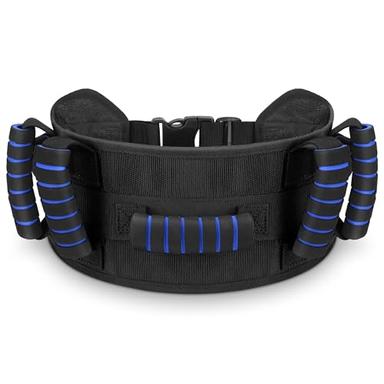
The widest published waist range here by eight inches, and the only listing in the category that states in its own bullets what the belt must not be used for.
- Waist range
- 32-55 in
- Our spec score
- 7.5/10
- Best for
- The widest fit range
What works
- Thirty-two to fifty-five inches. That is the only range here that reaches past a 50-inch waist, and it starts lower than the KkaFFe as well
- The only listing in this category that publishes its own limits: not a floor lift, not a substitute for a mechanical hoist, not for solo use by somebody with balance problems. A seller telling you when not to use the product is worth more than another adjective
- Publishes the handle geometry rather than just the count — four vertical and three horizontal, which is what decides whether you can pull upward or steady sideways
- Names an inner non-slip pad and hedges the claim honestly, saying it is designed to help limit shifting rather than promising it will not move
What doesn’t
- No load figure published anywhere. On a product whose entire job is taking a person's weight through a buckle, that is the blank that matters most, and three of the five here fill it
- No belt width published, so there is no way to tell whether the pressure is spread over five inches or two
- The most expensive belt here apart from the vest, and the one with the biggest hole in its specification
- No warranty term published
Published specifications
| Load published | Not published |
|---|---|
| Belt length | Not published |
| Waist range | 32 to 55 inches (feature bullets and listing size field) |
| Belt width | Not published |
| Handles | 7 foam-padded — four vertical and three horizontal |
| Buckle | Quick-release |
| Material | Durable nylon with reinforced stitching |
| Non-slip lining | An inner non-slip pad, described as helping limit shifting |
| Warranty | Not published |
| Published limits | States it is not intended to lift a person off the floor or replace a mechanical patient lift, and should not be used alone by someone with balance problems |
Read from the product listing on 2026-11-22. Blanks are specifications the manufacturer does not publish, not figures we could not be bothered to find.
How the score was reached
| Load disclosureNo load figure published anywhere in the listing. The neutral score, and the most consequential blank in this category. | 5 |
|---|---|
| Fit disclosureA 32 to 55 inch range published, the widest here; no belt width figure. | 8 |
| Grip and hardwareSeven padded handles with their orientation published, a quick-release buckle, nylon and reinforced stitching named. | 9 |
| Care and ownershipPublished use limits and a safety warning in its own bullets, which nothing else here offers; no warranty term. | 8 |
| Mean, rounded to one decimal | 7.5 |
5 · Most hardware, least published · we would skip this one
KAVIL Transfer Vest Belt with 8 Grips
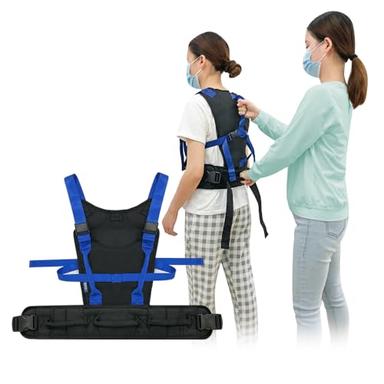
We would skip this one. It is a vest rather than a belt, it costs more than three of these belts put together, and it publishes no load figure and the narrowest waist recommendation on the page.
- Waist range
- 30-44 in
- Our spec score
- 5.8/10
- Best for
- Nothing we would recommend it for
As of November 24, 2026. #ad How we’re funded
What works
- Eight grips, the most on this page, in two orientations
- Shoulder straps. The listing's own tip explains why they are there: tightening them reduces how far the vest rides up when the caregiver pulls, which is a real failure mode of a plain belt
- Names a mesh-and-nylon construction rather than calling it durable and stopping
What doesn’t
- No load figure published. On the most expensive product in the category, that is not a small gap
- A recommended waist of 30 to 44 inches is the narrowest in this set, and a vest with shoulder straps is exactly the product you would expect to reach further, not less far
- It costs roughly four times the belts around it, and the specification it publishes is thinner than three of them
- The listing lists conditions it is beneficial for — Parkinson's, Alzheimer's, cerebral palsy and more — with nothing published behind any of them. We do not score that as evidence
- No warranty term published
Published specifications
| Load published | Not published |
|---|---|
| Belt length | Not published |
| Waist range | Recommended 30 to 44 inches |
| Belt width | Not published |
| Handles | 8 grips — four horizontal and four vertical, secured to a vest |
| Buckle | Quick-release latch |
| Material | Mesh pad with nylon webbing |
| Non-slip lining | Not published |
| Shoulder straps | Yes — the vest adds shoulder straps the belts do not have |
| Warranty | Not published |
Read from the product listing on 2026-11-22. Blanks are specifications the manufacturer does not publish, not figures we could not be bothered to find.
How the score was reached
| Load disclosureNo load figure published. The neutral score. | 5 |
|---|---|
| Fit disclosureNot a blank but a published limit: a 30 to 44 inch recommendation, the narrowest in the set, on the product with the most hardware. Below neutral because it rules buyers out rather than saying nothing. | 4 |
| Grip and hardwareEight grips in two orientations plus shoulder straps and a quick-release latch, all published. | 9 |
| Care and ownershipNo warranty, no care instruction, no non-slip measure. The neutral score. | 5 |
| Mean, rounded to one decimal | 5.8 |
Four of these five cost less than a takeaway meal, which is unusual on this site and worth saying plainly: the price is not the decision here, and buying the cheapest is not the mistake people make in this category. The mistake is buying one at all when there is nobody to hold it. If two belts both fit, the tie-breakers we would use are the published load figure first, then the width, then whether the listing is honest about what the product cannot do.
What none of these publish
The blanks are consistent right across the category:
- A test standard. One listing says it meets all USA safety requirements and names no standard, no test method and no certifying body. That is the closest any of the five comes to a standards claim. We record that the sentence exists and we score it at nothing, because a claim with no referent is not verifiable by anybody.
- A washing instruction. These are products worn against a body during physical effort, often daily, often by someone with continence issues. Not one of the five publishes a wash temperature, a cycle, or whether the webbing can go in a machine at all.
- A buckle load rating separate from the belt. The buckle is the single point of failure and four of the five are a moulded plastic quick-release. Only the KkaFFe describes the mechanism in any detail, and none of them rates it independently of the webbing.
- A replacement or wear indicator. Webbing abrades and stitching fatigues. Nothing here tells you when to stop using it.
- Instructions for the person doing the lifting. The product's entire safety profile depends on technique, and the listings sell handles. The Silimore gets a point in our scoring for being the one that at least draws a boundary round its own use.
What to use instead, if nobody else is there
This is the section we would want a relative to read first. A transfer belt is a handle for a helper. If the situation is a person getting themselves out of bed at two in the morning in an empty house, the belt is not merely unhelpful — buying it can delay buying the thing that would have worked.
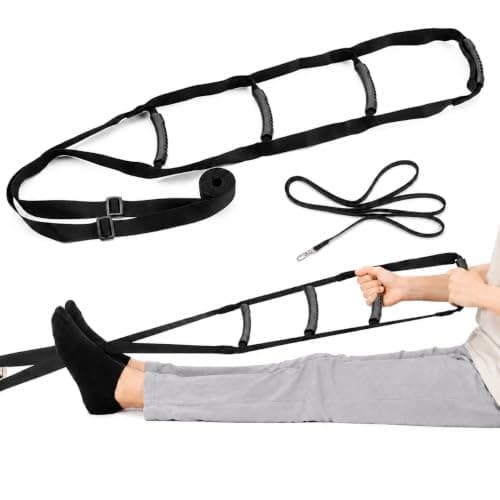
- Cannot get from lying to sitting. That is a bed ladder assist: a strap of handles anchored to the bed frame that you pull yourself up along, hand over hand. It is the cheapest answer to the half of getting out of bed that nothing else addresses.
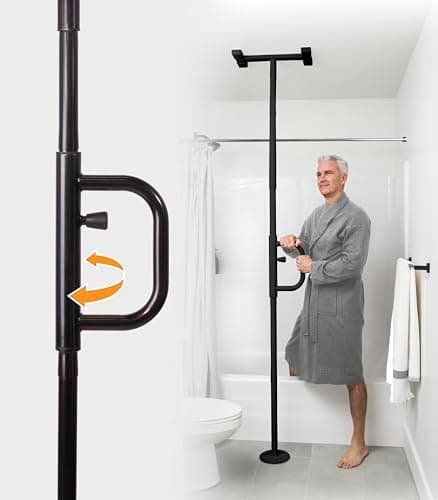
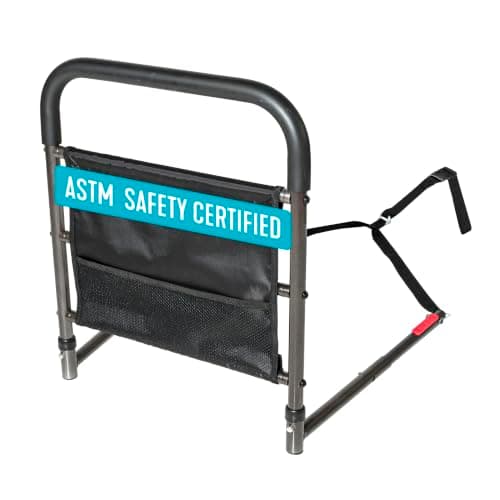
- Can sit up, cannot stand. That is a bed assist rail or handle at the side of the mattress, or a floor-to-ceiling transfer pole if standing and then turning is the problem.
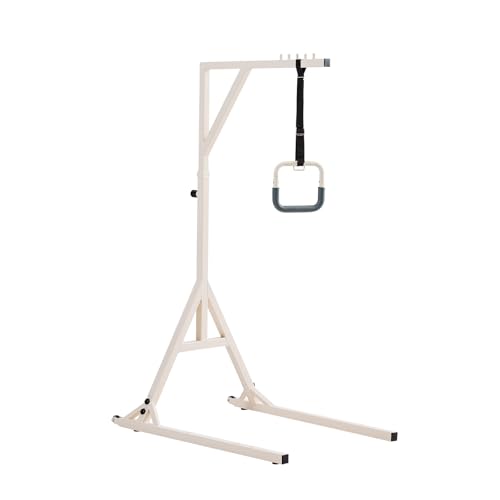
- Cannot reposition in the bed at all. That is an overhead trapeze bar, which gives both hands something fixed above the chest to pull against.
- The bed itself is the problem. A bed too high or too low makes every one of the above harder. The height arithmetic is here, and it is free to check.
Living with one
- Over clothing, never on bare skin. The webbing is not padded on any of these and a tightened belt on skin during a lift is how you get a friction burn on somebody with thin skin.
- Snug, below the ribs, above the hips. Loose is the common error and it is the dangerous one: a loose belt rides up under the arms exactly when the load comes on. Two fingers under the belt is the usual rule of thumb.
- Check the buckle every single time. Four of these five are plastic quick-releases, chosen because they open in an emergency. A fastener designed to open under one hand is a fastener you confirm is shut.
- Never use it to lift somebody off the floor. If a person is down, a belt is not the tool and pulling on it risks two injuries instead of one. The Silimore listing says this; the other four do not, and it remains true for all of them.
- Replace it when the stitching at a handle starts to lift. The handle seam is the failure point, and it gives warning before it gives way.
Who should not buy one
- Anyone living alone. No second person, no use. The alternatives are in the section above, and one of them is probably the right purchase.
- Anyone whose relative cannot bear any weight. A belt assumes the person contributes. If they cannot, this becomes a dead-weight lift with a handle on it, and the injury lands on the carer.
- Anyone shopping after a fall has already happened. A belt does not get somebody off a floor. The fall-prevention work is free and on this checklist, and the landing-softening product is a bedside fall mat.
- Anyone who has been given a belt by a therapist and taught to use it. Use that one. The training is the part that matters and we cannot supply it.
- Anyone expecting it to help with walking a dog, a child, or a pet. Two of these listings reach for those uses. We score nothing for them.

Everything on this page is a reading of published specifications from live listings, recorded with the date we read them and scored against a rubric anyone can check. Where a listing is silent we say so — and in this category two of five are silent on the number that matters most. What we do and do not claim.
Questions people actually ask
What is the best transfer belt for seniors?
The one that publishes what it holds, what it fits and how wide it is — and of the five here only the KkaFFe publishes all three: 360 lb, a 30 to 46 inch waist and a 5.1-inch belt. If the person being moved is heavier than that range allows for, the Medical King publishes 500 lb and a 50-inch length, and it is also the cheapest belt on the page. If the waist is above 46 inches, the Silimore is the only one here that reaches 55.
What is the difference between a gait belt and a transfer belt?
In practice, nothing — the listings use the two words interchangeably, and all five products here are sold under both. Where the terms are used carefully, a gait belt is for walking alongside someone and a transfer belt is for moving them between a bed and a chair, but it is the same webbing and the same buckle. What does differ is handle count and placement, and that is worth checking: a belt with handles only on the sides is awkward for a transfer you have to make from the foot of the bed.
How much weight can a gait belt hold?
Three of the five listings here publish a figure and they range from 300 to 500 pounds. The other two publish none at all, which on a product whose job is to take a person's weight through a plastic buckle is the blank that matters. Note that the published figure is about the belt, not about you: a belt rated for 500 lb does not make lifting a 250 lb adult safe for one person, and the only listing here that says so in print is the Silimore.
Can you use a transfer belt by yourself?
No, and this is the thing the category never says plainly. A transfer belt is a handhold for a second person. It does nothing at all for somebody alone in a bedroom — there is no one holding it. If the person needing help is on their own at night, the products that work without a helper are a bed ladder assist for getting upright, a bed assist rail or handle for standing, or a floor-to-ceiling transfer pole for standing and turning.
What size gait belt do I need?
Measure the waist of the person who will wear it, over clothes, and buy a belt whose published range covers it with room to tighten. The five here publish ranges of 30-46, 30-50, 32-55 and a recommended 30-44 inches, plus one that publishes a 50-inch length and no range. A belt at the very top of its range has no adjustment left, and the adjustment is what stops it riding up under the arms during a lift.
Are transfer belts safe for someone who cannot bear weight?
No. Every honest description of this product assumes the person can take some of their own weight and follow an instruction, and the Silimore listing is the only one here that states it: not for lifting someone off the floor, and not a replacement for a mechanical patient lift. If the person cannot stand at all, a belt turns a transfer into a two-person lift of dead weight, which is how caregivers get hurt. That is a conversation with a clinician, not a purchase.
Sources
Every factual claim on this page traces to one of these, or to a product listing cited in the specification table beside it.
Read next
Comparison
Best Bed Ladders
A strap of handles you pull yourself up on, for under twenty dollars. Ranked on published load, handle count, length and how it anchors - and the one measurement nobody gives you.
Our top pick — Gpajdty Bed Ladder Assist, 4 Handles, Dual-Point
$11.99 · Check priceAs of November 24, 2026. #ad How we’re funded
Comparison
Best Transfer Poles
A pole you tension between floor and ceiling and stand up against. Ranked on the ceiling window, the grip, and the material - and every one of them publishes exactly 300 pounds.
Our top pick — Stander 1100-B Security Pole and Curve Grab Bar
Comparison
Best Assist Handles
If the difficulty is standing up rather than staying in, this is the product you actually want.
Our top pick — Able Life Bedside Safety Handle
$49.99 · Check priceAs of November 24, 2026. #ad How we’re funded
Comparison
Best Trapeze Bars
Two mounting kinds share one search term and only one works on a bed whose deck moves. Five compared on published capacity, height and footprint.
Our top pick — VEVOR Trapeze Bar with Floor Stand, 350 lb, 2 Casters
Guide
Getting Up With a Walker
The walker is not a handhold for standing up - AAOS says so plainly. What to push from instead, and why the bed's height does most of the work.
Our top pick — Able Life Bedside Safety Handle
$49.99 · Check priceAs of November 24, 2026. #ad How we’re funded
Guide
Best Bed Height for Seniors
A calculator that shows its working, because the right answer depends on your legs and not on an average.

Nothing here is medical advice. Prices are pulled live and stamped with the date they were checked; scores are our published spec rubric, not a test result. How we pick · How we make money · Corrections