Guide
A bedroom fall-prevention checklist
Most of what prevents a bedroom fall is free, dull, and never bought. Here is the list, grounded in the CDC's own falls guidance.
By Stephen V.Published How we pick
Here is the whole guide in one sentence: most of what prevents a fall around the bed is free, dull, and never bought. It is light, clear floor, the right footwear, a bed you can rise from, and a solid thing to hold where you stand. Hardware comes near the end, not the start. This checklist is grounded in the CDC's falls guidance and the home-hazard part of its STEADI framework, and it is arranged so you can walk into the room and work through it tonight.
Start with the number
The CDC reports that around one in four adults aged 65 and over falls each year, that falling once roughly doubles the chance of falling again, and that a large share of injuries needing treatment begin at home. That is not a reason to be frightened of the bedroom; it is a reason to spend twenty minutes on the boring list, because against numbers like those the boring list is what moves them.
The checklist
Walk the route you take from lying in bed to standing at the bathroom, in the dark, and check each of these as you go.
- Light you can reach lying down. A lamp, a touch light, or a motion night light within arm's reach of the pillow, so you never cross the floor before you can see it. A large share of bedroom falls happen on the unlit trip to the bathroom.
- A clear, lit path to the bathroom. Walk it. Anything you have to step over or around at night — a laundry basket, a footstool, a charging cable, the dog's bed — is a fall waiting for a dark night. Move it now, not later.
- No loose rugs on the route. Loose mats and curling rug edges are among the most common trip hazards named in fall-prevention guidance. Remove them or fix them down; a rug is not worth a hip.
- Footwear, not socks, on hard floors. Socks on wood or tile are skates. Non-slip slippers or grippy socks kept where you put your feet down make a measurable difference and cost almost nothing.
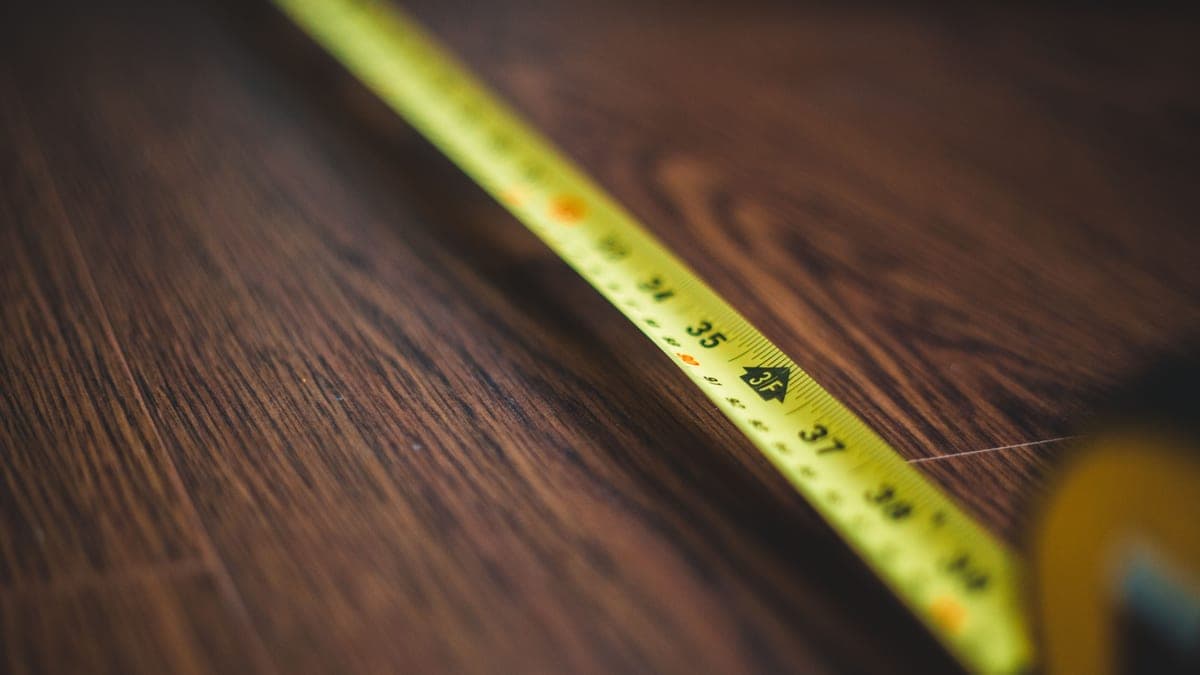
- A bed at the right height. Perch on the edge: feet flat, knees about a right angle. If you drop onto the mattress or slide off it, the height is wrong, and fixing it makes every transfer safer. Measure your target rather than guess.
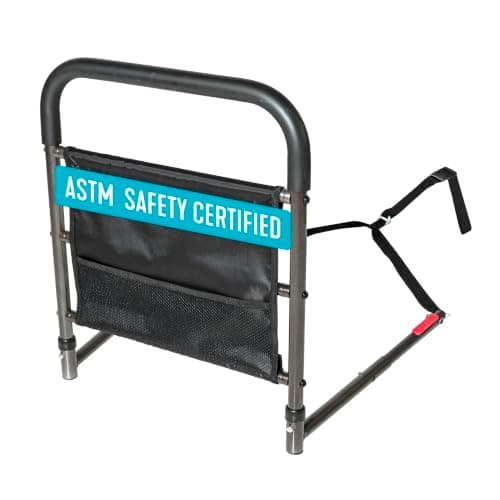
- A solid grab point where you stand. Something fixed and load-bearing to push up against as you rise — an assist handle beside the bed, not the bedside table, which slides, and not the lamp.
- Nothing you reach for that moves. Check what your hand actually grabs on the way up. If it is a rolling table, a wardrobe door or a curtain, that is a fall dressed up as support.
- A phone or call button within reach of the floor. Not a fall preventer, but the thing that decides whether a fall becomes a long wait. Keep it reachable from where you would land.
Lighting is the highest-value item
If you do only one thing from this page, make it the light. The pattern behind a large share of bedroom falls is the same: someone wakes, needs the bathroom, and stands or walks before their eyes have adjusted and before they can see the floor. A light within reach of the pillow breaks that pattern at its start. A motion-activated light that comes on as you move — including one built into a bedside grab bar — removes even the reach for a switch, which is why we rate that feature highly on the handles we track. Warm, low light is enough; you are lighting a path, not reading.
The floor between bed and bathroom
The single most productive thing you can do after lighting is to walk the night route in daylight and be ruthless about it. Every object on that path is only a hazard in the dark, half-asleep, in a hurry — which is exactly the condition you will be in. Loose rugs come up. Cables get routed around the wall. The path stays the same width the whole way, with a wall or a piece of solid furniture within reach if a hand is needed. This is free, it takes ten minutes, and it targets the exact moment most bedroom falls occur.
Where a product helps, and where it does not
Hardware has a place on this list, but a smaller one than the shopping results suggest. An assist handle earns its place if standing up is the hard part — it gives a fixed, load-bearing thing to push against instead of a bedside table that slides. A bed-height correction earns its place if the surface is wrong to rise from. A bed rail earns a place only for the specific person it suits, on the specific bed it fits, and it comes after the free changes, not instead of them — read the safety case and the alternatives before buying one, because for many people a rail is the wrong tool. A bed exit alarm is a different kind of purchase again: it changes how fast someone reaches you after a fall, not whether the fall happens.
For the person who might get up confused at night, the calculus flips: a barrier can make a fall worse, and a lower bed, better light and a clear path do more. Floor beds and fall risk covers that trade honestly, because a very low bed is safer to fall from and harder to rise from, and both halves are true.
Re-walk it every few months
A room does not stay tidy. Cables reappear, a rug comes back, a new footstool arrives, a mattress softens and drops the bed height. Put a reminder somewhere to walk the night route again a few times a year, and after any change — a new bed, a hospital stay, a change in eyesight or medication. The list is short precisely so that repeating it costs nothing.
Footwear and floor surfaces
It is worth pulling this one out of the list because it is so easily dismissed and so cheaply fixed. Socks on a wood or tile floor behave like skates, and the moment you are most likely to be in socks is the middle of the night. Non-slip slippers with a firm back you can step into without bending, or grippy-soled socks kept exactly where your feet come down, remove a hazard for the price of a small purchase. The floor itself matters too: a slick, freshly polished surface, a threshold strip between rooms, or the lip of a bathroom mat are all places a foot can catch. Walk the route and notice what your feet actually meet.
Grab points that are actually fixed
When people rise, they reach for whatever is nearest, and the bedroom is full of things that look supportive and are not. A bedside table slides. A wardrobe door swings. A lamp tips. A curtain tears away. The single upgrade here is to make sure the thing your hand naturally grabs on the way up is fixed and load-bearing — an assist handle anchored to the bed, or a wall-mounted grab bar by the bathroom door. It is a small change with an outsized effect, because it converts the most unstable second of the whole trip, the push to standing, into a controlled movement.
The things this list cannot fix
The home half of STEADI is the half you can act on tonight, but it is only half. The CDC's framework puts equal weight on the person: medications that cause dizziness or drowsiness, low leg strength and unsteady gait, uncorrected vision, and conditions that affect balance. None of those is fixed by moving a rug. If there have been falls or near-misses, the most valuable single step is to ask a doctor for a falls assessment and a medication review — some of the strongest risk factors are things a clinician can change and a checklist cannot. Treat this page as the environment, and the assessment as the person, and do both.
Questions people actually ask
How can seniors prevent falls in the bedroom?
Most of it is unglamorous and free: a light you can reach before your feet touch the floor, a clear path to the bathroom, no loose rugs, footwear rather than socks on hard floors, a bed at a height you can rise from in one movement, and a solid grab point where you stand. The CDC's falls guidance is about the whole environment, not one product.
What is the CDC STEADI initiative?
STEADI — Stopping Elderly Accidents, Deaths and Injuries — is the CDC's framework for clinicians to screen, assess and reduce fall risk in older adults. It emphasizes reviewing medications, checking gait and strength, correcting vision, and removing home hazards. This checklist turns the home-hazard part of it into steps you can do this week.
What height should a bed be to prevent falls?
The one where your feet sit flat on the floor with your knees at roughly a right angle when you perch on the edge — so you rise in one step rather than dropping onto it or sliding off. Our bed-height guide shows how to measure your own target rather than guess.
Do night lights actually reduce falls?
A large share of bedroom falls happen on the way to the bathroom in the dark, so being able to light the floor before you stand — a bedside lamp within reach, a motion night light, or a lit path — targets one of the highest-risk moments directly. It is one item on a list, not a cure on its own.
Is a bed rail part of fall prevention?
Sometimes, for the right person on the right bed — but it is one item near the end of the list, not the start. Many people who reach for a rail actually need a height change or an assist handle. Bed rail safety and the alternatives come before the purchase.
Sources
Every factual claim on this page traces to one of these, or to a product listing cited in the specification table beside it.
Read next
Comparison
Best Assist Handles
If the difficulty is standing up rather than staying in, this is the product you actually want.
Our top pick — Able Life Bedside Safety Handle
$49.99 · Check priceAs of September 21, 2026. #ad How we’re funded
Guide
Best Bed Height for Seniors
A calculator that shows its working, because the right answer depends on your legs and not on an average.
Guide
Bed Rail Safety
The federal rule, the seven entrapment zones, and the measurements to take on your own bed. The page to read before you buy anything.
Guide
Floor Beds and Fall Risk
Lowering a bed shortens the fall and makes standing up harder. Both halves of that are true, and the choice is real.

Nothing here is medical advice. Prices are pulled live and stamped with the date they were checked; scores are our published spec rubric, not a test result. How we pick · How we make money · Corrections