Head to head
CPAP vs an adjustable bed
One is a medical treatment, the other is furniture. The useful question is not which — it is what each one is for.
By Stephen V.Published How we pick
People ask which is better, a CPAP or an adjustable bed, as though the two were on the same shelf competing for the same money. They are not. One is a prescribed medical treatment for a diagnosed condition; the other is a piece of motorized furniture that changes how you sit and lie. The useful question is not which to choose — it is what each one is for, and where they happen to help each other.
What each one actually is
A CPAP machine delivers a steady stream of air through a mask, at a pressure set for you, which physically holds the airway open so it cannot collapse during sleep. It needs a diagnosis and a prescription, and it treats the condition itself. That is a medical device doing a medical job, and no amount of tilting a mattress reproduces it.
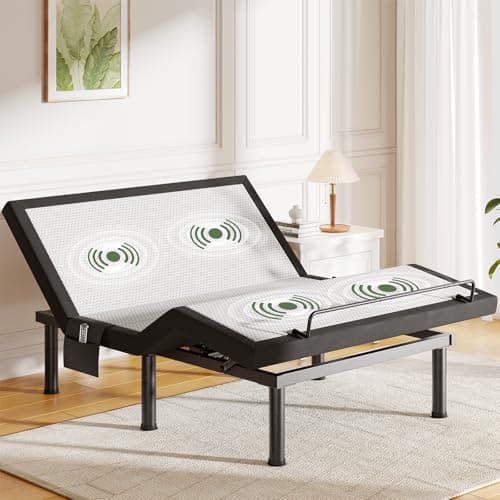
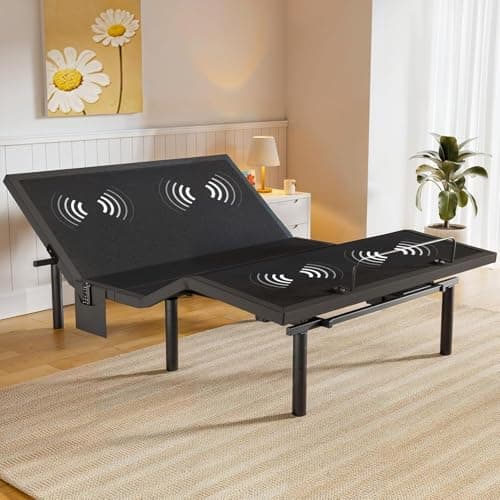
An adjustable base raises the head and, on most models, the feet. It changes your position: it can keep your upper body inclined all night, take some load off the lower back with a knee raise, lift swollen legs, and turn getting out of bed into a two-stage movement. For some people a raised head reduces ordinary snoring and eases mild positional breathing. What it never does is hold the airway open the way a machine does.
There is also a money difference that follows from the category difference. Because CPAP is a prescribed treatment for a diagnosed condition, it is often covered — by insurance, or for those who qualify by Medicare as durable medical equipment. An adjustable bed bought for comfort generally is not, because comfort furniture is not medical equipment. That gap is not a verdict on either product; it is the coverage system drawing the same line this page draws, between treating a condition and being more comfortable while you do.
The honest comparison
| CPAP | Adjustable bed | |
|---|---|---|
| What it is | A prescribed medical device | A piece of motorized furniture |
| Treats obstructive sleep apnea | Yes — the first-line treatment | No |
| Holds the airway open | Yes, mechanically | No |
| Needs a diagnosis or prescription | Yes | No |
| Raises the head for comfort, all night | No | Yes |
| Helps positional snoring for some | Not its purpose | Sometimes, mildly |
| Eases reflux by elevation | No | Yes, for some people |
| Raises the feet for swelling | No | Yes, on most models |
| Helps you get in and out of bed | No | Somewhat, as a two-stage lift |
| Can make the other easier to use | — | Yes — hose management, less aerophagia for some |
| Often covered with a diagnosis | Yes | Generally not, as a comfort item |
| Replaces the other | No | No |
Where they overlap, and where they do not
The overlap is narrow and worth being precise about. Both can touch snoring — CPAP by treating the apnea underneath it, a bed by a mild positional change for snoring that is not apnea. That is the only column where they appear to do a similar thing, and even there they are working on different problems. Everywhere else they simply do not compete: only the machine treats apnea, and only the bed does reflux, swelling, and getting up in the morning.
How an adjustable bed can help a CPAP user
- Hose management. An inclined upper body gives the hose a natural place to run, rather than dragging sideways across the mask every time you turn.
- Less aerophagia for some. Swallowed air from the CPAP pressure is uncomfortable, and a slightly raised head makes it less likely for some users — worth mentioning to whoever manages your therapy, who may also adjust the machine.
- Easier mask tolerance. Some people find a mask easier to settle into sitting slightly up than lying dead flat, especially in the first weeks.
- Getting up in the night. Raising the head to near-vertical before standing turns one hard movement into two easy ones, which matters more when you are also unclipping a mask and moving a hose. The technique is here.
None of those four are treating apnea. They are the reasons a CPAP user might also want a bed, which is a different sentence from a bed replacing the machine.
What the bed does not do
- It does not keep the airway open. That is the machine's job and the bed has no mechanism for it.
- It is not a medical device, carries no diagnosis, and needs no prescription — which is also why it is generally not covered the way CPAP can be.
- It cannot tell you whether stopping treatment is safe. That is a clinical question, and the answer for diagnosed apnea is almost always to keep using the prescribed therapy.
A misunderstanding worth naming
The reason this comparison gets searched at all is that people hope the bed will let them avoid the machine. It is an understandable hope — a mask is intrusive and a bed is pleasant — but acting on it is how treated apnea quietly becomes untreated apnea. Untreated obstructive sleep apnea is linked to real daytime tiredness and longer-term health consequences, which is precisely why a clinician prescribes something as involved as CPAP for it rather than a pillow. If the mask is the problem, the productive move is to tell whoever manages your therapy, who can change masks, pressures and settings until it is bearable. The unproductive move is to swap the treatment for a tilt and hope.
Which one for you
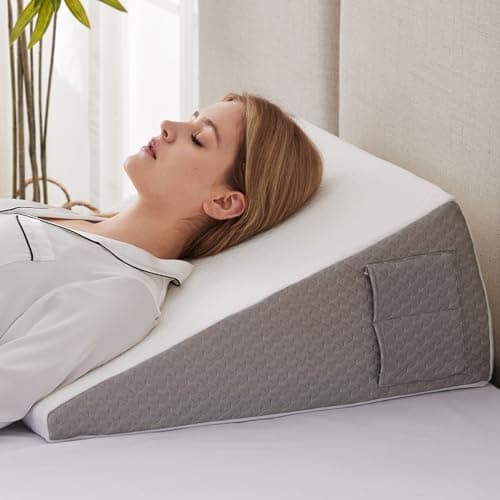
If you have diagnosed obstructive sleep apnea, CPAP is the treatment and the bed is optional comfort on top of it — genuinely useful for some people, but never a swap. If you snore but have never been assessed, the honest first step is a clinician rather than either purchase, and the cheap experiment in the meantime is a wedge pillow to see whether elevation changes anything at all. If you already use CPAP and struggle to tolerate it, an adjustable base is one of the few things that can make the machine easier to live with, and that is a reasonable reason to buy one.
Whichever bucket you fall into, the sequence is the same: settle the medical question first, then decide on comfort. A sleep study answers whether you have apnea and how severe it is, and that answer decides whether CPAP is on the table at all. Only after that is the bed a clean decision about reflux, swelling, positioning and getting out of bed in the morning — the things a base is genuinely good at, none of which a machine touches. Buying in that order means you never find yourself hoping a piece of furniture will do a job it was never built for.
If it is the bed you are weighing, our sleep apnea roundup scores the bases on the things that matter for positioning — head incline, presets, quiet nightly use — with the same caveats front and center.
Questions people actually ask
Can an adjustable bed replace my CPAP?
No. CPAP is the first-line treatment for obstructive sleep apnea because it holds the airway open mechanically. An adjustable bed changes your position and your comfort; it does not keep the airway open and is not a medical device. If you have been prescribed CPAP, the bed is an addition, not a substitute.
Does an adjustable bed help CPAP users?
For some people, yes — not by treating apnea, but by making the machine easier to live with. A raised head can reduce swallowed air for some users, and an incline gives the hose somewhere to rest instead of pulling on the mask. Whether it helps you is individual, and it is a livability gain rather than a clinical one.
Is CPAP or an adjustable bed better for snoring?
It depends whether the snoring is apnea or not. If a sleep study has found apnea, CPAP is the treatment. If it is ordinary snoring with no apnea, a small head raise helps some people, which is what the anti-snore preset is. Only a clinician can tell you which you have.
Will raising the head of the bed reduce CPAP aerophagia?
For some users it does. Aerophagia is swallowed air from the CPAP pressure, and a slightly raised upper body can make it less likely for some people. It is not guaranteed and it is worth raising with whoever manages your therapy, who may also adjust the machine.
Do I still need CPAP if I raise the head of my bed?
If you have diagnosed obstructive sleep apnea, yes. Head elevation is comfort and mild positional help, not a treatment that keeps the airway open. Stopping prescribed therapy because a bed feels better is exactly the decision to take to your clinician rather than a website.
Sources
Every factual claim on this page traces to one of these, or to a product listing cited in the specification table beside it.
Read next
Comparison
Sleep Apnea
CPAP is the treatment; an adjustable bed is only positioning. Here is which base does that best, and the honest limits.
Our top pick — DOMIA T600 Queen Adjustable Bed Frame
$399.99 · Check priceAs of September 21, 2026. #ad How we’re funded
Comparison
Acid Reflux
Start with the cheap answer. If it works you will know within a week, and only then is a base worth considering.
Our top pick — Ruqmuis Bed Wedge Pillow, 10 in
$38.99 · Check priceAs of September 21, 2026. #ad How we’re funded
Guide
Elevation Angles
Thirty degrees is not a wedge height and a wedge height is not an angle. Here is the arithmetic that connects them.
Comparison
Best Adjustable Beds for Seniors
Ranked on leg height, controls and published capacity — not on how the marketing photo looks.
Our top pick — Amada 01B-Q1 Queen Adjustable Bed Frame

Nothing here is medical advice. Prices are pulled live and stamped with the date they were checked; scores are our published spec rubric, not a test result. How we pick · How we make money · Corrections