Guide
Getting out of bed with Parkinson's
Bed mobility is often the hard part. A higher firmer edge, a head raise and a grip help you move, with your therapy team, not instead of it.
By Stephen V.Published How we pick
For many people with Parkinson's, the hardest part of the night is the transitions: turning over, sitting up, and getting out of bed. Reduced movement, stiffness and slowness can turn a movement that used to be automatic into a real effort, and it often gets harder late in a dose cycle when medication is wearing off. The good news is that a few practical changes to the bed can make those transitions meaningfully easier. The honest caveat is that they are setup and support, not treatment, and they work best alongside the people managing your care.
Why bed mobility is hard with Parkinson's
Two features of Parkinson's make beds difficult in particular. Rigidity and slowness of movement make the big, coordinated efforts — rolling over, going from lying to sitting — harder to start and slower to complete. And ordinary bedding makes it worse: soft flannel sheets and heavy blankets grip the body, so every turn means dragging yourself against friction a well person never notices. Add a soft mattress that you sink into and a low frame that you have to climb up out of, and the deck is stacked against an easy transfer.
The aim of a good setup is to remove as much of that resistance as possible: less friction to turn against, a firmer and higher surface to push up from, and something solid to pull on so your arms can do work your legs and core find hard.
The setup that helps
A higher, firmer edge to push from
Standing up from a low, soft bed means rising out of a deep squat — the movement Parkinson's makes hardest — and a soft edge makes it worse by dropping you lower still as you sit. A bed at the right height lets you rise from nearly standing, and a firm edge gives you a stable platform instead of a collapsing one. Height is cheap to fix with risers, and it is often the single biggest improvement. Work out your target height — floor to the back of the knee, sitting — before assuming you need anything motorized.
A head raise to help you sit up
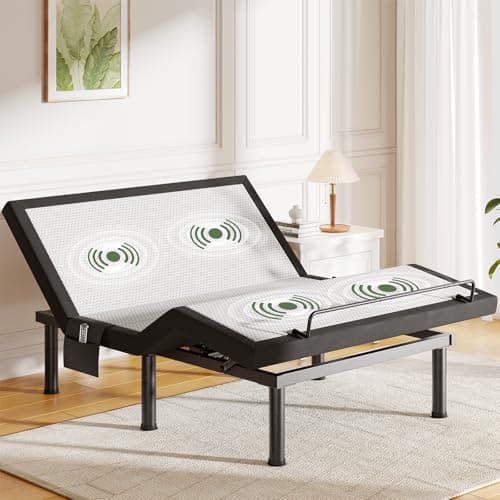
Going from flat on your back to sitting upright in one movement needs a coordinated abdominal effort and a twist, which is often exactly what is difficult. Raising the head of the bed does that work for you: from an already-inclined start, you have far less distance to travel to sitting, and from sitting you can turn your legs off the side and stand. This is the most useful thing an adjustable base offers here, and it works on any base with a head raise. The full two-stage technique is on our sleep positions page.
An assist handle or a rail to pull against
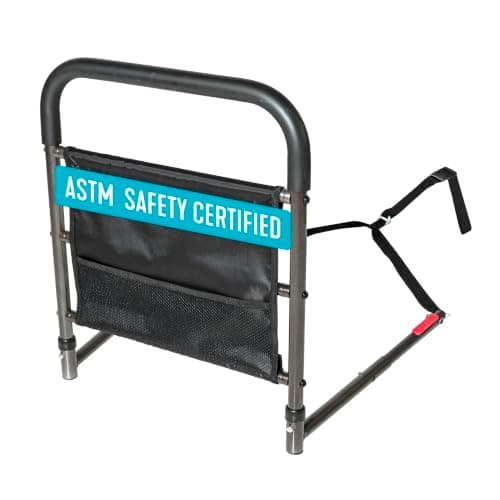
A fixed grip beside the bed lets you use your arms to control both turning and rising, and it gives a reassuring point of contact for balance, which matters because Parkinson's affects balance as well as movement. A padded handle that anchors under the mattress, positioned where your hand falls, is the usual choice; a rail is the alternative where a longer support helps with turning as well. The assist handles we compare are scored on grip and stability. A physiotherapist can advise which side and which type suits how you move.
Low-friction bedding
This one costs the least and is mentioned the least. Satin or silky sheets and a lighter blanket dramatically reduce the friction you fight when turning over, and for some people that single change makes rolling in bed possible again where flannel made it a struggle. It is worth trying before anything more expensive, because friction is often the hidden reason turning feels so hard.
Where medication timing comes in
Bed transfers are often hardest when Parkinson's medication is at its lowest — first thing in the morning, or in the night. That is not something a bed fixes, but it is worth factoring in: the setup should be built for your worst moments, not your best, because those are when you most need a firm edge, a head raise and a grip. If your nights or mornings are consistently difficult, that is useful information for your neurologist about how your medication is covering you, and for your therapist about your setup.
Therapy first, then furniture
The people who can make the biggest difference to bed mobility are physiotherapists and occupational therapists. They teach specific techniques — how to roll in stages, how to use momentum, how to sequence getting up — that often help more than any product, and they assess your actual home and your actual movement. A referral, usually through your Parkinson's team or primary care, is the highest-value step here and it is not a purchase. Everything on this page is meant to support what they show you, not to stand in for it.
The order to spend in
- A therapy assessment. Free, tailored, and more effective than any product. Ask your Parkinson's team about physiotherapy and occupational therapy for bed mobility.
- Bedding and height. Low-friction sheets and a bed at the right height are the cheapest changes and often the most effective. Risers cost little.
- A grip. An assist handle or rail for turning, rising and balance.
- A base with a head raise, if getting from lying to sitting is the sticking point and the cheaper changes have not solved it. The same getting-up mechanics help with back pain too.
Questions people actually ask
Does an adjustable bed help with Parkinson's?
It can make bed transfers easier, not by treating Parkinson's but by removing resistance from the movements it makes hard. A head raise helps you sit up, a higher firmer edge helps you stand, and a grip lets your arms do work. It works best alongside your physiotherapist and occupational therapist, not instead of them.
Why is getting out of bed so hard with Parkinson's?
Rigidity and slowness make the big coordinated efforts — rolling over, going from lying to sitting — harder to start and slower to finish, and soft, gripping bedding adds friction to fight against. It is often hardest in the night and early morning when medication is at its lowest.
What bedding is best for turning over with Parkinson's?
Satin or silky sheets and a lighter blanket reduce the friction you drag against when turning, and for some people that single, cheap change makes rolling in bed possible again where flannel made it a struggle. It is worth trying before anything more expensive.
Should I get an assist handle or a bed rail?
A fixed grip beside the bed lets you use your arms to control turning and rising and gives a point of contact for balance. A padded handle that anchors under the mattress is the usual choice; a rail helps where a longer support aids turning. A physiotherapist can advise which side and type suits how you move.
Sources
Every factual claim on this page traces to one of these, or to a product listing cited in the specification table beside it.
Read next
Comparison
Best Assist Handles
If the difficulty is standing up rather than staying in, this is the product you actually want.
Our top pick — Able Life Bedside Safety Handle
$49.99 · Check priceAs of September 22, 2026. #ad How we’re funded
Guide
Best Bed Height for Seniors
A calculator that shows its working, because the right answer depends on your legs and not on an average.
Guide
Sleep Positions
Every position, what it changes, and how to test each one tonight with pillows before you spend anything.
Comparison
Back Pain
There is a free test that tells you whether a base would help. Run it tonight before spending anything.
Our top pick — DOMIA T600 Queen Adjustable Bed Frame
$399.99 · Check priceAs of September 22, 2026. #ad How we’re funded


Nothing here is medical advice. Prices are pulled live and stamped with the date they were checked; scores are our published spec rubric, not a test result. How we pick · How we make money · Corrections