Comparison
The best washable bed pads
Three of these four publish how many washes they survive. One publishes how much fluid it holds. One has wings that tuck under the mattress — and it is the only one that does.
By Stephen V.Published Updated How we pick
We earn a commission if you buy through the links on this page, at no extra cost to you. It does not change what we recommend, and we have not tested these products — here is what we do instead.
The verdict first. Buy the Utopia Bedding four-pack: a published 500 washes, four pads in the box so one can be on the bed while another is in the machine, and the most honest set of limits on any listing we read in this category — including the sentence that tells you to use two pads for heavy incontinence rather than pretending one will do. If the sleeper moves a lot, the Sequoia Health saddle pad is the one to buy, because its tuck-in wings are the only published retention mechanism here and it is also the only pad that states how much fluid it holds. For length rather than a rotation, the Brosive publishes 36 by 72 inches and the only barrier thickness in the category. Every price in the table above is read live with the date it was checked. A pad manages moisture and nothing else; if the same person is also at risk of pressure injuries because they cannot reposition, that is a different product with a pump and the two layers stack.
A reusable underpad is an unglamorous product that changes how a night goes. It sits on top of the sheet, it takes the accident, and it comes off in under a minute without stripping the bed or waking the person any more than necessary. Nothing else in this part of the house does that, and the registry behind this site carried none of them until today.
How we ranked them
- Wash count published. 500 washes is the top band, 300 the lower one, and silence scores the neutral five. On a product bought to replace disposables, this is the figure that decides whether it is actually cheaper.
- Coverage published. Both dimensions and the piece count. A full-length pad beats a torso pad, and a pack of four beats a single pad, because a pad in the wash is a pad that is not on the bed.
- Retention. Published tuck-in wings or straps beat a stays-in-place claim, which beats nothing at all. A pad that moves does not work, however absorbent it is.
- Absorbency disclosure. A published volume or a barrier thickness beats the phrase maximum absorbency, which every listing here uses and which on its own means nothing.
Scored out of ten against bands we publish, averaged unweighted, with an unpublished specification taking a neutral five rather than a guess. The full rubric.
| # | Pick | Key spec | Score | Price |
|---|---|---|---|---|
| Rank1 | 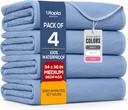 Utopia Bedding UB1187 Washable Underpads, 34 x 36 in, 4-pack Best overall, and the lowest cost per wash | Key specUp to 500Washes | Score7.0/10 | |
| Rank2 | 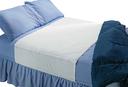 Sequoia Health SQ1056 Saddle Style Bed Pad with Tuck-in Sides, 34 x 52 in Best for a restless sleeper | Key spec8 cupsAbsorbency | Score8.8/10 | |
| Rank3 | 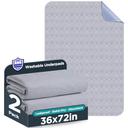 Brosive Washable Bed Pads, 36 x 72 in, 2-pack Best coverage, and the only published barrier | Key spec0.03 mm TPUBarrier | Score7.8/10 | |
| Rank4 | 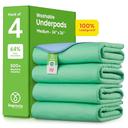 IMPROVIA Washable Underpads, 34 x 36 in, 4-pack The stain-resistant alternative | Key specUp to 500Washes | Score6.8/10 |
Prices checked November 24, 2026. Scores are our published spec rubric, not a test result — here is exactly how they are calculated.
The four, side by side
| Pad | Size | Pack | Washes | Retention | Absorbency figure |
|---|---|---|---|---|---|
| Utopia Bedding | 34 x 36 in | 4 | Up to 500 | Stays-in-place claim | Not published |
| Sequoia Health saddle | 34 x 52 in (36 x 60 queen) | 1 | Up to 300 | Tuck-in saddle wings | 8 cups |
| Brosive | 36 x 72 in | 2 | 500+ | Not published | Not published |
| IMPROVIA | 34 x 36 in | 4 | Up to 500 | Correct-position claim | Not published |
One pad in four publishes how much it holds. Eight cups, on the Sequoia Health. Every other listing on this page uses the phrase maximum absorbency or heavy absorbency and gives no number at all, which means the single most important specification in the category is a word on three of the four products. We score what is published, so that silence costs them — and it is the reason the dearest pad here, with the shortest published wash life, still ranks second.
One pad in four publishes what the waterproof layer is. The Brosive states 0.03 mm of TPU and goes further than anybody else by naming the figure it is comparing against, saying 0.02 mm is typical for the category. We cannot verify either number and we are not presenting it as tested; what we can say is that it is the only quantified material claim across the nine products we read for this page and the protectors. Everything else is an integrated barrier, a leakproof barrier or a triple-layer design.
Two listings claim the same exclusive
The IMPROVIA listing says it is "the only absorbent pad that wicks the fluid to the edges". The Utopia Bedding listing says it "channels liquids towards the edges, helping prevent leaks", and describes it as what sets it apart from other bed pads. Both cannot be the only one. We are not calling either dishonest — this is boilerplate marketing in a crowded category — but it is a useful reminder of what a feature bullet is worth when two products in the same ranking claim the same unique mechanism.
That is also why the two torso pads score as closely as they do. Same published size, same pack of four, same published 500 washes, same unquantified absorbency. The Utopia takes it on care disclosure: it is the only listing in the category that publishes prohibitions — no bleach, no fabric softener — and the only one that tells you what to do when one pad is not enough.
Whether reusable actually costs less
This is the arithmetic that decides the purchase, and no listing does it for you. A reusable pad has one price and a published number of washes; a disposable has a price per pad and no washes at all. Divide the live price in the table above by the published wash count and you get a cost per night that is a fraction of a cent on three of these four — and that is before you count the pads in the pack. The catch is that the wash figure is the seller's claim with no test method cited, so treat it as an upper bound rather than a promise.
Two practical things make the sum real rather than theoretical. The first is the pack size: a pad that is in the washing machine is not on the bed, so a single pad means either a second purchase or a night without one. Two of these four come as a pack of four, one as a pair and one as a single. The second is laundry capacity — a reusable pad only saves money if somebody actually does the wash, every day, and for a carer already doing several loads that is a real constraint and not a detail. If the honest answer is that the laundry will not happen, disposables are the better product and we would rather say so than sell you four pads.
What the care label is actually telling you
Only one of these four listings publishes prohibitions, and they are the two that matter in this category: no bleach and no fabric softener. Both attack the waterproof film rather than the fabric you can see — bleach degrades it chemically, softener leaves a coating that stops the top layer wicking, and a pad that has stopped wicking funnels fluid straight off the edge onto the sheet it was bought to protect. The same listing is the only one that says to avoid prolonged saturation, which is a polite way of saying a pad left wet all night will fail sooner than the published wash count suggests.
The three listings that publish none of that are not claiming the opposite; they are silent, and silence on a reusable waterproof product is the thing to notice. Follow the strictest care instruction in the category regardless of which pad you buy — wash warm rather than hot, skip the softener, and tumble low — and take the physical care label in the box as the authority over anything printed on a product page, including ours.
What to buy with them
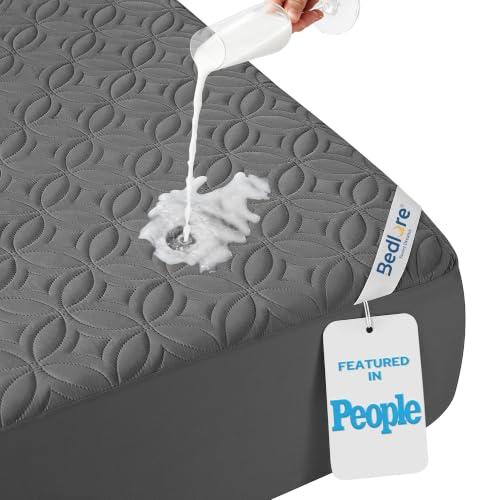
A fitted protector, first, if there is not one on the bed already. The pad handles the night; the protector is what stops a bad night costing you a mattress. The five we read, and the practical note that the thinnest fitted ones interfere least with sheet depth.
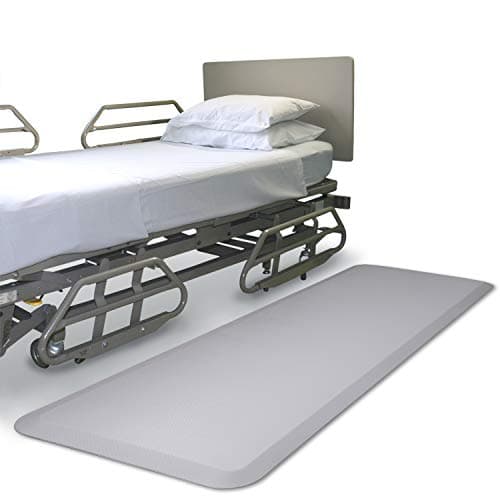
Something at the bedside if there is a fall risk as well. Incontinence and night-time falls travel together more often than either gets discussed, because getting up in a hurry in the dark is the mechanism for both. A bedside mat does not stop a fall and nobody publishes an impact figure for one, which we say plainly on the fall mats page.
And if skin is the worry rather than laundry, the pad is secondary. What matters is how long anybody stays in one position and what is under them — a damp surface against skin is the risk, not the stain. Pressure sores and repositioning is the page for that, and it recommends a routine rather than a purchase.
Every specification on this page was read from a live Amazon listing on 15 November 2026 and scored against the rubric we publish. We have not used, washed or tested any of these pads, we have no absorbency data of our own, and the figures above are the sellers' published claims with no test method cited by any of them. Prices are read live and carry their own date; no price is written into the words on this page. How we pick, and how we make money.
A pad is one of three layers, and all three cost less than most people expect. The waterproof bedding for incontinence under $50 ranks the protector, the pad and the sheet together, with the published wash counts that decide the real cost.
Questions people actually ask
What are the best washable bed pads for incontinence?
Of the four we read, the Utopia Bedding four-pack is the one we would buy first: a published 500 washes, four pads so there is a rotation, and the clearest set of limits on any listing here — no bleach, no fabric softener, avoid prolonged saturation, and use two pads for heavy incontinence. If the sleeper moves a lot, buy the Sequoia Health saddle pad instead, because it is the only one with tuck-in wings. Prices in the table above are read live with the date they were checked.
How many times can a washable bed pad be washed?
Three of these four publish a figure: 500 washes, 500 washes and 500-plus washes. The fourth publishes 300. That is the number that decides the real cost of a reusable pad, and it is also the number most listings in neighboring categories do not publish at all — no mattress protector we read publishes any wash count. Treat the figures as the seller's claim rather than a tested result; none cites a test method.
What size bed pad do I need?
Three of these four are torso-sized — 34 by 36 inches — which is designed to sit under the hips rather than cover the bed. The fourth publishes 36 by 72 inches, which runs most of the length of the mattress and is the one to buy for somebody who moves around at night. None of them covers the full width of a queen, and they are not meant to: a pad that covers the whole bed is a mattress protector, and that is a different product with a different job.
Will the pad stay where you put it?
One of the four publishes a mechanism for that — saddle-style wings that tuck under the mattress on both sides. Two publish a stays-in-place claim with nothing behind it, and the largest pad here publishes nothing at all about retention. If the person moves in the night, the wings are worth more than any absorbency claim, because a pad that has migrated to the edge of the bed has an absorbency of zero.
Do washable bed pads replace a mattress protector?
No, and buying one instead of the other is the common mistake. A pad is on top of the sheet and gets changed in a minute; a protector is sealed to the mattress and protects the thing you cannot replace. The sensible setup for nightly management is both — a fitted protector underneath and a pad on top. The protectors we track are the other half of this page.
Can you claim bed pads on an HSA or FSA?
Incontinence supplies are a category that often qualifies, but eligibility depends on the plan and sometimes on a letter of medical necessity, so the only reliable answer comes from your own administrator before you buy. We set out how that works, and what documentation tends to be asked for, on HSA and FSA eligibility. Medicare Part B does not cover reusable underpads as durable medical equipment.
Read next
Comparison
Mattress Protectors
Four of these five say 100% waterproof. None of the five publishes a rating, a thickness or a test behind it. Here is what they do publish, and which to buy.
Our top pick — BEDLORE UM002 Waterproof Mattress Protector, Queen
Guide
Pressure Sores
Repositioning matters more than any mattress angle. How a bed helps a caregiver, the shear caution, and when this needs clinical equipment.
Comparison
Best Sheets
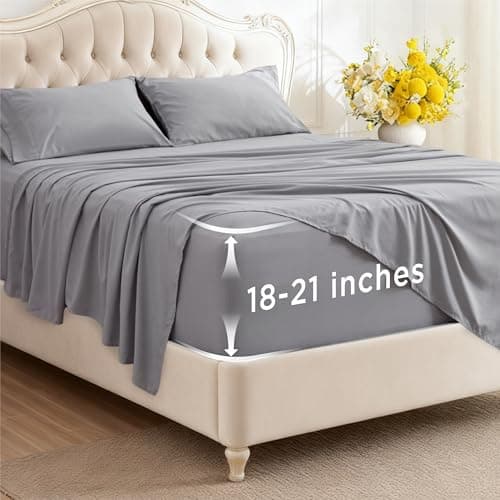
Scored on published pocket depth and anchoring design, because thread count has nothing to do with why your sheet keeps coming off.
Our top pick — Bedsure Deep Pocket Queen Sheet Set
Comparison
Best Fall Mats
A fall mat softens a landing. It prevents nothing, and the thickest one here is the one with no beveled edge. Ranked on what the listings actually publish.
Our top pick — NYOrtho FALLSHIELD Fall Mat, 70" x 24"
Guide
HSA and FSA
Usually not for a bed, sometimes for what goes on it. What actually decides eligibility, and what a letter of medical necessity does.
Guide
Stop a Mattress Sliding
Just two of the nineteen bases we track publish a mattress retainer bar, and both of them are DUMOS. Here is what actually holds a mattress in place, and why a sliding mattress beside a bed rail is a safety problem rather than an annoyance.
Our top pick — EPHEDORA 3-in-1 Split King Gap Filler, 79" x 79"
Comparison
Hospital Bed Alternatives
A hospital bed raises and lowers as a whole, takes fitted rails and has a funding route. Here is what covers the rest of it, and the job nothing on this page replaces.
Our top pick — Amada 01B-Q1 Queen Adjustable Bed Frame
Comparison
Best Mattresses for Seniors
Scored on published height, flex and certification — not on how they feel, because we have not slept on them.
Our top pick — EGOHOME 12 Inch Queen Memory Foam Mattress


Nothing here is medical advice. Prices are pulled live and stamped with the date they were checked; scores are our published spec rubric, not a test result. How we pick · How we make money · Corrections