Guide
Adjustable bed delivery and assembly
The hardest part of owning a base often happens before you press a button. Here is how to get it into the room and put together without hurting yourself.
By Stephen V.Published How we pick
An adjustable base is heavy, it arrives in one or two large boxes, and the hardest part of owning one often happens before you ever press a button: getting it into the bedroom and put together. This is the page nobody sends you until after the delivery has already gone wrong. Read it before you order, because two of the decisions — which delivery service, and whether you need a second person — have to be made at checkout.
Know the weight and the boxes before you buy
The first number to find is not on most listings, which is telling in itself. A queen base is a serious two-box load; a king heavier still. Before you order, work out three things: how much the base weighs, how many boxes it splits into, and the size of the largest box. The largest box is what has to fit through your front door, up your stairs and round the turn at the top — and a long, rigid box does not bend the way a mattress in a compression bag does.
- Measure the tight points. The front door, the narrowest hallway, the turn on the stairs, the bedroom door. Write the numbers down before you shop.
- Prefer a split configuration if access is hard. A split king arrives as two twin XL halves, each of which one person can manage, instead of one king frame two people struggle with.
- Ask how many boxes. A base that ships in two moderate boxes is a far easier carry than one that ships in a single long box, even at the same total weight.
Before delivery day: a short checklist
Most of what makes a delivery go smoothly is done before the truck arrives, not during it. Run through this the day before.
- Clear the route and the room. Move the old bed out, clear the hallway and the stairs, and have the bedroom floor empty before the boxes arrive. Doing this around a heavy box stuck in a doorway is how people hurt themselves.
- Confirm who carries it. Know before the truck arrives whether the driver brings it inside or leaves it at the curb, and have your second person there if the answer is the curb.
- Have the tools and the light out. The hex key is in the box, but a torch, a clear patch of floor to work on, and a second person for ten minutes all need arranging in advance.
- Plan where the power lead runs before the bed is against the wall, so you are not shifting a built bed to reach an outlet.
White-glove versus curbside — decide at checkout
How the base reaches you is a choice you usually make when you order, and it is the choice that matters most if stairs are involved.
| Service | What you get | Who it suits |
|---|---|---|
| Curbside / standard parcel | Boxes left at the curb or front door | Someone with help on hand and a ground-floor room |
| Threshold | Boxes brought just inside the door | A ground-floor bedroom, one fit person to take it from there |
| White-glove | Carried to the room, assembled, packaging removed | Stairs, living alone, or anyone who would rather not lift it |
For this audience the honest default is white-glove wherever it is offered, especially if the bedroom is upstairs or you live alone. It costs more, and it is usually worth it — the alternative is a heavy box left at the curb in the rain while you find someone to help. Where white-glove is not offered, arrange your help before the delivery window, not during it.
Getting it up the stairs
Stairs are where this most often goes wrong, and the fix is planning rather than strength. A long, rigid box does not pivot on a half-landing the way a mattress does, so measure the turn before you order, and if it is tight, choose a base that ships in smaller boxes or a split configuration that comes in halves. On the day, two people take a heavy box up stairs with one below and one above — the lower person carrying the weight, the upper person guiding — and never one person walking backwards up a staircase under the load. If none of that is workable, this is precisely what white-glove delivery exists for, and it is worth the cost rather than the injury.
What one person can and cannot do
A lot of an adjustable base can be handled solo, and some of it genuinely cannot. Being honest about which is which prevents the injury that sends this whole plan sideways.
- One person can usually unbox, attach the legs, plug in the motors and the control box, and run the first test — most of assembly is bolting legs on and pushing connectors home, not lifting.
- One person should not carry a queen or king base up a flight of stairs, or lift a full base onto a bed frame. That is a two-person job, and pretending otherwise is how backs go.
- One person can manage a twin XL half of a split king almost entirely alone, which is the strongest practical argument for the split configuration when help is scarce.
- Nobody should wrestle the old mattress and the new base at the same time. Clear the room first — old bed out, floor clear — then bring the base in.
The tools and the timing
Assembly is deliberately simple, because these are sold to be built at home. You will not need a workshop.
- Tools: usually just the hex key in the box, and sometimes an adjustable wrench for the legs. A cordless screwdriver makes the leg bolts quicker but is not required.
- Time: budget an unhurried hour for a single base and closer to two for a split king or a first-timer. It is not a hard job; it is an awkward one, mostly because of the weight and the space.
- Space: you need the floor clear and room to stand the base on its side to fit the legs. Do this before the boxes arrive, not around them.
- Two hands for ten minutes. Even if you assemble it alone, the single lift onto the bed frame, or the flip upright, is where a second person earns their keep. Borrow one for that ten minutes.
One underrated tip: build the bed roughly where it will live, not in the middle of the room. A fully assembled base is heavy and awkward to slide across a floor, and dragging it can loosen the legs you have just fitted. Get the frame to its final spot, then attach the legs and lift it into place, rather than building it in open floor and shifting the finished bed afterwards. The same goes for the flat-on-the-floor test below — do it close to where the bed will end up.
After it is built
- Fit the mattress retainer. Most bases include a bar or bracket at the foot to stop the mattress sliding as the head rises. Fit it now; it is the part everyone leaves in the box.
- Check the mattress flexes. A rigid innerspring will fight the base. If you are not sure yours is suitable, check compatibility before you make the bed.
- Route the power lead deliberately. A cord trailing across the floor beside a bed is a trip hazard on a site about not falling. Clip it to the frame and keep it off the path to the door.
- Measure the finished height. Base plus mattress is your new sleep-surface height, and it decides whether you can stand up easily. Compare it against your target and adjust the legs or add risers if it is off.
- Keep the packaging for a week. If a motor is faulty it usually shows early, and a return is far easier if you still have the boxes.
Handling the mattress is its own job, and often the heavier one — a 12-inch foam mattress in a compression box is no lighter than the base. Our guide to mattress weight and handling covers unboxing and moving one safely; if you are still choosing, the mattresses we would put on a base is the place to start. Get both into the room, built, tested and set to the right height, and the daily part — the part you actually bought it for — is the easy bit.
Questions people actually ask
How heavy is an adjustable bed to move?
Heavy enough that a queen is a two-box load and a king heavier still. Most listings do not publish the weight, which is telling. Before you order, find the weight, the number of boxes, and the size of the largest box — the last one is what has to fit up your stairs and round the turn at the top.
Can one person assemble an adjustable bed?
Most of the assembly, yes — it is mostly bolting on legs and pushing connectors home, not lifting. What one person should not do alone is carry a full queen or king base up stairs, or lift it onto a bed frame. Borrow a second pair of hands for those ten minutes even if you build the rest solo.
Should I pay for white-glove delivery?
If the bedroom is upstairs or you live alone, usually yes. White-glove carries it to the room, assembles it, and takes the packaging away. The alternative is a heavy box left at the curb while you find someone to help. Where it is not offered, arrange your help before the delivery window, not during it.
What tools do I need to assemble an adjustable base?
Usually just the hex key in the box, and sometimes an adjustable wrench for the legs. A cordless screwdriver makes the leg bolts quicker but is not required. Budget an unhurried hour for a single base, closer to two for a split king or a first build.
Should I test the bed before finishing assembly?
Yes. Attach the motors and remote and run the bed through its full range while it is still low on the floor, before you fit the legs or lift it onto a frame. A loose connector or a dead motor is a two-minute fix at floor level and a miserable one once the bed is made up against the wall.
Read next
Guide
Common Problems
Almost nothing that fails is the frame. It is the electronics, and every one of them is a part rather than the whole bed. Here is what goes wrong and what to do.
Guide
Weight and Handling
The real problem with a mattress in a box is not choosing it — it is getting the heavy, compressed parcel home, upstairs and unwrapped without hurting yourself.
Guide
How They Work
What is inside the frame, what the buttons do, and which parts fail first. No sales pitch, just the mechanism.
Comparison
Best Adjustable Beds for Seniors
Ranked on leg height, controls and published capacity — not on how the marketing photo looks.
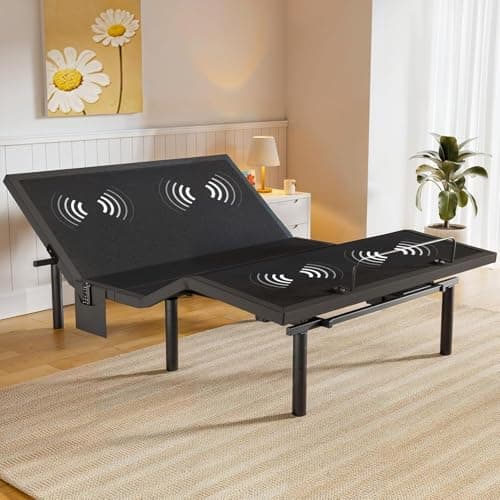
Our top pick — Amada 01B-Q1 Queen Adjustable Bed Frame


Nothing here is medical advice. Prices are pulled live and stamped with the date they were checked; scores are our published spec rubric, not a test result. How we pick · How we make money · Corrections