Comparison
The best bed alarms for elderly adults
The first question is not which alarm. It is whether the noise happens next to the person getting up, or on a pager in your pocket.
By Stephen V.Published Updated How we pick
We earn a commission if you buy through the links on this page, at no extra cost to you. It does not change what we recommend, and we have not tested these products — here is what we do instead.
Start with the sentence that decides everything else on this page. A bed alarm does nothing at all for the person in the bed. It is a notification for somebody else. If there is nobody in the house to notify, an alarm is a noise made at a person who has just stood up in the dark — and there is a federal document that describes exactly why that is a problem. If there is somebody to notify, then the only question that matters is where the alert lands.
| # | Pick | Key spec | Score | Price |
|---|---|---|---|---|
| Rank1 | 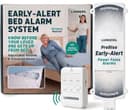 Lunderg Wireless Early Alert Bed Alarm System Best overall | Key spec400 ftPager range | Score8.8/10 | |
| Rank2 | 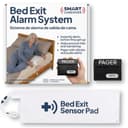 Smart Caregiver Bed Exit Alarm with Wireless Pager (RP-WPBR1-SYS) Best expandable system | Key spec6 sensorsPager supports | Score8.8/10 | |
| Rank3 | 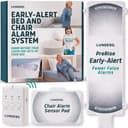 Lunderg Wireless Early Alert Bed and Chair Alarm Set Best for the bed and the chair | Key specBed + chairSensors | Score9.0/10 | |
| Rank4 | 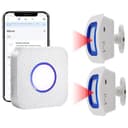 EverNary WiFi Smart Bed Sensor Alarm with App Best when nobody is in the house | Key specPhone appAlert path | Score6.8/10 | |
| Rank5 |  Nesthao Bed Sensor Alarm and Caregiver Pager (KS-SF20R) Cheapest route to a pager | Key specFloor motionSensor | Score6.6/10 | |
| Rank6 | 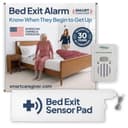 Smart Caregiver Bed Alarm for Elderly Adults (BB45-SYS) The in-room version · we would skip this one | Key spec80 dB in-roomAlarm | Score5.8/10 |
Prices checked October 12, 2026. Scores are our published spec rubric, not a test result — here is exactly how they are calculated.
The one property that separates these products
Six systems, and the biggest difference between them is not price, range or brand. It is whether the noise happens beside the bed or in your pocket. Five of the six send every alert to a pager or a phone. One sounds an 80 dB alarm on a monitor corded to the bed, and offers the pager as a separate add-on kit.
That distinction is not our invention. It comes from the guidance CMS gives its own nursing home surveyors, which treats an alarm the resident can hear as something that can function as a restraint:
While position change alarms may be implemented to monitor a resident's movements, for some residents, the use of position change alarms that are audible to the resident(s) may have the unintended consequence of inhibiting freedom of movement. For example, a resident may be afraid to move to avoid setting off the alarm and creating noise that is a nuisance to the resident(s) and staff, or is embarrassing to the resident. For this resident, a position change alarm may have the potential effect of a physical restraint.
The same document defines a position change alarm broadly enough to cover everything on this page: chair and bed sensor pads, bedside alarmed mats, alarms clipped to clothing, and infrared beam motion detectors. That guidance is written for facilities and does not regulate what you put in your own bedroom. The mechanism does not change with the address. An adult who stops shifting position at night because moving sets off a noise is worse off, not safer, and nobody sells the product that way. It is also the clearest reason an alarm is not a substitute for a rail, or the other way round — which of the two you are actually shopping for.
What the evidence says about alarms and falls
This is the part every other page in this category leaves out, so here it is first. In 2012 a pair-matched cluster randomized trial ran for 18 months across 16 nursing units in an urban hospital, covering 27,672 inpatients. Half the units got education, training and support to increase bed alarm use; half did not. Alarm use went up enormously on the intervention units. Falls did not go down.
An intervention designed to increase bed alarm use in an urban hospital increased alarm use but had no statistically or clinically significant effect on fall-related events or physical restraint use.
CMS reaches the same conclusion in its guidance on accidents and supervision, and adds the failure mode: the efficacy of alarms to prevent falls has not been proven, a study of hospitalized patients concluded the devices may only alert staff that a fall has already occurred, and false alarms produce alarm fatigue, in which people stop responding to the sound. It also notes that facilities which removed alarms and replaced them with other measures saw falls fall rather than rise.
How we scored them
Five criteria, averaged with no weighting, rounded to one decimal. An unpublished specification scores five — neutral — and the write-up says so. The full rubric is here.
- Where the alert lands. Pager, phone, or a noise in the room. This is first for the reason above: it is the only criterion with a federal document behind it, and it is the one thing a product page will never frame as a choice.
- How early it fires. A pad at the hips fires as someone shifts to the edge of the mattress. A pad under the shoulders fires as they sit up. A floor sensor fires when a foot is already coming down. Those are three different moments, and only one of them is early.
- Published range. The distance the listing states between the sensor and the pager. A figure that only holds in an open field is worth less than a figure measured through walls, and one listing here publishes two numbers that contradict each other.
- Running costs disclosed. The sensor pad is a consumable. Almost nobody says how long it lasts, and almost nobody publishes a warranty. A system with no pad at all has no pad to replace, and that counts here.
- Expandability. Whether one pager takes more sensors — a chair pad, a door sensor, a floor mat — because this problem tends to grow, and buying the second system separately means two alerts to learn.
The disagreement nobody resolves
Two of the brands here take opposite positions on where the sensor pad belongs, in writing, on their own listings. Lunderg places its pad at hip level and states that competitors' shoulder placement is exactly what generates false alarms, because every roll and shift sets it off. Smart Caregiver places its pad under the shoulders and states that is what produces an immediate alert as the person starts to get up.
Neither publishes a study, a test, or a false-alarm rate. We are not going to pick a winner on physics we cannot verify, so both score on what they state rather than on who is right. It is worth knowing before you buy, because it is the difference between a device you trust at 3am and one you eventually switch off — and an alarm that has been switched off is the most expensive kind.
The alarms in full
1 · Best overall
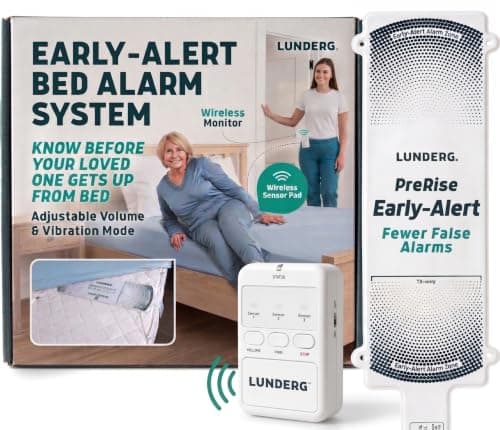
Lunderg Wireless Early Alert Bed Alarm System
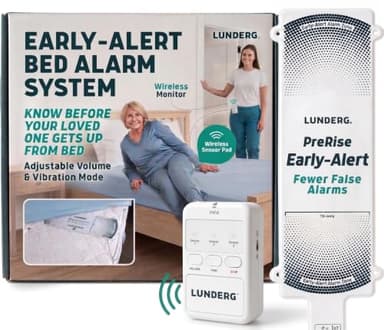
The only brand here that says how long its sensor pad lasts, on a system built around the idea that nothing should make a noise at the person in the bed.
- Pager range
- 400 ft
- Our spec score
- 8.8/10
- Best for
- Alerting a caregiver in another room
As of October 12, 2026. #ad How we’re funded
What works
- Nothing in this system is stated to sound at the bedside — every alert goes to a pager the caregiver carries, which is the distinction the whole category turns on
- The pad sits at hip level and the listing says it alerts before the person is out of bed, rather than once their weight has already gone
- Lunderg is the only brand here that publishes how long its sensor pad lasts — 15 months — on the one part of the system that is a consumable
What doesn’t
- The specification table gives an audible-noise figure of 120 dB and never says which device it describes; the same brand's bed-and-chair set publishes 48 dB for what looks like the same pager, and neither listing resolves the contradiction
- The 15-month pad life is a claim in the bullet points, not a warranty term — no warranty length is published anywhere on the listing
- The pad is a consumable and the listing says nothing about what a replacement costs, so the running cost is knowable in months but not in dollars
Published specifications
| Where the alert goes | Wireless pager carried by the caregiver |
|---|---|
| Sensor pad | 10 x 33 in, foam interior, incontinence-resistant |
| Pad placement | Hip level |
| Published range | Up to 400 ft |
| Sensor pad life | 15 months (seller stated) |
| Pager alert modes | High volume, low volume or vibrate only |
| Batteries | 2 AA, included |
| Wi-Fi or app required | No |
| Expandable with | Lunderg chair alarm and call button |
| Warranty | Not published |
Read from the product listing on 2026-08-28. Blanks are specifications the manufacturer does not publish, not figures we could not be bothered to find.
How the score was reached
| Where the alert landsThe listing states every alert goes to a pager the caregiver holds and that nothing sounds at the bedside. | 10 |
|---|---|
| How early it firesHip placement published, with a stated alert before the person is out of bed. | 10 |
| Published range400 ft published — the longest figure on this page. | 9 |
| Running costs disclosedA 15-month pad life and included batteries are published; no warranty term is. | 8 |
| ExpandabilityA chair alarm and a call button are named as compatible; no supported sensor count is published. | 7 |
| Mean, rounded to one decimal | 8.8 |
2 · Best expandable system
Smart Caregiver Bed Exit Alarm with Wireless Pager (RP-WPBR1-SYS)
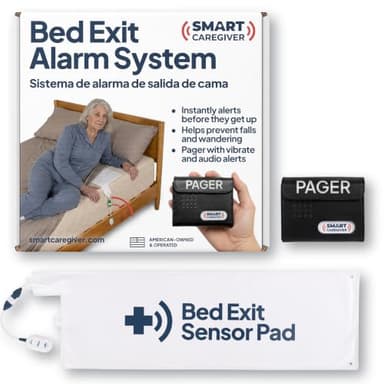
The listing that answers the most questions before you have to ask them, and the one to buy if the bed alarm is going to become a chair pad and a door sensor as well.
- Pager supports
- 6 sensors
- Our spec score
- 8.8/10
- Best for
- A system that will grow
As of October 12, 2026. #ad How we’re funded
What works
- The most complete specification table of any alarm here: range, pager volume, pad dimensions, battery type and warranty length are all published rather than left for you to guess
- One pager takes up to six sensors and the listing names the types, so the system grows with the problem instead of being replaced by a second one
- A published one-year manufacturer warranty, which four of the six systems here do not state at all
What doesn’t
- The pad goes under the shoulders, and the competing brand on this page argues in its own listing that shoulder placement is exactly what produces false alarms. Neither seller offers evidence, so you are choosing between two marketing claims
- Nothing is published about how long the sensor pad lasts, and the pad is the part that wears out
- The pager is published at 70 dB, well below the loudest figure here. If it has to wake you from sleep, test it in the house before you rely on it
Published specifications
| Where the alert goes | Wireless pager carried by the caregiver |
|---|---|
| Sensor pad | 10 x 30 in, 0.5 in thick, weight sensing |
| Pad placement | Under the shoulders |
| Published range | 300 ft |
| Pager alert modes | Sound or vibrate |
| Pager volume | 70 dB |
| Batteries | 2 AA, included |
| Sensor pad life | Not published |
| Expandable with | Up to 6 sensors — chair pad, door exit, floor mat, motion, call button |
| Warranty | 1 year manufacturer |
Read from the product listing on 2026-08-28. Blanks are specifications the manufacturer does not publish, not figures we could not be bothered to find.
How the score was reached
| Where the alert landsPager with sound or vibrate published; the listing does not state whether the base unit is silent. | 9 |
|---|---|
| How early it firesShoulder placement published, with a stated alert as the person starts to get up. | 9 |
| Published range300 ft published. | 8 |
| Running costs disclosedA one-year warranty and included batteries are published; no sensor pad life is. | 8 |
| ExpandabilityUp to six sensors published, and the listing names five sensor types plus call buttons. | 10 |
| Mean, rounded to one decimal | 8.8 |
3 · Best for the bed and the chair
Lunderg Wireless Early Alert Bed and Chair Alarm Set
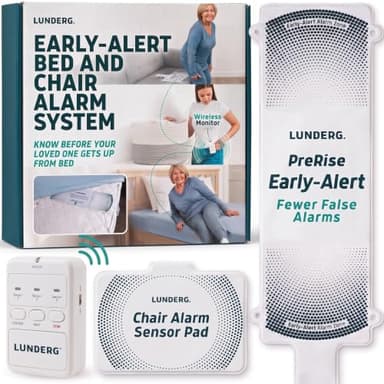
The highest-scoring system on this page, because it publishes everything the bed-only kit does and adds a second sensor. It is not our top pick, because most people reading this need a bed alarm and not a chair alarm.
- Sensors
- Bed + chair
- Our spec score
- 9.0/10
- Best for
- The bed and the chair on one pager
As of October 12, 2026. #ad How we’re funded
What works
- Two sensors on one pager: the bed pad fires as they shift to the edge, the chair pad the moment they stand
- Both pads carry the same published 15-month life, so the recurring cost is at least knowable in advance
- One handset covers the bed at night and the chair during the day, rather than two systems with two alerts to learn
What doesn’t
- Its specification table publishes a 48 dB pager while the same brand's bed-only kit publishes 120 dB for what appears to be the same handset. The two listings contradict each other and neither explains it
- The most expensive system on this page, and if the chair is not part of the problem you are paying for a pad you will never place
- No warranty length is published, for either pad or the pager
Published specifications
| Where the alert goes | Wireless pager carried by the caregiver |
|---|---|
| Sensors included | Bed pad and chair pad, one pager |
| Sensor pad | Bed pad 10 x 33 in, foam interior, incontinence-resistant |
| Pad placement | Hip level on the bed; the chair pad fires on standing |
| Published range | Up to 400 ft |
| Sensor pad life | 15 months, both pads (seller stated) |
| Pager alert modes | High volume, low volume or vibrate only |
| Pager volume | 48 dB |
| Batteries | 2 AA, included |
| Warranty | Not published |
Read from the product listing on 2026-08-28. Blanks are specifications the manufacturer does not publish, not figures we could not be bothered to find.
How the score was reached
| Where the alert landsThe listing states every alert goes to a pager the caregiver holds and that nothing sounds at the bedside. | 10 |
|---|---|
| How early it firesHip placement on the bed pad with a stated pre-exit alert; the chair pad fires on standing. | 10 |
| Published range400 ft published. | 9 |
| Running costs disclosedA 15-month life is published for both pads, batteries included; no warranty term is. | 8 |
| ExpandabilityShips with two sensors and names a call button as a further option; no supported count is published. | 8 |
| Mean, rounded to one decimal | 9.0 |
4 · Best when nobody is in the house
EverNary WiFi Smart Bed Sensor Alarm with App
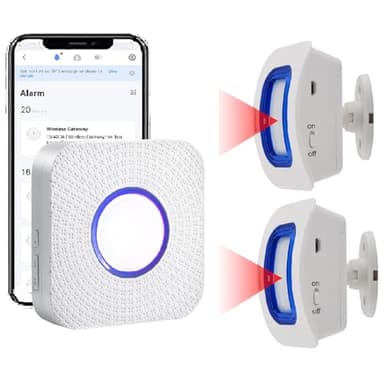
The only system here whose alert can reach a phone that is not in the building. That is the whole reason to buy it, and it is also why it depends on things the other five do not.
- Alert path
- Phone app
- Our spec score
- 6.8/10
- Best for
- A caregiver who is not in the house
As of October 12, 2026. #ad How we’re funded
What works
- The alert reaches a phone rather than a pager, so the caregiver does not have to be within radio range of the bedroom — the listing's own example is being in another city
- The app's share function sends the same alert to more than one phone, which is how a family actually splits this between siblings
- No sensor pad at all, so there is no consumable to replace on a schedule and nothing to slide out from under a sheet
What doesn’t
- The sensor detects a foot approaching the floor, not a shift in the bed. By the time it fires the person is already getting out, which is later than any of the pad systems here
- It depends on 2.4 GHz Wi-Fi and the seller's cloud service. Every other system on this page keeps working when the internet does not
- The listing says the hub itself rings, so where you put the hub decides whether there is a noise near the bed. It also carries by far the fewest customer ratings here, so there is little independent signal on reliability
Published specifications
| Where the alert goes | Phone app, and the hub rings |
|---|---|
| Sensor type | Floor motion sensor, 2 included |
| Pad placement | No pad — the sensor sits on the floor under the bed |
| Published range | 330 ft open area; 30-150 ft indoors |
| Network required | 2.4 GHz Wi-Fi only |
| App | Smart Life, with a share function for extra phones |
| Batteries | 4 AAA required |
| Expandable with | Up to 20 transmitters per hub — call button, door sensor, motion sensor |
| Sensor pad life | No consumable pad |
| Warranty | Not published |
Read from the product listing on 2026-08-28. Blanks are specifications the manufacturer does not publish, not figures we could not be bothered to find.
How the score was reached
| Where the alert landsAlerts reach a phone anywhere, but the listing states the hub also rings. | 7 |
|---|---|
| How early it firesA floor sensor fires as the foot reaches the floor, once the person is already leaving the bed. | 5 |
| Published range330 ft open area, but the listing's own indoor figure is 30-150 ft. | 7 |
| Running costs disclosedNo consumable pad, but batteries are required and not stated as included, and no warranty term is published. | 6 |
| ExpandabilityUp to 20 transmitters per hub published, with the sensor types named and multi-phone sharing. | 9 |
| Mean, rounded to one decimal | 6.8 |
5 · Cheapest route to a pager
Nesthao Bed Sensor Alarm and Caregiver Pager (KS-SF20R)
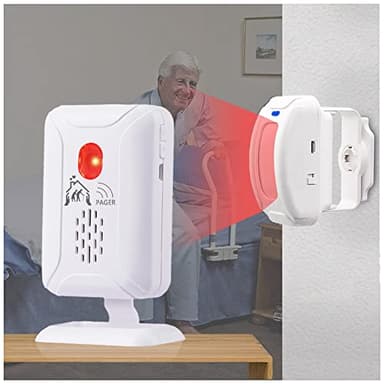
The cheapest way to get an alert out of the bedroom and onto a pager. It fires later than a bed pad does, and the listing cannot keep its own range figure straight.
- Sensor
- Floor motion
- Our spec score
- 6.6/10
- Best for
- The smallest budget
As of October 12, 2026. #ad How we’re funded
What works
- The listing states plainly that the alarm does not sound in the person's room, which is the single most important property in this category and the one the cheapest products usually get wrong
- No sensor pad means nothing to replace, nothing to slide, and no false alarm from a wet bed — the listing names that last point directly
- Five volume levels and a micro-USB power option alongside batteries, on the least expensive system here by a wide margin
What doesn’t
- The bullets claim 918 ft of open-area range while the specification table says 182 meters, about 597 ft. Both are published on the same listing and they cannot both be right, so we treat the range as unpublished
- A floor sensor fires when a foot is about to reach the floor. That is later than a bed pad, and for someone who falls during the transfer itself it may be too late to be the alert you wanted
- No warranty term, no supported sensor count, and no way to add a chair pad or door sensor to the same pager as the situation changes
Published specifications
| Where the alert goes | Wireless pager carried by the caregiver |
|---|---|
| Sensor type | Floor motion sensor, 1 included |
| Pad placement | No pad — the sensor sits on the floor under the bed |
| Published range | 918 ft in the bullets, 182 m in the spec table |
| Pager alert modes | 5 volume levels, plus an LED light |
| Batteries | 3 AA pager and 3 AAA sensor, included; micro-USB power option |
| Sensor pad life | No consumable pad |
| Expandable with | Not published |
| Warranty | Not published |
Read from the product listing on 2026-08-28. Blanks are specifications the manufacturer does not publish, not figures we could not be bothered to find.
How the score was reached
| Where the alert landsThe listing states explicitly that the alarm does not sound in the person's room. | 10 |
|---|---|
| How early it firesA floor sensor fires as the foot reaches the floor, once the person is already leaving the bed. | 5 |
| Published rangeTwo contradictory figures are published on the same listing, so we score this as unpublished. | 5 |
| Running costs disclosedNo consumable pad, all batteries included and a USB power option; no warranty term is published. | 8 |
| ExpandabilityNothing is published about adding further sensors to the pager. | 5 |
| Mean, rounded to one decimal | 6.6 |
6 · The in-room version · we would skip this one
Smart Caregiver Bed Alarm for Elderly Adults (BB45-SYS)
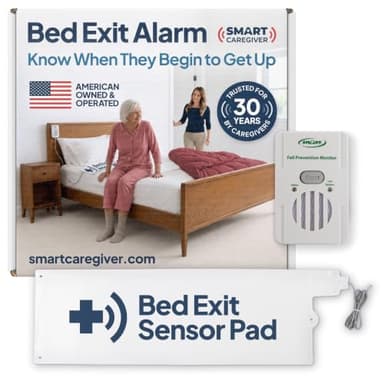
The in-room version, and the only bed alarm we track whose alarm sounds at the person getting up. CMS names an alarm audible to the person as something that can act as a physical restraint, and this listing sells the pager as a separate add-on kit.
- Alarm
- 80 dB in-room
- Our spec score
- 5.8/10
- Best for
- A caregiver in the same room
As of October 12, 2026. #ad How we’re funded
What works
- The simplest form of the product — a pad, a cord and a monitor, with nothing to pair, configure or keep on a network
- Low-battery and sensor status lights, so you can tell at a glance that it is still working, and a reset button that silences it without unplugging anything
- A published one-year warranty and a sealed, wipe-clean pad, from a company that has made only this category for decades
What doesn’t
- The alarm sounds in the room at 80 dB. CMS guidance describes a position change alarm audible to the person as something that can have the effect of a physical restraint, and an alarm going off mid-transfer can startle someone into the fall you were trying to prevent
- The pager that fixes that is an add-on kit sold separately, so the version most people should own costs more than the sticker on this one
- No sensor pad life published, and the monitor is corded to the pad, so the cord runs across the floor beside a bed where someone is getting up in the dark
Published specifications
| Where the alert goes | In-room monitor, corded to the pad |
|---|---|
| Sensor pad | 10 x 30 in vinyl, foam interior, sealed for incontinence |
| Pad placement | Under the shoulder blades or hips |
| Published range | Not published |
| Alarm volume | 80 dB, two volume levels |
| Batteries | One 9 V, included; AC-02 adapter sold separately |
| Sensor pad life | Not published |
| Expandable with | Optional wireless pager add-on kit, sold separately |
| Warranty | 1 year manufacturer |
Read from the product listing on 2026-08-28. Blanks are specifications the manufacturer does not publish, not figures we could not be bothered to find.
How the score was reached
| Where the alert landsThe alarm sounds in the room at a published 80 dB; a pager is only an add-on kit sold separately. | 3 |
|---|---|
| How early it firesPad placement published, with the alarm sounding as pressure is removed. | 8 |
| Published rangeA corded monitor at the bedside — there is no wireless range to publish. | 5 |
| Running costs disclosedA one-year warranty and an included battery are published; no sensor pad life is. | 6 |
| ExpandabilityAn optional wireless pager kit is named; no supported sensor count is published. | 7 |
| Mean, rounded to one decimal | 5.8 |
Why the highest score is not our top pick
The bed-and-chair set scores highest here, and it earns that honestly: it publishes everything the bed-only kit publishes and adds a second sensor on the same pager. We have still put the bed-only kit first, for a reason we would rather state than hide. Most people arriving on this page need a bed alarm and not a chair alarm, the set is the most expensive system on the page, and a pad you never place is not a feature. If the chair is genuinely part of the problem — and for anyone who dozes in a recliner during the day it often is — the set is the better buy and its score says so.
The scores also tie at the top. The bed-only kit and the expandable Smart Caregiver system land on the same number by different routes: one publishes how long its pad lasts, the other publishes a warranty and a supported sensor count. We ranked the pad life first because it is the recurring cost, and a warranty on the monitor does not help you when the pad stops reading.

Five things to check before you buy
- Is there actually somebody to alert? If the person lives alone, an alarm makes a noise in an empty house. A call button, a phone within reach of the floor, or a monitored service is a different product and a better answer.
- Will the alert wake you? Published volume figures on this page run from 48 dB to 120 dB, and two listings from the same brand disagree about the same handset. Whatever you buy, put the pager where you sleep and set it off deliberately before you depend on it.
- Does it reach through your walls? Open-area range figures are measured in the open. The one listing here that publishes an indoor figure gives 30 to 150 ft against 330 ft outdoors, which is the honest shape of the difference. Test the real distance in the real house during the return window.
- What does a replacement pad cost? Ask the seller in writing before you buy. Only one brand here publishes a pad life at all, and a system whose consumable is unpriced is a subscription you have not been quoted.
- Have you done the free things first? A light within reach of the pillow, a clear path, no loose rugs, and a bed at a height that can be risen from in one movement. The checklist takes twenty minutes and costs nothing, and the evidence behind it is stronger than the evidence behind any alarm on this page.
What an alarm cannot do
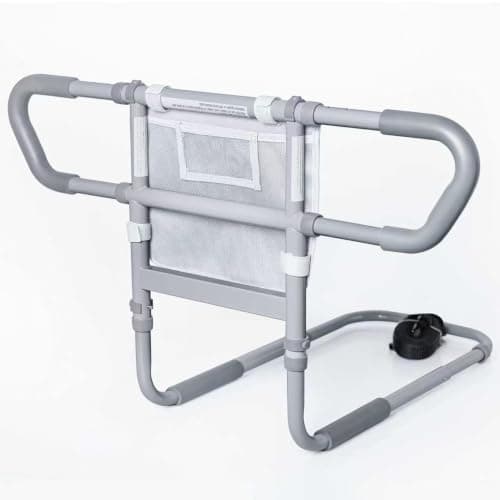
It cannot make the bed easier to get out of. If the difficulty is the transfer itself — the push to standing, the wobble on the way up — the product that helps is an assist handle beside the bed, or a change to the bed height, and both do something an alarm never will. If the worry is rolling out while asleep, that is a rail question, with its own safety case to read first.
And if the person gets up confused at night, be careful about what you are actually solving. A barrier can make that worse rather than better, and so can a noise. Floor beds and fall risk covers the lower-bed trade honestly, and who should not use a bed rail covers the same ground from the other direction. Where the confusion is dementia specifically, the ranking on this page changes — wandering rather than the bedside becomes the risk you are buying against, which promotes a system that will also take a door sensor: bed alarms for dementia care. For someone whose mobility is changing because of a condition rather than age alone, our page on Parkinson's and mobility is the better starting point than a product grid.
Questions people actually ask
What is the best bed alarm for elderly adults?
The one whose alert reaches you and not them. Every system here sends the alert somewhere; only one of the six makes its noise beside the bed, and that is the one we would skip for a home. After that it comes down to how early the sensor fires and whether the listing tells you how long the sensor pad lasts.
Do bed alarms prevent falls?
There is no good evidence that they do. A cluster randomized trial across 16 nursing units and 27,672 hospital patients successfully increased bed alarm use and found no difference in falls, injurious falls or restraint use. CMS says the same thing in its own surveyor guidance: the efficacy of alarms to prevent falls has not been proven. An alarm shortens the time someone lies on the floor. That is worth having. It is not fall prevention.
Are bed alarms considered a restraint?
An alarm audible to the person can be. CMS's guidance to nursing home surveyors treats a position change alarm as a potential physical restraint when a resident is afraid to move to avoid setting it off. That rule is written for facilities, not for your house, but the mechanism is the same in a bedroom — which is why we rank an in-room alarm below every pager system here.
Should the pad go under the shoulders or the hips?
The two brands here directly contradict each other. Lunderg puts the pad at hip level and argues in its own listing that shoulder placement is what causes false alarms; Smart Caregiver puts it under the shoulders and says that is what gives an immediate alert. Neither publishes any evidence, so we score both on what they state rather than on who is right, and we say plainly that this is unresolved.
Will Medicare pay for a bed alarm?
We cannot point you at a coverage determination that pays for a consumer bed exit alarm, and we will not invent one. What is on the listings is different: one seller here states its system is FSA and HSA eligible. Our HSA and FSA page covers what actually decides that, and our Medicare page covers how the durable medical equipment benefit works and who it is really for.
How long does a bed alarm sensor pad last?
Only one brand on this page says. Lunderg publishes 15 months for its pads; nobody else publishes a figure at all, and the pad is the part that wears out. Treat a bed alarm as a purchase with a recurring cost attached, and ask the seller in writing what a replacement pad costs before you commit to a system.
Sources
Every factual claim on this page traces to one of these, or to a product listing cited in the specification table beside it.
- CMS — State Operations Manual Appendix PP, guidance to surveyors (F604 physical restraints; F689 accidents and supervision)
- Shorr et al. — Effects of an Intervention to Increase Bed Alarm Use to Prevent Falls in Hospitalized Patients: A Cluster Randomized Trial, Annals of Internal Medicine 157(10), 2012
- CDC — Facts About Falls
- CDC STEADI — Clinician fact sheet (PDF)
Read next
Guide
Who Should Not Use One
Four situations where a rail makes things worse, and the alternatives that work better in each.
Guide
Fall Prevention Checklist
Most of what prevents a bedroom fall is free, dull, and never bought. Here is the list, grounded in the CDC's own falls guidance.
Comparison
Best Bed Rails
Scored on whether the listing states compliance with the standard that became federal law in 2023 — and four other things.
Our top pick — Lesamediio HC035 Bed Assist Rail
$69.99 · Check priceAs of October 12, 2026. #ad How we’re funded
Guide
Floor Beds and Fall Risk
Lowering a bed shortens the fall and makes standing up harder. Both halves of that are true, and the choice is real.
Guide
Parkinson's and Mobility
Bed mobility is often the hard part. A higher firmer edge, a head raise and a grip help you move, with your therapy team, not instead of it.
Guide
HSA and FSA
Usually not for a bed, sometimes for what goes on it. What actually decides eligibility, and what a letter of medical necessity does.
Gift guide
Gifts for Caregivers
For the person doing the caring, the gift is an uninterrupted night. Alarms that reach a pager or a phone, and one rail that reduces the number of calls in the first place.
Our top pick — Lunderg Wireless Early Alert Bed Alarm System
$119.95 · Check priceAs of October 12, 2026. #ad How we’re funded


Nothing here is medical advice. Prices are pulled live and stamped with the date they were checked; scores are our published spec rubric, not a test result. How we pick · How we make money · Corrections