Guide
Helping someone out of bed, safely
Roll, sit, pause, stand — in that order, with the helper beside the person rather than lifting them. The sequence matters more than strength, and the pause matters most.
By Stephen V.Published How we pick
The verdict first: roll, sit, pause, stand — and the helper steadies rather than lifts. The single change that makes the biggest difference is not strength or technique at all: it is giving the person something fixed to pull against, which is why the Able Life Bedside Safety Handle is the first thing we would buy for this job. An arm that moves when it is pulled helps less than a handle that does not, and it puts the helper's back in the load path.
The sequence, step by step
- Set the scene first. Light on. Slippers or shoes on, not socks. Walker or stick within reach but not yet in use. Floor clear on the side they are getting out from. If the bed has a head lift, raise it now rather than later.
- Roll onto the side facing the edge. Knees bent, top arm reaching across. Rolling toward the strong side is easier for anyone with a weak side, which also decides which edge of the bed they should be leaving from.
- Legs over, push to sitting. The lower legs drop over the edge and the body follows as the person pushes up on the underneath elbow and then the hand. The weight of the legs going down helps the torso come up - that is why this is one movement rather than two.
- Pause. Sitting, feet flat. This is the step people skip and the step that matters. Both feet flat on the floor, hips back, thirty seconds or so. Check for dizziness before any weight goes onto the legs.
- Stand: nose over toes. Feet slightly apart, one a little behind the other if that helps, lean the chest forward over the feet, then push down through the arms on something fixed and straighten the legs. The helper stands beside them, a hand at the waist or behind the shoulder blade for balance.
- Pause again before walking. Standing still for a moment beats setting off and reaching for furniture half way across the room.
What makes it harder, and which of those you can fix
| The obstacle | Why it makes the transfer harder | The cheapest fix |
|---|---|---|
| The bed is too low | Standing starts from a deep squat | Risers: 3, 5 or 8 in published lifts |
| Nothing fixed to hold | They pull on the helper, or on furniture that moves | A handle or rail bolted to the bed |
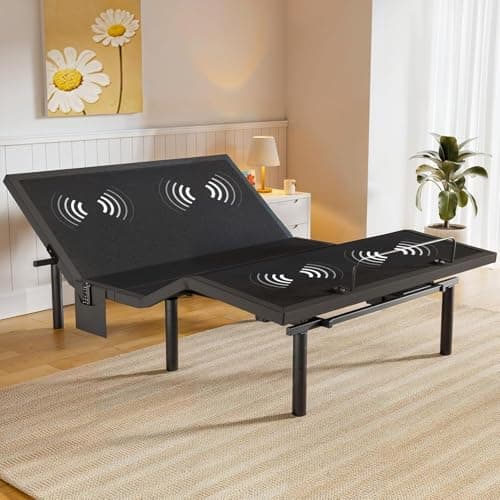
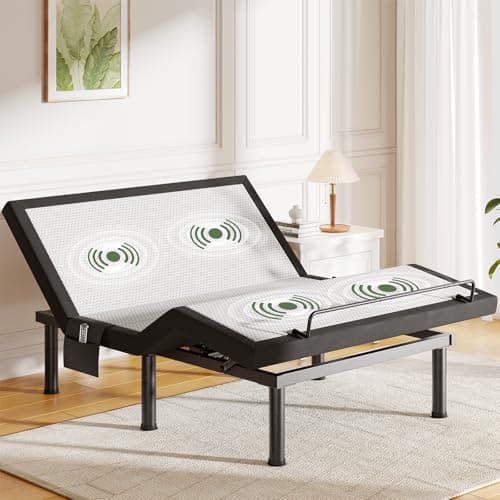
| Flat start position | The torso has to come off the mattress unaided | A head lift - published by 13 of 14 bases |
| Dark room, bare feet | The fall risk is the trip, not the transfer | A motion light and shoes, not socks |
The height one is worth settling before anything else, because it is measurable rather than a matter of judgement: sitting on the edge, the target is feet flat on the floor with knees level with or just below the hips. Work out the number for this person, measure what the bed is now, and only then decide whether hardware is needed at all.
Protecting the helper
Helpers get hurt in this category more often than anyone plans for, and almost always the same way: a person who is halfway to standing grabs an arm, and the helper takes a sudden partial load in a twisted position. Three habits prevent most of it. Stand beside rather than in front. Give them something fixed to hold so your arm is not the handhold. And decide in advance what you will do if they cannot get up — because deciding that mid-transfer is how both people end up on the floor.
If the honest answer is that the person cannot take their own weight on a bad day, then this has stopped being a technique question. A two-person transfer, a hoist, or a hospital bed with carer-height adjustment are the next steps, and all three start with an assessment rather than a purchase. What a hospital bed does differently.
Three things that reduce how much help is needed
Each of these replaces part of the help rather than all of it, and each is covered in full elsewhere on the site. The full cross-category comparison, including every rail and riser we track, is on equipment that helps someone get out of bed.
| # | Pick | Key spec | Score | Price |
|---|---|---|---|---|
| Rank1 | 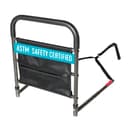 Able Life Bedside Safety Handle Reduces the help needed most | Key specStand assistType | Score8.0/10 | |
| Rank2 | 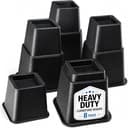 Home It Adjustable Bed Risers, 3/5/8 in Fixes the height, not the person | Key spec3, 5 or 8 inLift | Score8.5/10 | |
| Rank3 | 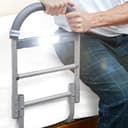 Lunderg Bed Assist Rail with Motion-Activated Light Best for the night trip | Key specMotion-activatedLight | Score8.0/10 |
Prices checked October 16, 2026. Scores are our published spec rubric, not a test result — here is exactly how they are calculated.
1 · Reduces the help needed most
Able Life Bedside Safety Handle
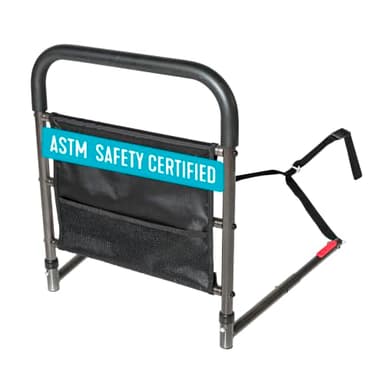
A padded stand-assist handle rather than a guard rail — the right tool if the problem is standing up, not rolling out.
- Type
- Stand assist
- Our spec score
- 8.0/10
- Best for
- Standing up, not staying in
As of October 16, 2026. #ad How we’re funded
What works
- Height adjustable, so the grip can sit where your hand naturally reaches from sitting
- Padded grip, which matters if arthritis makes a bare steel tube unpleasant to hold hard
- A published 300 lb load rating and a published fit across king, queen, full and twin
What doesn’t
- It is a handle, not a rail. It will not stop anyone rolling out of bed, and it is not meant to
- 300 lb is the lowest published rating of the rails here, and standing up loads a handle harder than sitting on it does
- No light, and the listing rules out adjustable beds and extra-soft mattresses
Published specifications
| Type | Stand-assist handle (not a full-length guard rail) |
|---|---|
| Standard claimed | ASTM safety approved |
| Height adjustable | Yes |
| Padding | Padded grip |
| Load rating | 300 lb |
| Fits | King, queen, full and twin beds; mattresses 6–14 in thick |
| Light | Not published |
Read from the product listing on 2026-08-26. Blanks are specifications the manufacturer does not publish, not figures we could not be bothered to find.
How the score was reached
| Standard complianceASTM compliance stated on the listing. | 9 |
|---|---|
| Grip and reachHeight adjustable with a published padded grip. | 9 |
| Load rating300 lb published — the lowest published figure of the rails here. | 8 |
| FitKing, queen, full and twin all published, with a 6–14 in mattress window. | 9 |
| Night useNo light published — neutral score. | 5 |
| Mean, rounded to one decimal | 8.0 |
2 · Fixes the height, not the person
Home It Adjustable Bed Risers, 3/5/8 in
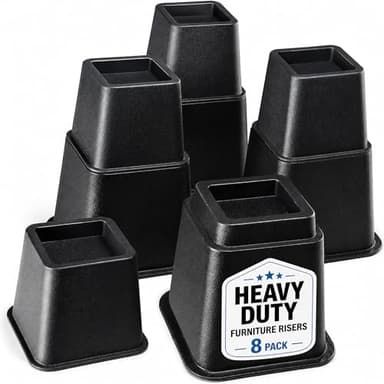
Three published lift heights from one set and a published 1,300 lb rating — the most flexible way to test a height before committing to it.
- Lift
- 3, 5 or 8 in
- Our spec score
- 8.5/10
- Best for
- Trying a height first
What works
- Three heights out of one box, so you can try 3 inches, decide it is not enough, and go to 5 without buying twice
- A published 1,300 lb rating for the set, and a published material — polypropylene, not an unnamed plastic
- Cheap enough that testing a height costs less than being wrong about one
What doesn’t
- Stacked risers are less stable than a single-piece riser of the same height — stack at your own judgment
- No published socket depth, and socket depth is what decides whether your bed leg actually sits in it
- Raising a bed raises the fall distance. Height helps you stand; it does not help you land
Published specifications
| Lift heights | 3, 5 or 8 inches (stackable) |
|---|---|
| Load rating | 1,300 lb |
| Pack | 4 |
| Material | Polypropylene |
| Socket depth | Not published |
Read from the product listing on 2026-08-26. Blanks are specifications the manufacturer does not publish, not figures we could not be bothered to find.
How the score was reached
| Lift rangeThree published heights from 3 to 8 inches. | 10 |
|---|---|
| Load rating1,300 lb published for the set. | 9 |
| StabilityPolypropylene with a broad base published; stackable by design, and no socket depth. | 7 |
| Set sizeFour-pack — one per bed leg. | 8 |
| Mean, rounded to one decimal | 8.5 |
3 · Best for the night trip
Lunderg Bed Assist Rail with Motion-Activated Light
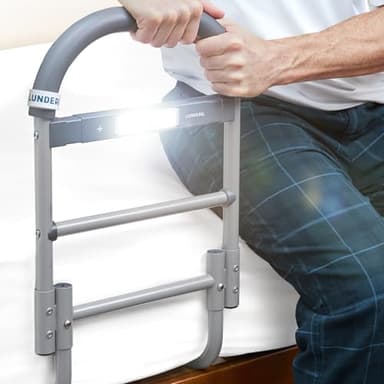
The motion light is the feature. Most bedroom falls happen on the way to the bathroom in the dark, and this one lights the floor as you reach for it.
- Light
- Motion-activated
- Our spec score
- 8.0/10
- Best for
- The 3am bathroom trip
As of October 16, 2026. #ad How we’re funded
What works
- A motion-activated light on the thing you were already going to grab — no switch to find in the dark
- A published non-slip grab bar and a 300 lb load rating, load-tested on a steel frame with four stabilizing bars
- Marketed for post-surgery use, which is often when a rail is a temporary need rather than a permanent one
What doesn’t
- The listing does not state ASTM compliance, and for an adult portable bed rail that is now a legal requirement worth confirming with the seller. It is the only rail here that names no standard at all
- No published height adjustment, so the grip sits where it sits
- The listing rules out adjustable beds, so this is not the rail for a motorized base
Published specifications
| Light | Motion-activated |
|---|---|
| Type | Bed assist rail with non-slip grab bar |
| Standard claimed | Not published |
| Load rating | 300 lb, load-tested |
| Height adjustable | Not published |
| Fits | Twin to king, mattresses 7–13 in thick; not adjustable beds |
Read from the product listing on 2026-08-26. Blanks are specifications the manufacturer does not publish, not figures we could not be bothered to find.
How the score was reached
| Standard complianceNo standard stated on the listing — neutral score. | 5 |
|---|---|
| Grip and reachNon-slip grab bar published; no height adjustment stated. | 8 |
| Load rating300 lb published and described as load-tested. | 8 |
| FitTwin to king with a 7–13 in mattress window published; adjustable beds excluded. | 9 |
| Night useMotion-activated light published — the top band. | 10 |
| Mean, rounded to one decimal | 8.0 |
Able Life Bedside Safety Handle — a padded, height-adjustable vertical grip rated to 300 lb, with the widest published mattress-depth window of anything we track at 6 to 14 inches. It is the right shape for the stand rather than the roll: something to push down and forward on at the moment the legs straighten. It gives no protection against rolling out of bed, which is a different product and a different problem. Handles compared.
Home It risers — three published lift heights from one set (3, 5 or 8 inches, stackable) and a published 1,300 lb rating across four pieces. If the bed is low, this fixes the transfer by changing the furniture rather than by asking more of either person, and it is the cheapest thing on this page. Riser weight limits.
Lunderg bed assist rail — a rail with a motion-activated light and a published, load-tested 300 lb rating, fitting mattresses 7 to 13 inches thick. The light is the reason it is here: the transfer that goes wrong is usually the unplanned one at 3am, and a rail that lights the floor as a hand reaches for it addresses the trip rather than the stand. Its listing names no ASTM standard, which the Lesamediio and the YrHeiper both do. Why that standard matters.
The transfer sequence above is general information, consistent with the CDC falls-prevention material named below; it is not a care plan and it does not replace instruction from the person's own therapist. Product figures were read from live Amazon listings on the dates stamped in each product's own specification table, and blanks are reported as blanks rather than filled in. How we pick.
Questions people actually ask
How do you help an elderly person get out of bed?
In four stages, in this order: roll onto the side facing the edge, drop the lower legs over the side while pushing up on the elbow to come to sitting, pause sitting on the edge with both feet flat on the floor, then stand by leaning forward over the feet and pushing down through the arms. The helper's job is to steady and to prompt, not to lift. If the person's therapist has taught them a different sequence, theirs wins — it was chosen for their body.
What is the most important part of the sequence?
The pause sitting on the edge. It lets blood pressure settle, which is the difference between standing up and standing up dizzy, and it gives both people a moment to check that the feet are flat and the floor is clear. Thirty seconds of sitting prevents more falls than any piece of hardware on this site. Why standing up makes people dizzy.
How do I avoid hurting my own back?
Do not lift, and do not let them pull on you. Stand close beside them rather than in front, keep your own feet apart and your knees soft, and give them something fixed to hold instead of your forearm — a rail or a handle that is bolted to the bed does not move when they pull, and your arm does. If the person genuinely cannot take their own weight, that is a two-person transfer or an equipment question, and continuing to do it alone is how helpers get injured.
What should I never do?
Three things. Never pull someone up by their hands or under their armpits — shoulders are easily injured and an armpit lift gives you no control. Never let them grab a walker to pull themselves up; walkers tip. And never hurry the pause. If the room is dark, turn on a light first: most bedroom falls happen on the way to the bathroom at night. The bedroom fall prevention checklist.
Does raising the head of the bed help?
Yes, and it is the cheapest change in this list if the bed can do it. Starting from a partly upright position removes the hardest part of the movement, which is getting the torso off the mattress. Thirteen of the fourteen adjustable bases we track publish a head lift; on a bed with no motor, a few minutes sitting propped against pillows before the transfer achieves some of the same thing.
When should we get a professional assessment?
When the help needed is increasing, when it takes two people, when there has been a fall, or when either person is finding it painful. A physical or occupational therapist can assess the transfer itself and recommend equipment with far more precision than any website — and in the US, a falls assessment is standard practice for older adults, as the CDC's clinician material below sets out.
Sources
Every factual claim on this page traces to one of these, or to a product listing cited in the specification table beside it.
Read next
Comparison
Getting-Up Aids
Three kinds of hardware do three different jobs. Which one you need depends on whether the failure is pulling up, standing up, or a bed that is simply the wrong height.
Our top pick — Lesamediio HC035 Bed Assist Rail
$69.99 · Check priceAs of October 16, 2026. #ad How we’re funded
Guide
Getting Up With a Walker
The walker is not a handhold for standing up - AAOS says so plainly. What to push from instead, and why the bed's height does most of the work.
Our top pick — Able Life Bedside Safety Handle
$49.99 · Check priceAs of October 16, 2026. #ad How we’re funded
Guide
Fall Prevention Checklist
Most of what prevents a bedroom fall is free, dull, and never bought. Here is the list, grounded in the CDC's own falls guidance.
Guide
Dizzy on Standing
The cause is a medical question and belongs with your doctor. The bed is the part we can help with: rising in stages, a handhold within reach, and a height your feet can meet.
Our top pick — Amada 01B-Q1 Queen Adjustable Bed Frame
Comparison
Stroke Recovery
One-sided weakness changes which side of the bed the person gets out of, and that decides every piece of hardware you buy. Set the side first, then the height, then the grip.
Our top pick — DOMIA T600 Queen Adjustable Bed Frame
$389.99 · Check priceAs of October 16, 2026. #ad How we’re funded
Guide
Best Bed Height for Seniors
A calculator that shows its working, because the right answer depends on your legs and not on an average.
Head to head
Rail vs Assist Handle
Two products, one search term, completely different jobs. Most people searching for the first one need the second.


Nothing here is medical advice. Prices are pulled live and stamped with the date they were checked; scores are our published spec rubric, not a test result. How we pick · How we make money · Corrections