Guide
Financing and paying over time
A payment plan changes when you pay, not what a bed costs — and on the wrong terms it costs more. How to read the plan before you sign.
By Stephen V.Published How we pick
Financing does not make a bed cheaper. It changes when you pay and, on the wrong plan, how much you pay in total — sometimes a good deal more than the sticker. That is the honest first sentence, and it is the one the checkout button is designed not to say. A payment plan can be a sensible tool when the alternative is going without something you genuinely need now. It can also quietly turn an affordable purchase into an expensive one. The difference is entirely in the terms, and the terms are what this page is about.
What checkout financing actually is
The financing offered on a product page or at a store counter is a loan, even when it is dressed up as a payment schedule. Two forms dominate. The first is short-term buy now, pay later — the balance split into a handful of equal payments over a few weeks or months, often advertised as interest-free. The second is longer store or brand financing, where a lender extends credit over many months and the seller advertises a low monthly figure. Both put the item in your house today and spread the cost. Both are only as good as the fine print underneath the headline.
It helps to separate the two questions the marketing blurs together. One is whether you can afford the monthly payment. The other is what the whole thing costs by the time it is paid off. The checkout is built to make you answer the first and forget the second.
The trap worth naming: deferred interest
The single most important distinction in this whole subject is between a plan that is genuinely interest-free and one that only defers the interest. They can look identical on the page and cost wildly different amounts.
A genuinely interest-free plan charges no interest, full stop — you pay the price back in installments and that is all. A deferred-interest plan advertises no interest if paid in full within a set window, and the catch is in what happens if you do not. Miss the window by a day, or leave a small balance unpaid at the end of it, and on many such plans the interest is not charged going forward from that point — it is charged retroactively, calculated on the original balance from the day you bought, as though the interest-free offer never existed. A plan that felt free becomes one of the more expensive ways to borrow, and the trigger is a date most people do not have written down.
Why the monthly figure is the wrong number to shop on
Sellers advertise the monthly payment because it is the smallest, friendliest number in the transaction. It is also the least informative. A low monthly payment can mean a short, cheap plan or a long, expensive one, and you cannot tell which from the payment alone. The number that tells the truth is the total you will have paid when the last installment clears.
- The total repaid, not the monthly amount. Add up every payment. If the plan carries interest, that sum is the real price of the bed.
- The length of any interest-free window, and the exact date it closes. On a deferred-interest plan that date is the whole game.
- What happens if you are late or miss the window — interest only from that point forward, or interest backdated to the day you bought.
- Any fees — account fees, late fees, setup charges — that do not show up in the advertised monthly figure at all.
- Whether a missed payment reports to credit bureaus. A bed is not worth a mark on your credit file.
There is often cheaper money than a payment plan
Before financing anything, it is worth checking whether you are about to borrow money you did not need to borrow. Several routes can beat a payment plan outright, and this hub has a page on each.
Pre-tax money is the clearest example. If part of the purchase qualifies for a health savings account or a flexible spending account, paying with pre-tax dollars is a genuine discount that no financing plan can match — you are spending money that was never taxed. A bed base rarely qualifies on its own, but specific products sometimes do, and the rules are particular. What actually qualifies for HSA and FSA walks through it.
For some people the question is not how to finance a bed but whether a bed is the thing to buy at all. If a clinical need genuinely applies, a covered hospital bed runs through insurance rather than a lender, and the coverage-versus-buying comparison lays out which route is faster and cheaper. Financing a purchase you might not have had to make in full is the most expensive version of this decision.
The cheapest fix usually needs no financing at all
This is the point that keeps surfacing across this hub, and it belongs here too. A payment plan is a way to afford a large purchase. Before reaching for one, it is worth being sure the large purchase is the right one. A great many of the problems people set out to solve with an adjustable bed — difficulty getting out of bed, a mattress that sits too low, wanting to sleep at a slight angle — are solved far more cheaply than a base, and cheaply enough that financing never enters the picture.
If the real problem is getting in and out of bed, that is usually height, and the height arithmetic is free to run and cheap to fix with a set of risers. If it is elevation for comfort or breathing, a wedge costs a small fraction of a base. Nobody finances a set of risers. The most reliable way to avoid a bad payment plan is to not need one, and the honest first step is always to price the smallest thing that would fix the actual complaint. Today's live prices across every category make that comparison easy to run before you commit to anything monthly.
If you do finance, read these lines first
- Find the actual credit agreement, not the checkout summary. The summary shows the monthly payment; the agreement shows the cost.
- Establish whether it is genuinely interest-free or deferred interest. Get the answer to the backdating question in writing before you agree.
- Write down the date any promotional window closes and set a reminder well before it, with a plan to clear the balance by then.
- Add up the total of all payments and compare it to the cash price. The gap is what borrowing costs you.
- Check for fees and late-payment terms, including whether a missed payment is reported to credit bureaus.
- Confirm what happens if you return the bed — how a refund interacts with the plan, and whether you keep paying while a return is processed. Trial periods and returns covers the return side in full.
Questions people actually ask
Is adjustable bed financing a good idea?
It can be, on a genuinely interest-free plan for something you needed anyway. It is a poor idea on a plan that only defers interest, or when it is used to buy something larger than the problem required. Financing does not make a bed cheaper — it spreads the cost, and on the wrong terms it increases it. Shop on the total you will repay, not the monthly payment.
What is deferred interest on a payment plan?
It is a plan advertised as no interest if paid in full within a set window, where interest is waived only if you clear the whole balance in time. Miss the window or leave a small balance, and on many such plans the interest is charged retroactively on the original amount from the purchase date, as though the offer never existed. Always ask, in writing, whether unpaid interest is backdated.
Is buy now, pay later always interest-free?
No. Some plans are genuinely interest-free; others defer the interest and charge it if you miss the promotional window. They can look identical on the checkout page. The only way to know which you have is to read the credit agreement, not the marketing summary, and to get the answer to the backdating question before you agree.
Should I finance an adjustable bed or use an HSA or FSA?
If part of the purchase qualifies for pre-tax money, that is a real discount no financing plan can match, because you are spending dollars that were never taxed. A bed base rarely qualifies on its own and specific products sometimes do, so check the rules first. Financing money you did not need to borrow is the most expensive version of this decision.
Does financing an adjustable bed affect my credit?
It can. Some plans run a credit check, and a missed or late payment may be reported to credit bureaus. Whether yours does is in the agreement. A bed is not worth a mark on your credit file, so check the late-payment terms before you sign and set a reminder to keep every payment on time.
Read next
Guide
What It Costs
Live prices across every category, plus the four accessory costs that never appear in anyone's total.
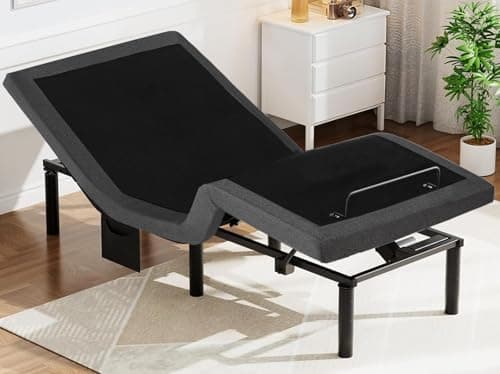
Our top pick — Pipishell Twin XL Adjustable Bed Frame
$339.99 · Check priceAs of September 22, 2026. #ad How we’re funded
Head to head
Rent vs Buy
Rental suits a short or uncertain need. Buying suits a long one. Medicare's capped rental changes the math in a way worth knowing.
Guide
HSA and FSA
Usually not for a bed, sometimes for what goes on it. What actually decides eligibility, and what a letter of medical necessity does.
Head to head
Coverage vs Buying
One costs weeks and might end in a denial. One costs a few hundred dollars and arrives Thursday. How to choose.


Nothing here is medical advice. Prices are pulled live and stamped with the date they were checked; scores are our published spec rubric, not a test result. How we pick · How we make money · Corrections