Comparison
The best bed alarms under $50
Under $50 you can get an alert out of the bedroom — but not from a pressure pad. Three alarms that qualified at the last price check, and what the band costs you.
By Stephen V.Published How we pick
We earn a commission if you buy through the links on this page, at no extra cost to you. It does not change what we recommend, and we have not tested these products — here is what we do instead.
The verdict first. Under $50 the one to buy is the EverNary WiFi bed sensor, because it is the only alarm at any price we track whose alert reaches a phone rather than a handset — which is the right answer when the person who needs to know is not in the house. The budget pick is the Nesthao, the cheapest system here and the cheapest way we know to get an alert out of the bedroom and onto a pager you carry. The third qualifier, the Smart Caregiver in-room monitor, is the one we would skip: its alarm sounds at the person getting up. Every price in the table above is read live and carries the date it was checked.
Three of the bed alarms we track carried a live price under $50 at the last check, out of six. The other three are pager systems built around a pressure pad, and they start well above this band. That split is not an accident of discounting — it is what the band is.
What $50 buys
At this price you get motion sensing, not weight sensing. Two of the three qualifiers detect a foot approaching the floor from a sensor that sits under the bed; the third is a pressure pad wired to a monitor in the same room. You also get, on two of the three, the single most important property in this category: the noise happens somewhere other than beside the person's head.
- An alert that leaves the room. Two of the three send it to a pager or a phone. That is the line between a safety device and a nuisance.
- No consumable. Neither floor sensor has a pad to replace, which matters more than it sounds: the one brand that publishes a pad life publishes 15 months, and it sits in the band above.
- Five volume levels and a USB power option, on the cheapest system here. The specification sheet at this price is thinner than the one above it, but it is not empty.
- Expansion, on one of them. The EverNary hub is published as taking up to twenty transmitters — a call button, a door sensor, another motion sensor — so the cheapest system here is also the most extensible one.
What it does not buy
- A pressure pad. Not one sub-$50 system senses weight on the mattress. A pad fires as somebody shifts to the edge; a floor sensor fires as their foot comes down. For a fall that happens during the transfer, that gap is the whole problem.
- A published warranty. Neither of the two systems we would actually recommend here publishes a term. The in-room monitor does — one year — and it is the one we would skip.
- A reliable range figure. The cheapest system publishes 918 feet in its bullets and 182 metres in its specification table, which is about 597 feet. Both are on the same listing, so we treat the range as unpublished rather than quoting either.
- Anything you can hold on to. An alarm is information. It is not a handle, a rail or a mat, and a sub-$50 alarm bought instead of one of those is the wrong order of purchase.
How we ranked them
- Where the alert goes. Out of the room beats in the room, every time, and a phone beats a pager when the carer is not on the property.
- When it fires. Earlier is better. Nothing in this band fires as early as a hip-level pressure pad, and the page says so rather than pretending the band is complete.
- What it depends on. A system that needs Wi-Fi and a cloud service is a system with two more ways to fail than one that needs batteries.
- The published record. Range, volume levels, battery type, expansion list, warranty. A figure the listing contradicts counts as no figure.
| # | Pick | Key spec | Score | Price |
|---|---|---|---|---|
| Rank1 | 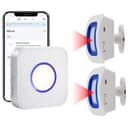 EverNary WiFi Smart Bed Sensor Alarm with App Best under $50, and the only alert that reaches a phone | Key specPhone appAlert path | Score6.8/10 | |
| Rank2 | 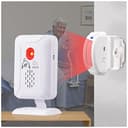 Nesthao Bed Sensor Alarm and Caregiver Pager (KS-SF20R) Budget pick: the cheapest alert out of the room | Key specFloor motionSensor | Score6.6/10 | |
| Rank3 | 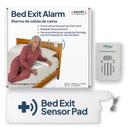 Smart Caregiver Bed Alarm for Elderly Adults (BB45-SYS) The one we would skip · we would skip this one | Key spec80 dB in-roomAlarm | Score5.8/10 |
Prices checked November 24, 2026. Scores are our published spec rubric, not a test result — here is exactly how they are calculated.
The sub-$50 field, side by side
| System | Alert path | Sensor | Network needed | Alarm at the bedside? | Warranty |
|---|---|---|---|---|---|
| EverNary WiFi | Phone app, hub also rings | Floor motion, 2 included | 2.4 GHz Wi-Fi | Only if you put the hub there | Not published |
| Nesthao KS-SF20R | Wireless pager | Floor motion, 1 included | None | No — stated on the listing | Not published |
| Smart Caregiver BB45 | In-room monitor, corded | Pressure pad, 10 x 30 in | None | Yes — 80 dB | 1 year |
The table makes the shape of this band plain. The only system here with a real pressure pad is also the only one that shouts at the person in the bed, and the two that behave correctly both sense at the floor. There is no sub-$50 product in our set that does both things right, and we would rather say that than rank three products as though one of them did.
The 80 dB problem
The in-room monitor on this page is a decades-old design and there is nothing shoddy about it: a sealed wipe-clean pad, status lights, a reset button, a published one-year warranty. The objection is to where the noise comes out. CMS guidance for nursing homes describes a position change alarm that is audible to the resident as something that can have the effect of a physical restraint, because somebody who knows a siren will go off learns not to move. At home the effect is smaller and the mechanism is identical.
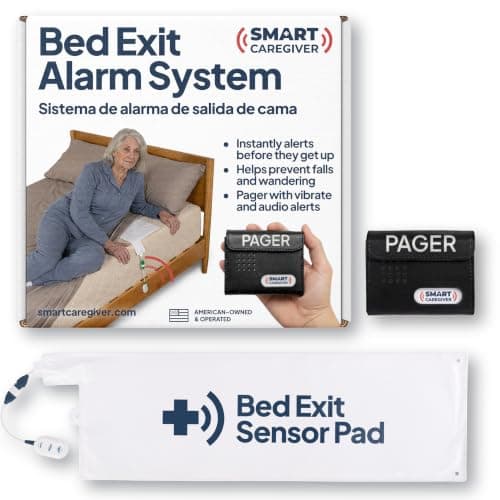
There is also the ordinary physical risk. Eighty decibels going off while somebody is halfway between lying down and standing up is a startle, and a startle at that moment is how people fall. The same brand sells a wireless pager as a separate add-on kit, which fixes it — and means the version most people should own is not in this band at all.

Where the money is better spent
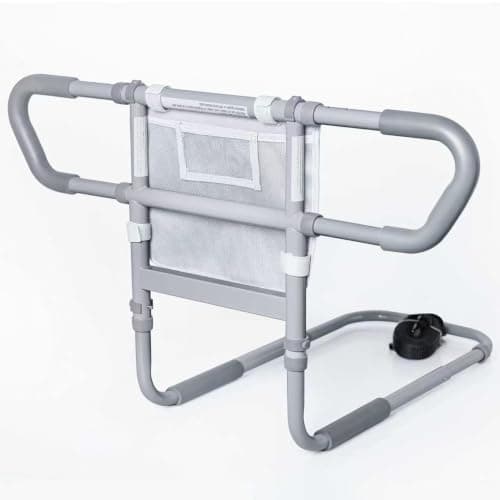
If the budget is genuinely tight and the main risk is a fall rather than wandering, we would not spend it on an alarm at all. A bed rail or assist handle gives somebody something to pull against at the moment the fall would happen, which is a better use of the same money than a device that tells you about it afterwards — the rails and handles under $100. If the bed is too low or too high to stand up from, the fix is cheaper still and it removes the risk rather than reporting it: bed risers and replacement legs under $50.
If wandering at night is the problem, the alarm is the right purchase and this band is a reasonable place to make it. The step up buys a hip-level pressure pad and a published pad life, and if that is what the situation needs, it is on the bed alarms with a pager.
Every specification on this page was read from a live Amazon listing on the date stamped in each product's own table, and scored against the rubric we publish. We have not installed or tested any of these systems, and nothing here is a test result. Prices are read live and carry their own date; no price is written into the words on this page, because in a band defined by a price threshold a typed number would be the worst possible place to be wrong. Where a listing publishes nothing — the warranty on two of three, the range on one — this page says so. How we pick.
Questions people actually ask
Can you get a usable bed alarm for under $50?
Yes, with one specific limitation. Three of the alarms we track were under $50 at the last price check and two of the three send the alert out of the bedroom, which is the property that matters most. What the band does not buy is a pressure pad: every sub-$50 system here senses movement at the floor rather than weight on the mattress, so the alert comes as the person is getting out rather than as they shift to the edge.
What is the cheapest bed alarm for the elderly?
Of the systems we track, the Nesthao floor sensor and caregiver pager — our budget pick on this page. It is a floor motion sensor plus a handset you carry, it states plainly that no noise sounds in the person's room, and it has no consumable pad to replace. Its own listing contradicts itself on range, which is why we treat that figure as unpublished rather than quoting the bigger number.
Is a cheap bed alarm worth buying?
It depends entirely on what fires it. A sub-$50 floor sensor is genuinely useful if the risk you are managing is somebody wandering at night, because the alert arrives while they are still in the room. It is much weaker if the risk is a fall during the transfer itself, because by the time a foot reaches the floor the dangerous part has already started. For that, a pressure pad at hip level is the right product and it sits above this band.
Why is the in-room alarm the one you would skip?
Because its alarm sounds at the person getting up, at 80 dB, two feet from their head. CMS guidance describes a position change alarm audible to the person as something that can have the effect of a physical restraint, and in practical terms a siren mid-transfer can startle somebody into a fall. It is also corded, so a cable runs across the floor beside a bed where someone is standing up in the dark. The pager that fixes both problems is an add-on kit sold separately.
Do cheap bed alarms need Wi-Fi?
One of these three does and two do not. The EverNary depends on 2.4 GHz Wi-Fi and the seller's cloud service, because its alert goes to a phone app rather than to a radio handset. The Nesthao pager and the in-room monitor work with no network at all. On an unreliable connection that difference decides which of these is worth owning.
What does a bed alarm not do?
It does not stop a fall. It tells you one may be starting, and everything useful that happens next depends on you being able to get there — or on there being something at the bedside to hold or to land on. Spend the rest of the budget on a rail or assist handle and, if the risk is real, a bedside fall mat.
Sources
Every factual claim on this page traces to one of these, or to a product listing cited in the specification table beside it.
Read next
Comparison
Best Bed Alarms
The first question is not which alarm. It is whether the noise happens next to the person getting up, or on a pager in your pocket.
Our top pick — Lunderg Wireless Early Alert Bed Alarm System
Comparison
Best With a Pager
The alert has to reach you, not the person getting out of bed. Five systems that put the noise in your hand, ranked on published range, pad life and what else each pager will take.
Our top pick — Lunderg Wireless Early Alert Bed Alarm System
Comparison
Best Rails Under $100
Four of the six rails we track were under $100 at the last check, and the cheapest one is not the worst. What separates them is what each listing is willing to publish.
Our top pick — Lesamediio HC035 Bed Assist Rail
Comparison
Best for Dementia
Six in ten people living with dementia wander. That one fact changes which alarm to buy, and rules out the product most families reach for first.
Our top pick — Smart Caregiver Bed Exit Alarm with Wireless Pager (RP-WPBR1-SYS)
Nothing here is medical advice. Prices are pulled live and stamped with the date they were checked; scores are our published spec rubric, not a test result. How we pick · How we make money · Corrections