Comparison
The best bed alarms with a caregiver pager
The alert has to reach you, not the person getting out of bed. Five systems that put the noise in your hand, ranked on published range, pad life and what else each pager will take.
By Stephen V.Published How we pick
We earn a commission if you buy through the links on this page, at no extra cost to you. It does not change what we recommend, and we have not tested these products — here is what we do instead.
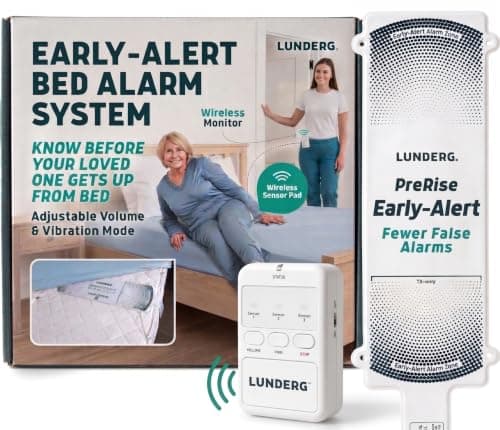
The verdict first. If somebody is getting out of bed at night and you are asleep in another room, buy the Lunderg Wireless Early Alert: it publishes the longest range here at up to 400 feet, it puts its pad at hip level so the alert comes before the person is standing rather than after, and it is the only brand in this set that says how long its sensor pad lasts. If the problem is going to spread beyond the bed, the Smart Caregiver pager takes up to six sensors and publishes more of its own specification than anything else here. The budget pick is the Nesthao, the cheapest way we know to get an alert out of the bedroom and onto a handset you carry — it fires later than a pad does, and it costs a fraction of one. Prices in the table above are read live by our price layer and carry the date they were checked.
This page exists because the category sells two completely different products under one name. Search for a bed alarm and you will find both: the kind that makes a noise at the person getting up, and the kind that makes a noise at you. Only the second one is on this page.
How we ranked them
- Where the alert goes, and when. A pager or a phone, never the bedside — and a sensor that fires as weight shifts beats one that fires as a foot lands.
- Published range. In feet, from the listing. An open-area figure is not a house figure, but a published number is still something you can hold a seller to.
- What the consumable costs you. A pressure pad wears out. One brand publishes a life for it and nobody else does, so this criterion rewards the one that tells you.
- What else the pager will take. A named list of compatible sensors, because the bed is rarely the last place this becomes a problem.
- The published record overall. Warranty term, battery type, pad dimensions, pager volume, placement instructions. Silence scores a neutral five rather than a guess, which is the rule across this whole site.
Each criterion is scored out of ten against bands we publish, averaged unweighted, and a specification the manufacturer does not publish scores a neutral five rather than being invented. We have not installed any of these systems and we make no claim about how reliably they fire. The full rubric.
| # | Pick | Key spec | Score | Price |
|---|---|---|---|---|
| Rank1 | 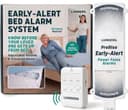 Lunderg Wireless Early Alert Bed Alarm System Best for a carer asleep in another room | Key spec400 ftPager range | Score8.8/10 | |
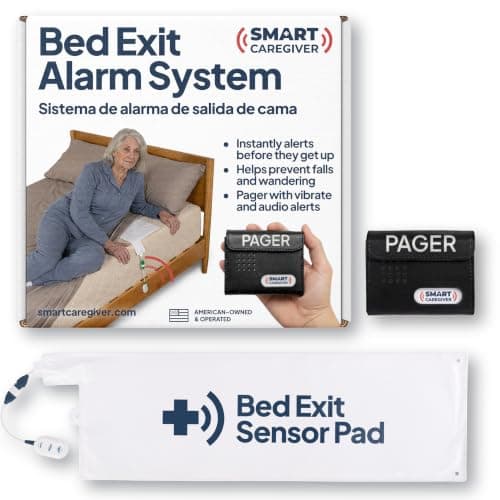
| Rank2 | 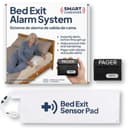 Smart Caregiver Bed Exit Alarm with Wireless Pager (RP-WPBR1-SYS) Best for a system that has to grow | Key spec6 sensorsPager supports | Score8.8/10 | |
| Rank3 | 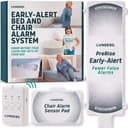 Lunderg Wireless Early Alert Bed and Chair Alarm Set Best for the bed and the chair on one pager | Key specBed + chairSensors | Score9.0/10 | |
| Rank4 | 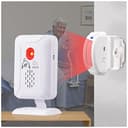 Nesthao Bed Sensor Alarm and Caregiver Pager (KS-SF20R) Budget pick: the cheapest pager system here | Key specFloor motionSensor | Score6.6/10 | |
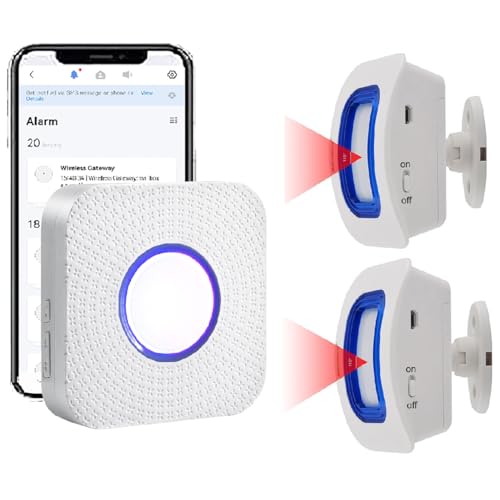
| Rank5 |  EverNary WiFi Smart Bed Sensor Alarm with App Best when the carer is not in the building | Key specPhone appAlert path | Score6.8/10 |
Prices checked November 24, 2026. Scores are our published spec rubric, not a test result — here is exactly how they are calculated.
The pager field, side by side
| System | Alert path | Published range | Sensor | Pad life | Warranty |
|---|---|---|---|---|---|
| Lunderg Early Alert | Pager | Up to 400 ft | Pressure pad, hip level | 15 months (seller stated) | Not published |
| Smart Caregiver RP-WPBR1 | Pager | 300 ft | Pressure pad, under shoulders | Not published | 1 year |
| Lunderg bed + chair set | Pager | Up to 400 ft | Two pressure pads | 15 months, both pads | Not published |
| Nesthao KS-SF20R | Pager | Contradictory — treated as unpublished | Floor motion | No consumable pad | Not published |
| EverNary WiFi | Phone app, hub also rings | 330 ft open; 30-150 ft indoors | Floor motion, 2 included | No consumable pad | Not published |
Two columns in that table do most of the work. The pad life column has one figure in it, from one brand, stated in a bullet point rather than in a warranty — which makes the running cost of a pad system a known quantity on exactly one of these products. The warranty column has one entry, from a different brand. No system here publishes both.
The placement argument nobody can settle
The two pad brands here disagree in print about where the pad goes. Smart Caregiver puts its pad under the shoulders. Lunderg puts its pad at hip level and its listing argues that shoulder placement is what produces false alarms, because a person who rolls over has taken their shoulders off the pad without going anywhere. Neither seller offers any evidence, so you are choosing between two marketing claims rather than between two findings — and we are not going to pretend otherwise.
What can be said without taking a side: a false alarm at three in the morning is not harmless. It wakes a carer who needs the sleep, and a system that cries wolf for a fortnight is a system that gets unplugged. If you buy a pad, be prepared to move it a few inches and try again before deciding the product is wrong.
The contradiction worth knowing about
Lunderg's bed-only kit publishes an audible figure of 120 dB in its specification table and never says which device that describes. The same brand's bed-and-chair set publishes 48 dB for what looks like the same handset. Both figures are on live listings from one brand and they cannot both describe the same pager. We have recorded the contradiction on both product entries rather than picking the flattering number, and the practical consequence is simple: whichever you buy, test whether the pager actually wakes you before you trust it to.

When a phone beats a pager
One system here does not use a pager at all: the EverNary sends its alert to a phone app, and the listing's own example of the use case is being in another city. That is a real gap the pagers cannot fill — a radio handset has to be within range of the bedroom, and an adult child two suburbs away is not. The app also has a share function, which is how a family actually splits a night between siblings rather than how a product brochure imagines it.
The trade is dependency. The EverNary needs 2.4 GHz Wi-Fi and the seller's cloud service, and every pager system on this page keeps working when the internet does not. If the house has unreliable broadband, that is not a small-print detail — it is the difference between an alarm and an ornament.
What none of them publishes
- A false-alarm rate. Not one listing publishes any figure for sensitivity, and the whole argument about pad placement above exists in that vacuum.
- A replacement pad price. One brand tells you the pad lasts 15 months and no brand tells you what the next one costs, so the running cost is knowable in months and not in dollars.
- A battery life for the pager. Battery types are published; how long they last on standby is not, on a device whose entire job is to be working at four in the morning.
- Any test standard. There is no named standard, no certification and no third-party test on any of the five. Our scores read what the listings publish; they are not a verdict on whether these alarms fire.
What to buy with it
An alarm tells you somebody is getting up. It does nothing to make the getting-up safer, and on its own it can turn into a device that summons you to watch a fall rather than prevent one. The two things worth buying alongside it are something to hold on to and something to land on: a bed rail or assist handle, and a bedside fall mat. If the bed is simply too low to stand up from, fix that first — it is arithmetic rather than equipment, and we show the sums on the bed-height page.
Every specification on this page was read from a live Amazon listing on the date stamped in each product's own table, and scored against the rubric we publish. We have not installed or tested any of these systems. Prices are read live and carry their own date; nothing here states a price in prose, because a price in prose goes stale silently. Where a listing publishes nothing — the warranty on four of five, the pad life on four of five, a false-alarm figure on all five — this page says so. How we pick. If the ceiling is tighter than this, the cheap end has its own ranking: the bed alarms under $50.
Questions people actually ask
What is a bed alarm with a pager?
It is a two-part system. A sensor on or under the bed detects that somebody is getting up, and a small handset — the pager — makes the noise somewhere else in the house. The person in the bed hears nothing. That is the whole point of the design, and it is what separates these from the in-room alarms that sound a siren at the person mid-transfer.
How far does a bed alarm pager reach?
The figures published on the listings we read run from 300 feet to 400 feet of open-area range, and one listing contradicts itself badly enough that we treat its range as unpublished. Open-area range is not house range: every wall, floor and appliance between the sensor and the handset takes some of it. Walk the house with the pager on the day it arrives and find the dead spots before you rely on it.
Do I need a sensor pad, or will a motion sensor do?
They fire at different moments. A pressure pad under the hips or shoulders alerts when weight shifts toward the edge of the bed, which is before the person is standing. A floor motion sensor alerts when a foot is about to reach the floor, which is later — and for somebody who falls during the transfer itself, later may be too late. The pads cost more and they are consumables. The floor sensors cost less and never need replacing.
How long does a bed alarm sensor pad last?
Only one brand in this set publishes a figure at all: Lunderg states 15 months for its pads, in a bullet point rather than in a warranty. Nobody else states anything, which means the running cost of the pad systems is unknowable from the listings. If a replacement pad arrives every year and a bit, a pad system is a subscription with extra steps — worth knowing before you choose between a pad and a floor sensor.
Will a bed alarm wake the person in the bed?
Not these ones, as far as every listing here states. Each of the five sends its alert away from the bedside, either to a pager or to a phone. The in-room version of the same product does sound at the bed, and CMS guidance describes a position change alarm that is audible to the person as something that can have the effect of a physical restraint — so the distinction is not a comfort preference. The whole bed-alarm field, including the one we would skip.
Does Medicare pay for a bed alarm?
No. A bed exit alarm is not durable medical equipment under Medicare Part B, and no clinical order makes it one. Families pay for these out of pocket, which is part of why the cheapest pager system here matters as much as the best-documented one. What Medicare does and does not cover, and the HSA and FSA position.
Can one pager cover more than one sensor?
On two of these, yes, and the listings name the parts. The Smart Caregiver pager is published as supporting up to six sensors — chair pad, door exit, floor mat, motion sensor, call button. The EverNary hub is published as taking up to twenty transmitters. The Lunderg bed-only kit names a chair alarm and a call button. Nothing else here publishes an expansion path, so if the problem is likely to spread from the bed to the chair or the front door, buy into a system that says so.
Sources
Every factual claim on this page traces to one of these, or to a product listing cited in the specification table beside it.
Read next
Comparison
Best Bed Alarms
The first question is not which alarm. It is whether the noise happens next to the person getting up, or on a pager in your pocket.
Our top pick — Lunderg Wireless Early Alert Bed Alarm System
Comparison
Best Under $50
Under $50 you can get an alert out of the bedroom — but not from a pressure pad. Three alarms that qualified at the last price check, and what the band costs you.
Our top pick — EverNary WiFi Smart Bed Sensor Alarm with App
Comparison
Best for Dementia
Six in ten people living with dementia wander. That one fact changes which alarm to buy, and rules out the product most families reach for first.
Our top pick — Smart Caregiver Bed Exit Alarm with Wireless Pager (RP-WPBR1-SYS)
Head to head
Alarm vs Rail
One tries to keep somebody in the bed. The other tells you they have left it. Which you need depends on a single question about the person, not about the product.
Our top pick — Lunderg Wireless Early Alert Bed Alarm System
Nothing here is medical advice. Prices are pulled live and stamped with the date they were checked; scores are our published spec rubric, not a test result. How we pick · How we make money · Corrections