Comparison
Alternatives to an adjustable bed
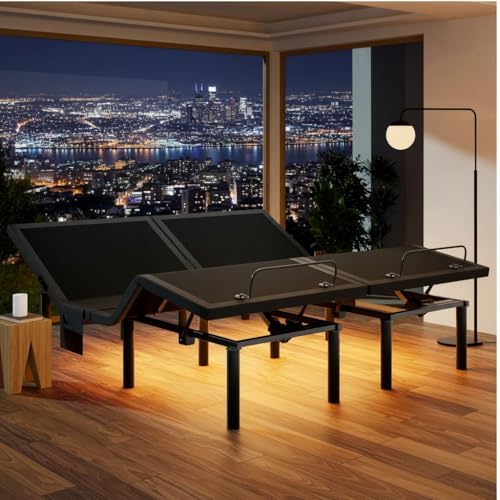
An adjustable bed does four separate jobs. Buy the one job you need and you can spend twenty dollars instead of five hundred.
By Stephen V.Published How we pick
We earn a commission if you buy through the links on this page, at no extra cost to you. It does not change what we recommend, and we have not tested these products — here is what we do instead.
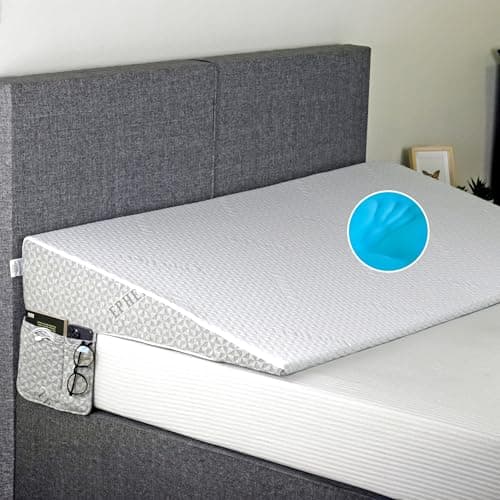
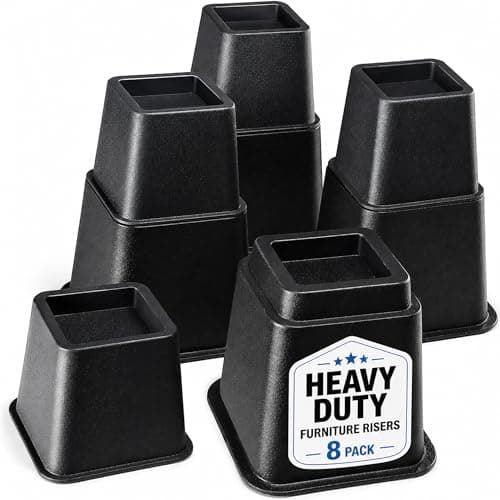
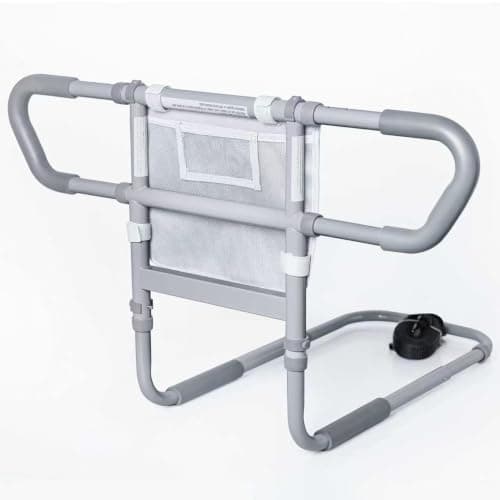
The verdict first. If you want the closest thing to an adjustable base without buying one, get the EPHEDORA under-mattress wedge — it goes under the mattress and tilts the whole bed, so you keep sleeping on your own surface, and it costs a fraction of the cheapest base we track. If the problem is getting OUT of bed rather than lying in it, the LESAMEDiiO assist rail does more for that than any base will. And the budget pick is a set of bed risers, under twenty dollars at the last price check and the cheapest useful thing on this page — the honest first purchase for anybody whose bed is simply the wrong height.
Here is the thing nobody selling an adjustable bed will tell you: it is four products in one box. It raises your head. It raises your legs. It changes the height of the bed. And it moves at the touch of a button. Most people need exactly one of those four, and pay for all of them.
The four jobs, and what each one costs separately
| What a base does | The cheap alternative | What you give up |
|---|---|---|
| Raises your head to sleep propped up | A wedge pillow, or an under-mattress wedge | It does not move; you set one angle and live with it |
| Raises your legs for swelling | A leg elevation pillow | One fixed height, and it has to be moved to get out |
| Changes the height of the bed | Risers, or replacement legs | No articulation at all — the bed stays flat |
| Moves at the touch of a button | Nothing here does this | This is the one job only a base does |
That last row is the honest part. If what you need is a bed that changes position repeatedly, every day, without anyone's help — because of surgery, because of breathlessness that comes and goes, because sitting up unaided is not possible — then nothing on this page is a substitute and you should buy the base. The bases we track, and the ones under $500.
How we ranked these five
Not against each other on specification — they are five different products — but on how much of a base's job each one does, for how little, with how little disruption. Each pick is scored against the published rubric for its own category, so the numbers in the ledger compare a wedge against other wedges, not against a rail. How the scoring works.
| # | Pick | Key spec | Score | Price |
|---|---|---|---|---|
| Rank1 | 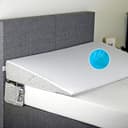 EPHEDORA ED-TP-QUEEN Under Mattress Wedge, 7.5 in, Queen Closest thing to a base | Key spec7.5 inRise | Score9.3/10 | |
| Rank2 |  Kolbs Bed Wedge Pillow, 7.5 in Best for the head end | Key spec7.5 inRise | Score8.8/10 | |
| Rank3 | 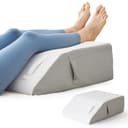 BIEEZZK Leg Elevation Pillow, 8 in Best for the foot end | Key spec8 inRise | Score9.3/10 | |
| Rank4 | 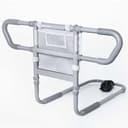 Lesamediio HC035 Bed Assist Rail Best if getting out is the problem | Key spec400 lbLoad rating | Score9.2/10 | |
| Rank5 | 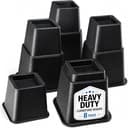 Home It Adjustable Bed Risers, 3/5/8 in Budget pick: cheapest alternative here | Key spec3, 5 or 8 inLift | Score8.5/10 |
Prices checked November 7, 2026. Scores are our published spec rubric, not a test result — here is exactly how they are calculated.
If the problem is at the head end
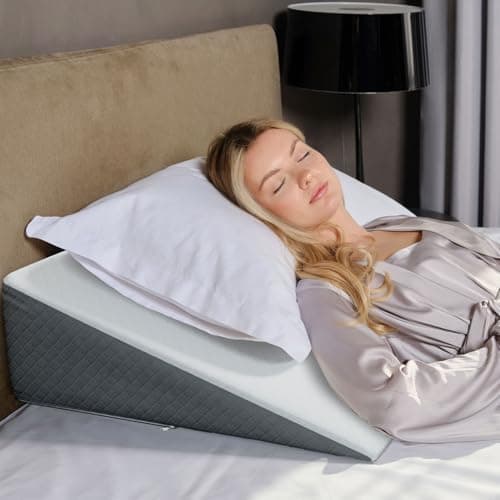
Two options, and they are genuinely different. A wedge pillow sits on the mattress under your torso. It is the cheapest, fastest, most reversible way to sleep at an angle, and it is what we tell everybody to try first. Its weakness is that it raises the torso only and has an edge you can slide off in the night.
An under-mattress wedge goes between the mattress and whatever it sits on, so the whole bed tilts and the surface you sleep on is the one you already own. It is far more comfortable to live with, and it costs several times more, weighs up to 14 pounds, and needs the mattress lifted to install. It also cannot be used on an adjustable base, which matters only if you already have one. The full comparison of the two, and the wedge pillows.
If the problem is at the foot end
A leg elevation pillow is the one substitution on this page that is nearly as good as the real thing. A base raises the feet to an angle; a leg wedge holds them at a fixed height, and for swelling and circulation the fixed height is usually what is wanted anyway. It costs less than a tenth of what a base does.
It has one real drawback and it belongs on this site: it is an object in the bed that has to be moved before you can sit up and get out. For somebody who already finds the transfer hard, that is an obstacle added to the exit route, and it is the reason we would not recommend one to a reader whose main difficulty is getting up. The leg pillows we track, and what elevation does and does not do for swelling.
If the problem is getting out of bed
This is where most readers of this site actually are, and it is where an adjustable bed is the weakest purchase. A base helps you get from lying to sitting. It does not help you get from sitting to standing, which is the harder half, and raising the deck can make it worse.
Two things do help, directly and cheaply. A bed rail or assist handle gives you something fixed to pull against, which is what the body is looking for in that moment — under $100, no tools on most, and it works with the bed you already have. Risers or replacement legs change the one measurement that decides whether your feet reach the floor with your knees at the right angle. Between them they cost less than a tenth of a base, and for a lot of people they are the whole answer. The aids for getting out of bed, the rails and the risers.

What none of these replaces
A hospital bed. If somebody needs to be repositioned by a carer several times a day, needs side rails fitted as part of a care plan, or needs the whole bed to rise and fall for transfers, that is a different class of equipment with a different route to paying for it — and it can be covered where the clinical criteria are met. Adjustable bed versus hospital bed, and getting a hospital bed approved.
Every specification on this page was read from a live Amazon listing on the date stamped in each product's own table, and scored against the rubric for its own category. We have not tested any of these products and we make no claim about how they feel. The coverage statements follow the federal sources named above rather than our opinion. Prices are read live and carry their own date. How we pick.
Questions people actually ask
What is a good alternative to an adjustable bed?
It depends entirely on which of the four jobs you need. If you want to sleep with your head raised, a wedge pillow or an under-mattress wedge does that for a fraction of the price. If you want your legs raised, a leg elevation pillow does it for under $40 at the last price check. If the bed is hard to get out of, a bed rail or a set of risers solves that and a base often does not. There is no single substitute, because an adjustable bed is not a single product.
Can you make a normal bed into an adjustable bed?
Not really, and the attempts that get sold as such are worth knowing about. An under-mattress wedge tilts the whole bed permanently — the nearest thing to a base's head lift, and it does not move once installed. Risers under the head legs raise the head end the way clinicians describe for reflux, crudely and almost for free. What nothing cheap will do is move the bed at the touch of a button, or raise the feet independently of the head. How a base actually works.
Is a wedge pillow as good as an adjustable bed?
For establishing whether elevation helps you at all, it is better, because it costs under $50 and you will know within a week. For living with long term, it is worse: it raises the torso only, it has an edge you can roll off, and it changes where the head sits relative to the shoulders. The honest sequence is pillow first, then decide whether a base is worth several hundred dollars. Wedge pillow versus adjustable bed.
What is the cheapest way to raise the head of a bed?
Risers or blocks under the two head legs of the frame, which is also what most clinical guidance describes when it says to elevate the head of the bed. It is the cheapest option on this page and it raises that end of the whole bed by the same amount, so it does not help if the bed is already too high to get out of. How to raise the head of a bed properly.
If I cannot get out of bed, will an adjustable bed fix that?
Sometimes, and less often than people assume. A base that raises the head helps you get from flat to sitting, which is genuinely useful. It does not change the height of the sleep surface, which is what decides whether you can stand up once you are sitting — and some bases make the bed taller. If standing up is the hard part, risers, replacement legs or a rail to pull against do more for a tenth of the money. The aids for getting out of bed.
Does Medicare cover any of these alternatives?
Generally no. Medicare's durable medical equipment benefit covers a defined list of items supplied by enrolled suppliers on a doctor's order, and wedge pillows, risers and consumer bed rails are not usually on it. A hospital bed can be covered where the clinical criteria in the coverage determination are met. Medicare and bed rails, and getting a hospital bed approved.
Sources
Every factual claim on this page traces to one of these, or to a product listing cited in the specification table beside it.
Read next
Guide
Are They Worth It?
Sometimes. Here are the four cheaper things to rule out first, and the three situations where a base is genuinely the right purchase.
Comparison
Sleep Number Alternatives
Sleep Number publishes two numbers that matter to anyone with a transfer problem: what the base costs, and how high its legs stand. Here is what else does the job.
Our top pick — Marsail NS0 Split King Adjustable Bed Base
$559.99 · Check priceAs of November 7, 2026. #ad How we’re funded
Comparison
Best Under-Mattress Wedges
A ramp that goes under the mattress so the surface you sleep on stays the one you own. Ranked on published rise, fit and foam - and not one of them mentions adjustable bases.
Our top pick — EPHEDORA ED-TP-QUEEN Under Mattress Wedge, 7.5 in, Queen
$129.99 · Check priceAs of November 7, 2026. #ad How we’re funded
Comparison
Best Wedge Pillows
The cheapest way to sleep on an incline — scored on published rise, coverage and cover, with the one thing a fixed ramp can never do.
Our top pick — Kolbs Bed Wedge Pillow, 7.5 in
Comparison
Best Bed Risers
The cheapest fix in this subject, scored on the two specs that matter: how much lift, and how much load.
Our top pick — Home It Adjustable Bed Risers, 3/5/8 in
Comparison
Getting-Up Aids
Three kinds of hardware do three different jobs. Which one you need depends on whether the failure is pulling up, standing up, or a bed that is simply the wrong height.
Our top pick — Lesamediio HC035 Bed Assist Rail
$69.99 · Check priceAs of November 7, 2026. #ad How we’re funded
Head to head
Wedge vs Adjustable Bed
One costs a fraction of the other. The cheap one wins more often than a site funded by product links is supposed to say.
Head to head
Adjustable Bed vs Recliner
Many people already sleep in the chair and did not plan to. Here is the honest comparison, including the cases where a recliner genuinely wins.


Nothing here is medical advice. Prices are pulled live and stamped with the date they were checked; scores are our published spec rubric, not a test result. How we pick · How we make money · Corrections