Guide
Are bed rails allowed in nursing homes?
Yes, with four conditions written into federal regulation — alternatives first, an entrapment assessment, informed consent, and a bed sized for the resident. The rule is quoted below.
By Stephen V.Published How we pick
Yes, bed rails are allowed in nursing homes — and they come with four conditions written into federal regulation. If a facility has told you it cannot simply put a rail on your relative's bed, that is not obstruction. It is the rule, and here it is:
Bed rails. The facility must attempt to use appropriate alternatives prior to installing a side or bed rail. If a bed or side rail is used, the facility must ensure correct installation, use, and maintenance of bed rails, including but not limited to the following elements. (1) Assess the resident for risk of entrapment from bed rails prior to installation. (2) Review the risks and benefits of bed rails with the resident or resident representative and obtain informed consent prior to installation. (3) Ensure that the bed's dimensions are appropriate for the resident's size and weight. (4) Follow the manufacturers' recommendations and specifications for installing and maintaining bed rails.
Four requirements, in a deliberate order: alternatives first, then an entrapment assessment, then consent, then fit and manufacturer specifications. That sequence is the whole answer to the question, and it explains almost every version of the conversation families have with facility staff.
Reading the rule the way a facility reads it
The first clause does most of the work. A rail is not the starting point: the facility has to have attempted appropriate alternatives before one goes on, and it has to be able to say what it tried. That is why asking "why won't you put a rail on?" often gets an answer about floor mats and bed height — those are the alternatives, and documenting them is a compliance requirement rather than a brush-off.
The second clause is the one that most often ends the discussion. An entrapment assessment is specific to the resident: their size, their mobility, their cognition, and the gaps that this bed and this mattress and this rail create together. The FDA's Hospital Bed Safety Workgroup publishes dimensional guidance for the zones where entrapments were most frequently reported, and it is dimensional precisely because the risk is geometric rather than a matter of judgment. If the assessment says the gaps are wrong, no amount of family preference changes the measurement.
The third and fourth clauses are the ones families can usefully act on. Informed consent gives the resident or their representative a formal place in the decision, which means you are entitled to the risks and benefits in plain terms rather than a yes or no. And "follow the manufacturer's recommendations and specifications" is the clause that quietly rules out a lot of hardware: every rail publishes a mattress thickness window and a frame type, and a rail fitted outside either is being used against its own instructions. The depth windows, collected and sorted.
Borrowing the rule for a bed at home
None of the above binds you in your own house. A household is not a certified facility and nobody will assess your spare room. But the regulation is a checklist written by people who have seen what goes wrong with this exact product, and it costs nothing to use it. In order:
- Try the alternatives first. Lower the bed. Put a stand-assist handle where the hand falls from sitting. Move the furniture so there is something solid on the route to the bathroom. Several of these are cheaper than a rail and none of them creates a gap. The alternatives, properly compared.
- Do your own entrapment assessment. Fit the rail, then measure the gaps with the mattress compressed as it will be with a person lying on it, against the FDA figures. The fitting guide walks through it.
- Get consent, genuinely. The person sleeping in the bed should want the rail there. A rail somebody resents is a rail they will climb, and climbing a rail turns a roll out of bed into a fall from a greater height.
- Check the bed suits the person, and the rail suits the bed. Size, weight, mattress depth, frame type. The manufacturer publishes a window for each; using a rail outside it is the home version of failing clause four.
The products that fit each step
| # | Pick | Key spec | Score | Price |
|---|---|---|---|---|
| Rank1 | 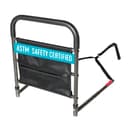 Able Life Bedside Safety Handle The alternative tried first | Key specStand assistType | Score8.0/10 | |
| Rank2 | 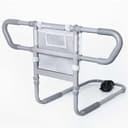 Lesamediio HC035 Bed Assist Rail If a rail is the answer | Key spec400 lbLoad rating | Score9.2/10 | |
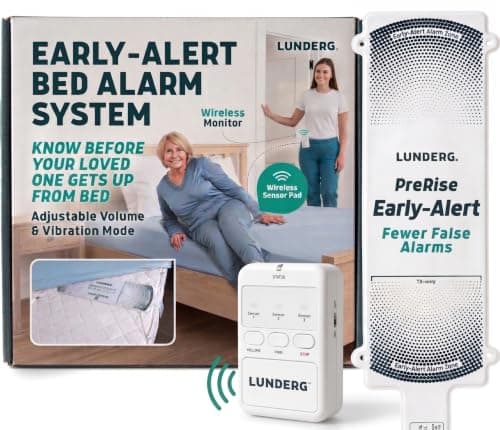
| Rank3 | 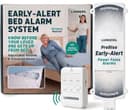 Lunderg Wireless Early Alert Bed Alarm System Alerting without a barrier | Key spec400 ftPager range | Score8.8/10 |
Prices checked October 10, 2026. Scores are our published spec rubric, not a test result — here is exactly how they are calculated.
1 · The alternative tried first
Able Life Bedside Safety Handle
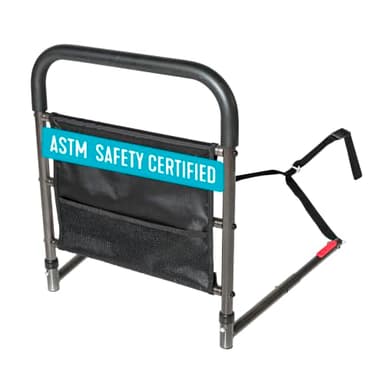
A padded stand-assist handle rather than a guard rail — the right tool if the problem is standing up, not rolling out.
- Type
- Stand assist
- Our spec score
- 8.0/10
- Best for
- Standing up, not staying in
As of October 10, 2026. #ad How we’re funded
What works
- Height adjustable, so the grip can sit where your hand naturally reaches from sitting
- Padded grip, which matters if arthritis makes a bare steel tube unpleasant to hold hard
- A published 300 lb load rating and a published fit across king, queen, full and twin
What doesn’t
- It is a handle, not a rail. It will not stop anyone rolling out of bed, and it is not meant to
- 300 lb is the lowest published rating of the rails here, and standing up loads a handle harder than sitting on it does
- No light, and the listing rules out adjustable beds and extra-soft mattresses
Published specifications
| Type | Stand-assist handle (not a full-length guard rail) |
|---|---|
| Standard claimed | ASTM safety approved |
| Height adjustable | Yes |
| Padding | Padded grip |
| Load rating | 300 lb |
| Fits | King, queen, full and twin beds; mattresses 6–14 in thick |
| Light | Not published |
Read from the product listing on 2026-08-26. Blanks are specifications the manufacturer does not publish, not figures we could not be bothered to find.
How the score was reached
| Standard complianceASTM compliance stated on the listing. | 9 |
|---|---|
| Grip and reachHeight adjustable with a published padded grip. | 9 |
| Load rating300 lb published — the lowest published figure of the rails here. | 8 |
| FitKing, queen, full and twin all published, with a 6–14 in mattress window. | 9 |
| Night useNo light published — neutral score. | 5 |
| Mean, rounded to one decimal | 8.0 |
2 · If a rail is the answer
Lesamediio HC035 Bed Assist Rail
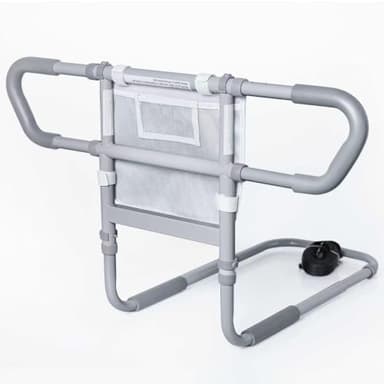
The highest published load rating here at 400 lb, on a rail that names the exact ASTM standard rather than gesturing at one.
- Load rating
- 400 lb
- Our spec score
- 9.2/10
- Best for
- The highest published load rating
As of October 10, 2026. #ad How we’re funded
What works
- It publishes a 400 lb load rating — the one number you actually lean on, and the highest figure any rail here prints
- It names the standard instead of gesturing at it: ASTM F3186-17, the standard 16 CFR part 1270 made mandatory in August 2023
- Published width and height adjustment, so the grip can be set where your hand falls from sitting, plus a motion sensor light and a safety strap to the opposite side of the frame
What doesn’t
- The listing states it is not compatible with adjustable beds. If the deck bends, this is the wrong rail
- One handrail, not a U-bar — there is no second grip height for anyone who pushes up in two stages
- The light's brightness, run-time and power source are not published, and a sensor light is the first component to fail on an inexpensive rail
Published specifications
| Standard claimed | ASTM F3186-17, named on the listing |
|---|---|
| Load rating | 400 lb |
| Light | Motion sensor night light |
| Grip form | Single padded non-slip handrail |
| Adjustable | Width 23–30.5 in, height 20.5–23.5 in |
| Stabilizer bar | Extends to 28 in under the mattress |
| Storage pocket | Yes — detachable |
| Fits | Twin, full, queen and king; not adjustable beds |
Read from the product listing on 2026-08-26. Blanks are specifications the manufacturer does not publish, not figures we could not be bothered to find.
How the score was reached
| Standard complianceNames ASTM F3186-17 specifically — the standard 16 CFR part 1270 made mandatory — not a generic ASTM claim. | 10 |
|---|---|
| Grip and reachPadded non-slip handrail with published width and height adjustment; one grip height, not two. | 9 |
| Load rating400 lb published — the highest figure any rail here states. | 10 |
| FitTwin, full, queen and king published; explicitly not for adjustable beds. | 8 |
| Night useMotion sensor light published; no brightness or run-time figure. | 9 |
| Mean, rounded to one decimal | 9.2 |
3 · Alerting without a barrier
Lunderg Wireless Early Alert Bed Alarm System
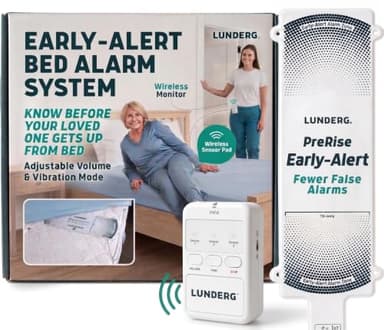
The only brand here that says how long its sensor pad lasts, on a system built around the idea that nothing should make a noise at the person in the bed.
- Pager range
- 400 ft
- Our spec score
- 8.8/10
- Best for
- Alerting a caregiver in another room
As of October 10, 2026. #ad How we’re funded
What works
- Nothing in this system is stated to sound at the bedside — every alert goes to a pager the caregiver carries, which is the distinction the whole category turns on
- The pad sits at hip level and the listing says it alerts before the person is out of bed, rather than once their weight has already gone
- Lunderg is the only brand here that publishes how long its sensor pad lasts — 15 months — on the one part of the system that is a consumable
What doesn’t
- The specification table gives an audible-noise figure of 120 dB and never says which device it describes; the same brand's bed-and-chair set publishes 48 dB for what looks like the same pager, and neither listing resolves the contradiction
- The 15-month pad life is a claim in the bullet points, not a warranty term — no warranty length is published anywhere on the listing
- The pad is a consumable and the listing says nothing about what a replacement costs, so the running cost is knowable in months but not in dollars
Published specifications
| Where the alert goes | Wireless pager carried by the caregiver |
|---|---|
| Sensor pad | 10 x 33 in, foam interior, incontinence-resistant |
| Pad placement | Hip level |
| Published range | Up to 400 ft |
| Sensor pad life | 15 months (seller stated) |
| Pager alert modes | High volume, low volume or vibrate only |
| Batteries | 2 AA, included |
| Wi-Fi or app required | No |
| Expandable with | Lunderg chair alarm and call button |
| Warranty | Not published |
Read from the product listing on 2026-08-28. Blanks are specifications the manufacturer does not publish, not figures we could not be bothered to find.
How the score was reached
| Where the alert landsThe listing states every alert goes to a pager the caregiver holds and that nothing sounds at the bedside. | 10 |
|---|---|
| How early it firesHip placement published, with a stated alert before the person is out of bed. | 10 |
| Published range400 ft published — the longest figure on this page. | 9 |
| Running costs disclosedA 15-month pad life and included batteries are published; no warranty term is. | 8 |
| ExpandabilityA chair alarm and a call button are named as compatible; no supported sensor count is published. | 7 |
| Mean, rounded to one decimal | 8.8 |
The Able Life Bedside Safety Handle is the alternative-first option: a short stand-assist handle with a published 6 to 14 inch mattress window, the widest in our set, that helps somebody stand without placing a barrier across the side of the bed. It will not stop a roll out of bed and is not meant to. The Lesamediio HC035 is the rail we would choose if a rail is genuinely the answer — the highest published load rating in our set at 400 lb, ASTM F3186-17 named, a published grip adjustment and a 28-inch stabilizer bar — with the honest caveat that it publishes no mattress depth window at all. The Lunderg early alert system is the no-barrier route: a pad at hip level and a pager the caregiver carries, with nothing stated to sound at the bedside, which is the property the whole alarm category turns on.

If the bed itself is the problem
Sometimes the question behind "can we have a rail" is really "is this the right bed". A hospital bed has rails designed into its frame, adjusts in ways a domestic bed does not, and in a facility it is the default. At home it is a bigger decision with a coverage question attached. Adjustable bed against hospital bed, compared on the things that differ, and what Medicare actually covers, with the rule quoted.
The regulation above is quoted verbatim from the eCFR text named with it rather than paraphrased, and the CMS surveyor guidance and FDA entrapment material are cited to their own documents in the sources below. Nothing on this page is legal or medical advice; regulations are amended, so check the primary source against your own date. Product specifications were read from live listings on the dates stamped in their own tables. How we pick.
Questions people actually ask
Are bed rails allowed in nursing homes?
Yes, but they are not allowed casually. Federal regulation at 42 CFR 483.25(n) requires a nursing home to attempt appropriate alternatives before installing a side or bed rail, and then to assess the resident for entrapment risk, review the risks and benefits with the resident or their representative and obtain informed consent, ensure the bed's dimensions suit the resident's size and weight, and follow the manufacturer's installation and maintenance specifications. A facility that skips those steps is out of compliance, which is why staff often sound reluctant.
Why do nursing homes say they cannot use bed rails?
Usually they mean they cannot use one without working through the requirements above, and sometimes they mean the clinical assessment came out against it. There is also a restraint dimension: a device a resident cannot lower or remove can function as a physical restraint, and residents have a federal right to be free from restraints imposed for discipline or convenience. Both readings are honest answers to your question, and neither is a blanket ban.
Can my family insist on a bed rail for a relative?
You can ask, and the regulation gives you a formal place in the conversation: the risks and benefits must be reviewed with the resident or the resident representative, and informed consent obtained, before installation. What you cannot do is override a clinical entrapment assessment. The productive version of the request is to ask what alternatives have been tried and what the assessment found, because that is the sequence the rule requires and the facility has to be able to answer it.
Do the same rules apply at home?
No. 42 CFR 483.25(n) binds certified nursing facilities, not households, and nothing stops you fitting a rail to a bed in your own home. The physics does not change with the address, though, and the four requirements make an unusually good home checklist precisely because somebody else wrote them for the same hazard. Bed rail safety, and the federal rule that governs the consumer product.
What alternatives count as having been tried?
The regulation does not enumerate them, which leaves the facility to document what it tried. In practice the list is the one this site has been writing about all along: lowering the bed so a fall is shorter, a bedside stand-assist handle instead of a barrier, a floor mat, repositioning the furniture so there is something to hold, and an exit alarm that tells a caregiver rather than a rail that blocks the resident. The alternatives, compared properly.
Is a bed rail a restraint?
It depends entirely on whether the person can get past it when they want to. A rail somebody raises for themselves and lowers when they wish to get up is an assist. The same rail on somebody who cannot lower it and wants to get up is restricting their movement, and that is the test the restraint rules apply. It is also the situation in which a rail becomes a climbing hazard rather than a barrier. Who should not use a bed rail.
Sources
Every factual claim on this page traces to one of these, or to a product listing cited in the specification table beside it.
- 42 CFR 483.25(n) — Bed rails, requirements for long term care facilities
- CMS — State Operations Manual Appendix PP, guidance to surveyors (F604 physical restraints; F689 accidents and supervision)
- FDA — Hospital Bed Safety Workgroup FAQ on entrapment issues
- FDA — Hospital Bed System Dimensional and Assessment Guidance to Reduce Entrapment (guidance document)
- Federal Register — Safety Standard for Adult Portable Bed Rails, final rule, 21 July 2023
Read next
Guide
Bed Rail Safety
The federal rule, the seven entrapment zones, and the measurements to take on your own bed. The page to read before you buy anything.
Guide
Who Should Not Use One
Four situations where a rail makes things worse, and the alternatives that work better in each.
Head to head
Alternatives to Rails
Five ways to make getting in and out of bed safer, and the honest test for which problem you actually have before you buy a rail.
Comparison
Best Bed Rails
Scored on whether the listing states compliance with the standard that became federal law in 2023 — and four other things.
Our top pick — Lesamediio HC035 Bed Assist Rail
$69.99 · Check priceAs of October 10, 2026. #ad How we’re funded
Comparison
Best Assist Handles
If the difficulty is standing up rather than staying in, this is the product you actually want.
Our top pick — Able Life Bedside Safety Handle
$49.99 · Check priceAs of October 10, 2026. #ad How we’re funded
Comparison
Best Bed Alarms
The first question is not which alarm. It is whether the noise happens next to the person getting up, or on a pager in your pocket.
Our top pick — Lunderg Wireless Early Alert Bed Alarm System
$119.95 · Check priceAs of October 10, 2026. #ad How we’re funded
Comparison
Best for Dementia
Six in ten people living with dementia wander. That one fact changes which alarm to buy, and rules out the product most families reach for first.
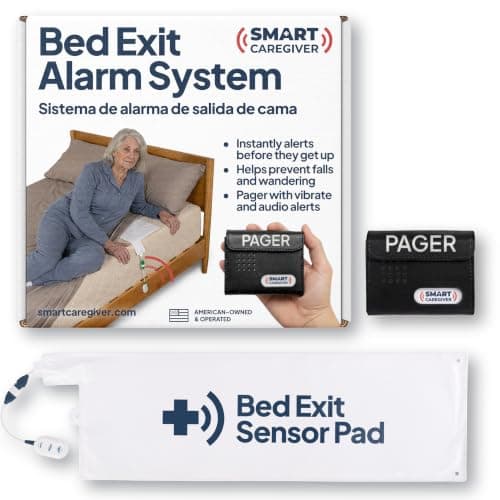
Our top pick — Smart Caregiver Bed Exit Alarm with Wireless Pager (RP-WPBR1-SYS)
$105.95 · Check priceAs of October 10, 2026. #ad How we’re funded
Head to head
Adjustable Bed vs Hospital Bed
Two different products that look similar in photographs. One is furniture, one is medical equipment, and only one of them Medicare will help with.


Nothing here is medical advice. Prices are pulled live and stamped with the date they were checked; scores are our published spec rubric, not a test result. How we pick · How we make money · Corrections